
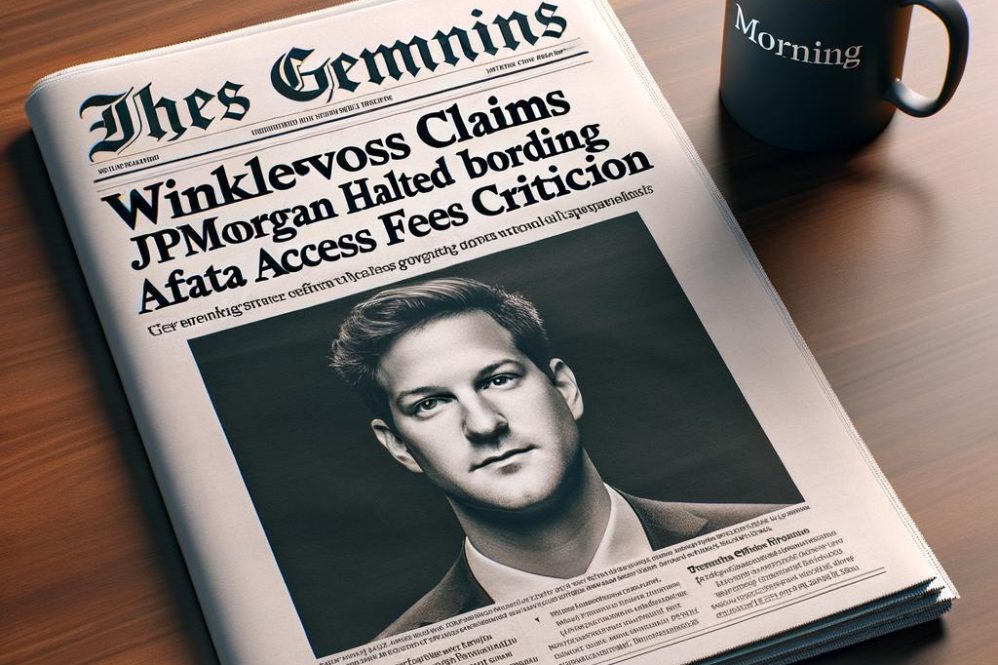
In a bold assertion that has sparked notable discourse in the financial and cryptocurrency sectors, Tyler Winklevoss, co-founder of the Gemini cryptocurrency exchange, has claimed that JPMorgan Chase has obstructed the onboarding of new accounts at Gemini due to the company’s outspoken criticism of the bank’s data access fees. This allegation highlights a growing concern regarding the potential repercussions that financial institutions may impose on firms that challenge their practices, raising questions about the implications for free expression and competition within the rapidly evolving cryptocurrency landscape. Winklevoss’s comments not only reflect the friction between traditional banking and emerging digital finance but also underscore the critical need for transparency and accountability among dominant players in the financial ecosystem.
Winklevoss Alleges JPMorgan Retaliation Against Gemini for Criticism on Fees
Tyler Winklevoss, co-founder of the cryptocurrency exchange Gemini, has publicly accused JPMorgan Chase of retaliating against his platform by blocking its banking services. This allegation arises in the context of recent criticisms levied by Winklevoss regarding the high fees associated with JPMorgan’s services. According to Winklevoss, such actions pose a significant threat to free expression within the financial and cryptocurrency sectors.
The claims made by Winklevoss suggest that financial institutions may resort to punitive measures when faced with public dissent. He posits that this type of retaliation undermines the principles of a competitive market where businesses shoudl be able to express concerns without fear of retribution.In this evolving landscape,where cryptocurrencies challenge traditional banking paradigms,the implications of such moves are profound.
Furthermore, this situation raises critical questions about the relationship between crypto businesses and established banks. Key considerations include:
- The impact on smaller players in the crypto space who may lack the leverage to negotiate terms with banking institutions.
- The broader ramifications for innovation and competition within the industry.
- Potential regulatory responses to protect businesses from perceived discrimination by financial giants.
Winklevoss’s statements thus highlight ongoing tensions and the need for clarity as the industry continues to mature.
The Clash of Power: financial Institutions and Free Speech in the Crypto World
The rise of cryptocurrency has ignited a profound debate over the balance of power between traditional financial institutions and the principles of free speech. Bitcoin, often referred to as digital gold, serves as a tool for individuals seeking financial autonomy away from centralized control. As the adoption of cryptocurrencies grows, so do the concerns from banks and governments, which perceive these decentralized systems as threats to their established authority.
Financial institutions, accustomed to exercising significant power over monetary transactions, are increasingly wary of cryptocurrencies encroaching on their domain. This tension is manifested in various ways, including calls for stricter regulations and heightened scrutiny on cryptocurrency transactions. Such measures are often justified under the guise of protecting consumers and preventing illicit activities. Though, critics argue that these actions stifle innovation and suppress the basic right to express oneself financially.
The ethos of cryptocurrency embodies the spirit of free speech; it allows individuals to transact and engage economically without fear of censorship. advocates for this decentralized movement argue that limiting access to cryptocurrencies undermines democratic values. The ongoing conflict between financial institutions and crypto advocates underscores an essential question: can society reconcile the need for regulatory oversight with the imperative of safeguarding individual freedoms in the digital age?
Gemini’s Banking Challenges: an Examination of Industry Dynamics and Accountability
The current landscape of cryptocurrency exchanges is marked by increasing scrutiny and regulatory pressures, which have significant implications for firms like Gemini. As a key player in the digital asset exchange sector, Gemini faces numerous banking challenges that stem from its operational structure and the compliance requirements set forth by regulatory bodies. These dynamics have compelled the exchange to navigate complex relationships with banking institutions, often leading to restrictions in accessing traditional financial services.
One of the primary hurdles affecting Gemini involves the banking sector’s hesitance to engage with cryptocurrency platforms. Traditional banks frequently view digital assets as high-risk, owing to concerns regarding anti-money laundering (AML) regulations and the potential for fraud. Consequently, this apprehension results in limited banking partnerships for cryptocurrency exchanges, which can impede operational efficiency and customer service. Moreover, the impact of stringent requirements from regulators can also lead to increased costs for compliance, directly affecting the exchange’s bottom line.
Additionally, accountability in the cryptocurrency space is paramount for fostering consumer trust and establishing a stable market.Gemini must proactively address these banking challenges by engaging with regulators and implementing robust compliance measures. By enhancing transparency and adhering to industry best practices, Gemini can mitigate risks associated with banking relationships while together building a reputation for reliability. This approach not only aligns with regulatory expectations but also positions Gemini favorably amidst growing competition in the crypto exchange sector.
Tyler Winklevoss’s accusations against JPMorgan highlight a significant tension within the financial industry, particularly as it relates to cryptocurrency firms and their operations. The alleged retaliation against Gemini following public criticisms regarding data access fees raises crucial questions about the boundaries of free expression in financial services and the potential consequences for companies that challenge established banking practices. As the crypto landscape continues to evolve,the relationship between traditional banks and digital asset platforms may remain fraught with conflict,necessitating careful scrutiny from regulators and industry stakeholders alike. Further developments in this situation will be essential to monitor, as they could set important precedents for the intersection of finance and freedom of speech in the rapidly changing world of cryptocurrency.