
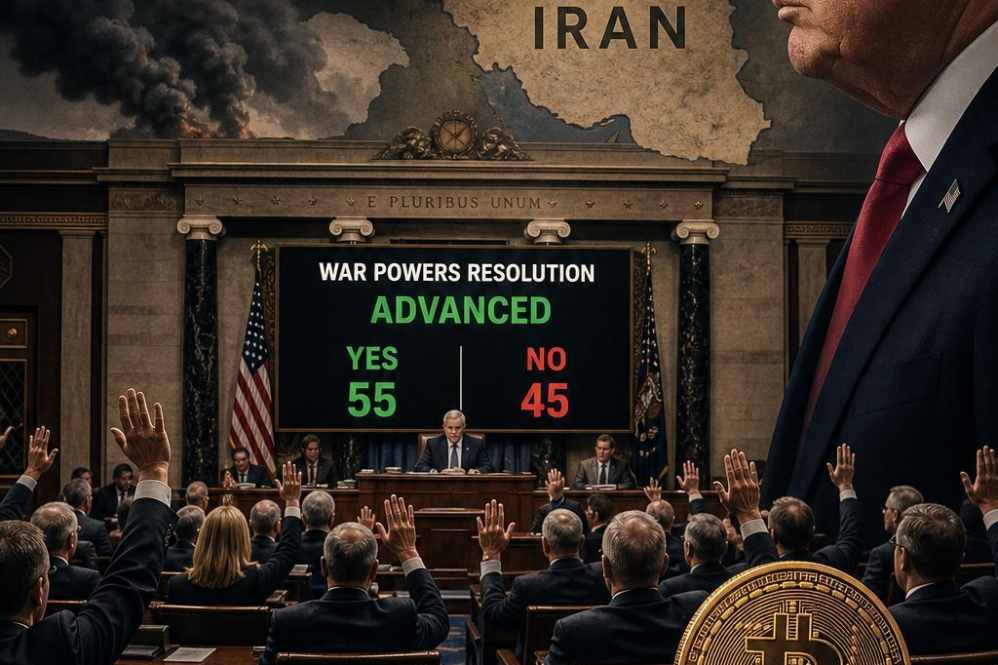
US Senate moves to Limit Executive Authority on Military Action Against Iran
The US Senate has taken steps to restrict the executive branch’s authority to engage in military actions against Iran without congressional approval. This move reflects ongoing concerns within the legislative branch regarding the separation of powers and the oversight of foreign military engagements. By seeking to limit unilateral executive decisions, the Senate aims to reinforce the role of Congress in authorizing meaningful military operations, underscoring the constitutional mandate that only Congress can declare war. Such legislative measures often emerge in response to geopolitical tensions and debates over the appropriate mechanisms for authorizing the use of force.
In the context of cryptocurrency markets, developments in US foreign policy and military actions can have indirect but notable influences. Uncertainty surrounding international relations and potential conflicts frequently enough leads to increased volatility in global financial markets, including digital assets like Bitcoin. While the Senate’s move does not directly impact cryptocurrency regulation, it forms part of a broader geopolitical landscape that investors and analysts consider when evaluating market conditions. Understanding these political dynamics helps provide a extensive viewpoint on the factors that may affect investor sentiment and asset performance.
Analyzing the Implications of the New Resolution on US Foreign Policy
The recent resolution introduces several considerations for US foreign policy, especially regarding how digital currencies like Bitcoin intersect with international relations and economic strategy. Traditionally,US foreign policy has prioritized stability and security concerns in its dealings with other nations. With the advent of cryptocurrencies, there is a growing need to address regulatory frameworks that encompass cross-border digital asset transactions, potential sanctions evasion, and the financing of illicit activities.This resolution underscores the importance of integrating digital currency oversight into diplomatic and economic policy channels, reflecting an adaptation to the evolving financial landscape influenced by blockchain technology.
While the resolution marks a step toward acknowledging cryptocurrencies within the foreign policy domain, its practical consequences are shaped by the complex nature of digital assets and their decentralized characteristics. Governing the flows and use of cryptocurrencies like Bitcoin involves balancing regulatory controls with the innovation and freedom inherent in blockchain technology. Consequently, the resolution highlights the challenges policymakers face in crafting effective strategies that consider both the global reach of cryptocurrencies and the limits of national jurisdiction. This nuanced approach is critical in understanding how future US foreign policy may evolve in response to technological advancements in the financial sector.
Recommendations for Congressional Oversight and Ensuring Diplomatic Solutions
Congressional oversight of cryptocurrency activities necessitates a comprehensive approach that integrates regulatory vigilance with diplomatic engagement. Effective oversight involves monitoring developments in blockchain technology and digital asset markets to ensure regulatory frameworks remain adaptive and relevant. Given the global nature of cryptocurrency transactions, fostering collaboration with international partners becomes essential in addressing issues such as cross-border regulatory arbitrage, illicit financial flows, and cybersecurity threats.Such cooperation can help harmonize regulatory standards and promote openness without stifling innovation within the digital asset space.
Ensuring diplomatic solutions alongside oversight underscores the importance of dialog among key stakeholders, including governments, financial institutions, and industry participants. Diplomatic efforts can facilitate multilateral agreements that uphold the integrity of global financial systems while respecting national regulatory sovereignty. In this context, understanding the technical underpinnings of cryptocurrencies and blockchain is critical to formulating policies that mitigate risks without hindering technological advancement. Ultimately,a balanced approach can provide a framework for responsible development and integration of cryptocurrencies into the broader financial ecosystem.