
—
Morgan Stanley’s Entry Boosts Bitcoin Confidence
Morgan Stanley’s recent venture into the cryptocurrency market marks a significant milestone for both the company and the digital asset industry. As a leading player in investment banking, Morgan Stanley’s decision to offer cryptocurrency trading services signals that digital currencies are now considered a serious and viable investment option by traditional financial institutions.
The bank’s initiative includes providing clients with access to Bitcoin through futures contracts, a less risky way to engage with the volatile market. This approach allows clients to speculate on Bitcoin’s price movements without owning the actual cryptocurrency, thereby reducing risk.By offering these services,Morgan Stanley positions itself as a bridge between the conventional financial world and the more speculative cryptocurrency market,enhancing trust and legitimacy around Bitcoin and making it more acceptable to a broader audience.
However,while Morgan Stanley’s involvement is a positive development,it’s crucial to acknowledge the ongoing challenges and uncertainties in the cryptocurrency market.Regulatory frameworks, market volatility, and the continuous evolution of blockchain technology present significant hurdles that even major financial institutions must navigate carefully.The entry of traditional finance players like Morgan Stanley into the cryptocurrency arena is highly likely to bring institutional standards to the market, perhaps maturing it. Yet, the rapid changes and inherent risks of the digital currency sphere mean that its future path remains unpredictable and complex.
Institutional Investment Boosts Bitcoin Credibility
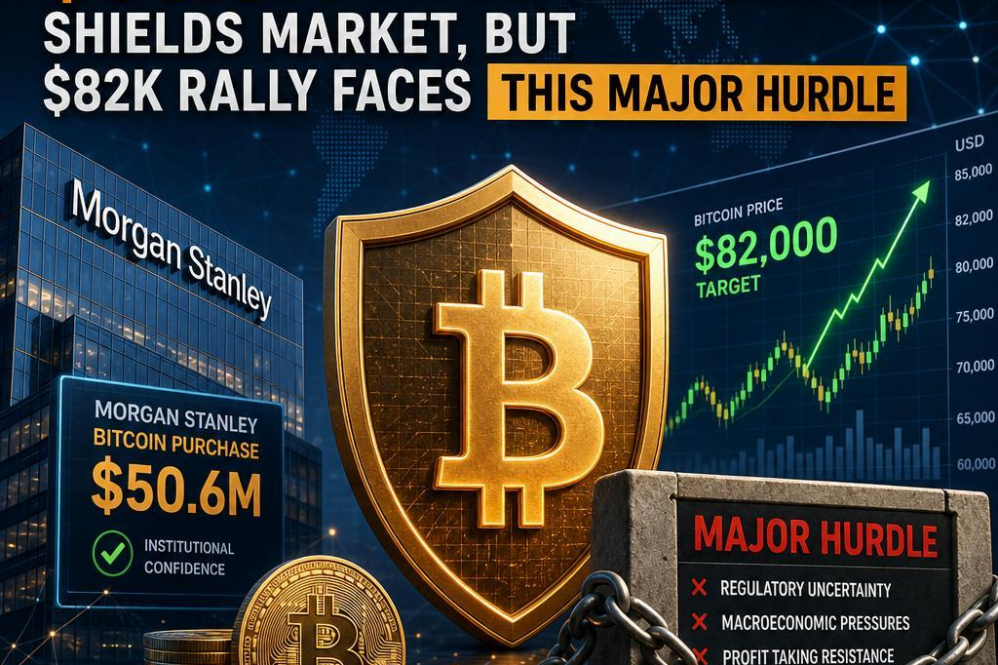
A recent $50.6 million investment in Bitcoin has garnered significant attention,marking a pivotal moment in the cryptocurrency ecosystem. This significant capital injection, primarily by institutional players, signals a shift in how these entities view Bitcoin as an investment asset. Institutional investors,known for their rigorous analysis and stringent criteria,are starting to see Bitcoin as more than just a speculative play.
The commitment from high-net-worth individuals and financial institutions can be seen as a vote of confidence in Bitcoin’s future prospects. This backing not only bolsters Bitcoin’s credibility in the financial community but also underscores its growing acceptance as a legitimate store of value and a hedge against inflation.However, it’s crucial to understand that such investments do not guarantee future performance; they reflect current market sentiment and dynamics.
As institutional involvement increases,the potential for wider adoption and more liquid markets may also follow. It’s essential to monitor regulatory developments alongside market movements, as they will shape the broader narrative around Bitcoin’s role in traditional finance contexts. While this influx of institutional funding is encouraging, it’s also important to remain cautious and recognize the inherent volatility and risks that still exist in the cryptocurrency market.
Overcoming Challenges to Reach $82K
As the crypto market moves toward the $82K price target, it must overcome several significant obstacles. Fluctuating investor sentiment can lead to sudden sell-offs or buying frenzies, affecting the stability of the price trend and making it challenging to maintain a consistent upward trajectory. Regulatory changes in major economies also present uncertainties that could impact the market’s momentum.
Another hurdle is the technical aspect of the blockchain. As the market approaches critical levels, network congestion can exacerbate transaction times and fees, deterring new users from entering the market. Such technical limitations not only hinder the flow of funds but also slow down the adoption of cryptocurrencies as a practical medium of exchange.Developers and network supporters are working on scaling solutions to address these issues, but the implementation of these improvements often requires time.
The global economic surroundings also plays a crucial role. With inflationary pressures and geopolitical tensions, traditional safe-haven assets like gold and the U.S. dollar may attract more interest, potentially redirecting potential investments away from crypto assets. Conversely, any signs of stability or positive economic developments can bolster investor confidence in cryptocurrencies. Understanding these broader market dynamics is essential for stakeholders trying to forecast the path to the $82K milestone.
Key Challenges for Bitcoin’s Next Growth Phase
Bitcoin’s trajectory is influenced by a mix of market dynamics and regulatory environments. For the digital currency to embark on a new rally, overcoming hurdles in the regulatory sphere is paramount. Government policies, notably in key jurisdictions, play a critical role in shaping market sentiment.Any changes or clarifications from regulatory bodies can either fuel investor confidence or cast a shadow of uncertainty, impacting the currency’s value.
Another significant hurdle lies in the scalability and efficiency of Bitcoin’s infrastructure. As the network matures,the inherent limitations tied to its block size and processing capacity continue to surface.While advancements such as the Lightning Network offer promising solutions for faster transactions, widespread adoption and technical integration remain challenges. These technological barriers not only affect user experience but also hinder broader acceptance by merchants and institutional investors.
The broader economic landscape also poses challenges that can either support or hinder Bitcoin’s advancement. Economic downturns, geopolitical tensions, and changes in monetary policy worldwide can sway investor behavior. In times of economic uncertainty, Bitcoin can act as a safe haven, but its success hinges on stability and reliability. It’s crucial to monitor these external factors as they interact with Bitcoin’s internal dynamics, potentially catalyzing or delaying the next phase of growth.