
—
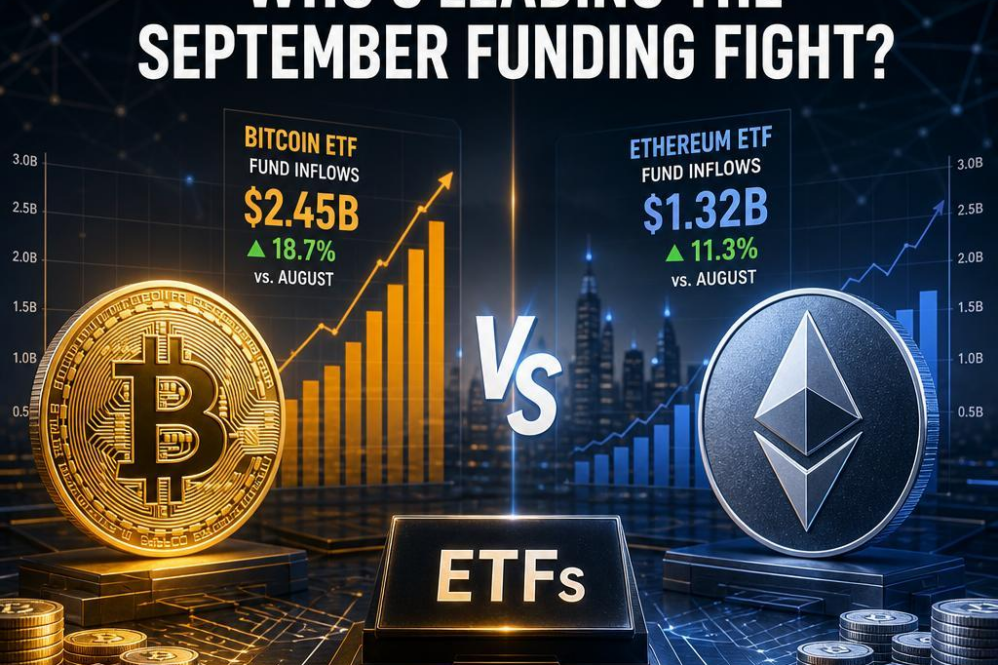
Bitcoin vs Ethereum ETFs: Examining September’s Fund Flows
As September unfolded, the interplay between Bitcoin and Ethereum exchange-traded funds (ETFs) captured the attention of both investors and enthusiasts. ETFs provide a conventional financial pathway to access the cryptocurrency market, offering flexibility and exposure to the evolving digital asset landscape. This month, Bitcoin ETFs witnessed a meaningful increase in fund inflows compared to Ethereum ETFs, mirroring broader market trends and investor strategies.
The disparity in fund flow dynamics between Bitcoin and Ethereum can be attributed to their unique characteristics and use cases. Bitcoin is often viewed as a store of value or digital gold, attracting investors seeking long-term appreciation or a hedge against market volatility. Ethereum, simultaneously occurring, is gaining traction as a platform for decentralized finance (DeFi) and other blockchain-based applications, drawing in developers and those interested in the broader utility and innovation aspects of the Ethereum ecosystem. This divergence in appeal influences how ETFs for Bitcoin and Ethereum are perceived and utilized by market participants.
The surge in funds directed towards Bitcoin ETFs underscores the strong interest in the stability and established market position of Bitcoin. Conversely, the lower inflows into Ethereum ETFs highlight the need for further development in the ecosystem’s adoption and acceptance. The performance of these ETFs not only reflects the current state of the underlying cryptocurrencies but also shapes expectations and influences future investment decisions. As the market evolves, the nuances of fund flow dynamics in Bitcoin and Ethereum ETFs will remain critical indicators of the digital asset landscape’s future direction.
Institutional Investors and Their Impact on ETF Performance
In the ever-evolving cryptocurrency investment landscape, institutional investors are playing an increasingly pivotal role in shaping the performance of digital asset ETFs. These large-scale investors, including pension funds, hedge funds, and investment banks, bring significant financial resources and a level of credibility and maturity that traditional financial markets associate with professional management. This can considerably influence the perception and adoption of cryptocurrency ETFs among retail investors, who might be hesitant to enter the space due to its reputation for volatility and uncertainty.
One key aspect of the interaction between institutional investors and cryptocurrency ETFs is the establishment of liquidity. These investors frequently enough commit to large-scale trades,adding stability to the markets where ETFs are listed. By participating actively in trading and ensuring that these instruments are readily available for purchase and sale, institutional investors help maintain consistent transaction volumes and price transparency, which are essential for a healthy and accessible investment environment. Their involvement can also help set standards for regulatory compliance and risk management, as these entities adhere to strict regulatory requirements across various jurisdictions.
While the influence of institutional investors on cryptocurrency ETFs is positive, it’s crucial to acknowledge the limitations and challenges that continue to shape this relationship. Regulatory frameworks remain a critical barrier in certain regions, limiting the accessibility and scope of such investments. The rapid pace of technological and market developments within the cryptocurrency space can sometimes outstrip the comfort level of traditional institutional players, who may be more accustomed to well-established and less volatile asset classes. Therefore, while the role of institutional investors is crucial, their overall success and influence depend heavily on the evolving regulatory and market conditions.
Key Indicators Showing the Dominance of Crypto ETFs
When evaluating the performance of cryptocurrency ETFs, several key metrics stand out as crucial indicators. These metrics help investors and analysts understand the relative strength and potential dominance of a particular ETF in the crypto market. High liquidity ensures that large orders can be executed without significantly impacting the ETF’s price, making it attractive to institutional investors who frequently require robust liquidity.
Another critical aspect is trading volume. A higher volume often indicates stronger interest from the market and more frequent trading activity. This metric is closely watched as it can signal the ETF’s ability to maintain stable pricing during periods of high demand. However, trading volume alone does not paint the full picture; it must be considered alongside the overall fund size. A large ETF with considerable assets under management (AUM) can be a reliable store of value for investors, providing a buffer against volatility.
The interplay between these metrics is essential for understanding the ETF’s stability and demand. For example, an ETF with high liquidity, significant trading volume, and a robust fund size is highly likely to attract continued investment over time, reinforcing its position in the market. Nonetheless,it’s vital to remember that while these metrics are indicative of performance,they are not guarantees of future success. Investors should conduct thorough research and consider additional factors such as the underlying assets, fund management, and historical performance before making investment decisions.
Strategic Guidelines for Navigating the ETF Market
When considering the ETF market landscape, particularly in the context of cryptocurrencies, investors must navigate a complex environment where regulatory uncertainties and market dynamics frequently shift. Understanding the approval processes and eligibility criteria for crypto-related ETFs is crucial. Some ETFs track the performance of a specific cryptocurrency or a basket of cryptocurrencies, while others may focus on mining operations or technology companies linked to blockchain.
Investors should also pay close attention to the underlying assets of the ETFs they are considering.For instance, an ETF might track the price of Bitcoin but hold U.S.dollars or other assets as collateral. This can affect the ETF’s volatility and correlation with the underlying cryptocurrency, possibly altering its risk profile relative to direct market exposure. Comparing fees and liquidity across different ETF options is also important to identify those with better value propositions.
Given the speculative nature of cryptocurrencies, it’s wise to approach ETFs with a diversified strategy. This means investors should consider a mix of cryptocurrency ETFs alongside traditional asset classes and other choice investments to manage risk effectively. While crypto ETFs offer a possibly more accessible entry point for traditional investors, they do not eliminate the inherent volatility and regulatory risks associated with digital currencies. It’s essential to keep abreast of developments in regulation and market trends to make well-informed decisions.
—