
– Understanding the Total Supply: The 21 Million Bitcoin Cap
The cap of 21 million Bitcoin, an integral aspect of its design, underscores the finite supply of this digital asset. Each Bitcoin can be subdivided into 100 million smaller units known as satoshis,resulting in a total volume of 2.1 quadrillion satoshis.This mathematical precision not only creates scarcity but also instills a sense of value over time, akin to precious commodities like gold. The rigid supply limit was established by Bitcoin’s pseudonymous creator, Satoshi Nakamoto, who intended to thwart inflation and ensure that Bitcoin could not be subject to arbitrary increases in supply.
As the adoption of Bitcoin increases, the implications of a fixed supply become increasingly notable. The interaction between supply and demand will define Bitcoin’s market dynamics. investors and users are motivated by the potential for gratitude in value as scarcity becomes more pronounced. In essence, while the Bitcoin network may grow in utilization, its supply remains static, thereby amplifying the importance of satoshis as a unit of measure. Such an ecosystem creates a compelling narrative for speculators, traders, and long-term holders, who perceive a finite resource amidst an ever-expanding digital economy.
Moreover, the fixed supply plays a critical role in the ecosystem’s governance. Bitcoin miners are rewarded with newly minted coins and transaction fees, yet as the mining reward diminishes over time due to halvings, the focus shifts towards transaction throughput and efficiency. This scarcity encourages innovation within the network, driving technological advancements that enhance Bitcoin’s utility. As the market matures, the challenge will be ensuring accessibility to satoshis while maintaining the integrity of a system committed to its limited supply. The exploration of this finite nature will continue to shape the narrative around Bitcoin, influencing investor sentiment and overall market dynamics in the years to come.
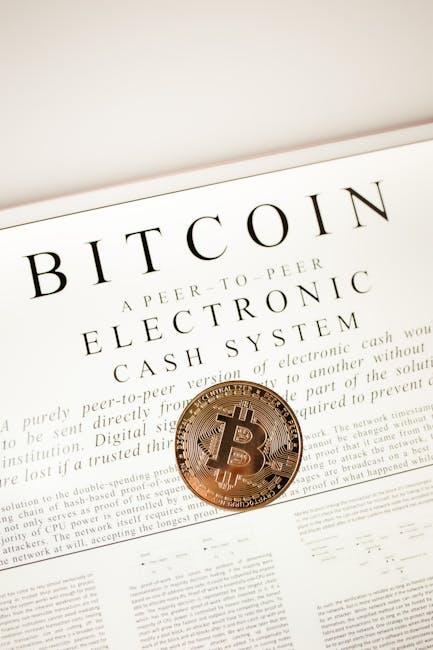
– The Implications of Satoshi Distribution on Market Dynamics
The distribution of Bitcoin’s finite supply,capped at 21 million coins or 2.1 quadrillion satoshis, plays a critical role in shaping market dynamics.the scarcity of this digital asset inherently influences its value and the behavior of investors and traders alike.As more satoshis become held in long-term wallets, a decreasing amount remains in circulation, accentuating the supply-demand imbalance that can drive prices upward. This phenomenon is notably pronounced during periods of heightened interest in cryptocurrencies, when both speculation and institutional investment surge.
Equally important is the disparity in how satoshis are distributed among holders. A significant portion of Bitcoin is concentrated in a small number of wallets, leading to concerns over potential market manipulation by large holders, often referred to as “whales.” These large stakeholders can significantly impact market sentiment and liquidity,especially during bull runs or downturns. Consequently, the uneven distribution may lead to volatility, as smaller investors react to the trades made by these giants, frequently enough exacerbating price swings in both directions.
Moreover, the implications of Satoshi distribution extend beyond mere price dynamics; thay also affect the advancement of the Bitcoin ecosystem. With a limited amount of coins available to circulate,the focus shifts towards application and utility rather than mere speculation.as users begin to favor transactions and adoption over hoarding, this shift towards practical use cases could foster greater stability in the market. Additionally, this may encourage the growth of second-layer solutions, which aim to enhance transaction speed and scalability while easing the inherent friction tied to Bitcoin’s capped supply.
– Strategies for investors in a Finite Satoshi Ecosystem
Investors looking to navigate the complexities of a finite Satoshi ecosystem must adopt strategies that account for both scarcity and market dynamics. Understanding that the bitcoin network is capped at 21 million coins-and each coin is divisible into 100 million Satoshis-creates a unique landscape where supply is inherently restricted. This scarcity can drive demand and increase value, but it also poses inherent risks. Investors should focus on a diversified approach that includes various assets, Bitcoin being the core component, while also considering other cryptocurrencies that leverage similar scarcity models.
Additionally, timing and market sentiment play critical roles in any investment strategy. With Bitcoin’s historical price volatility, savvy investors should implement strategies like dollar-cost averaging (DCA) to mitigate risks associated with market fluctuations. Rather than investing a lump sum, breaking down investments into smaller, regular purchases can help smooth out the market’s ups and downs. Furthermore, staying informed about macroeconomic trends that influence cryptocurrency markets, and also technological advancements in blockchain, can enhance decision-making.
Lastly, building a robust exit strategy is essential in a landscape characterized by finite resources. Investors should establish clear profit-taking points and loss limits to ensure they can respond appropriately if market conditions shift unexpectedly. Utilizing tools such as limit orders can automate exit strategies, reducing emotional decision-making during market turmoil. By coordinating these elements-diversification, informed timing, and a solid exit plan-investors can position themselves strategically in the finite world of Satoshis.
– The Future of Bitcoin: Scarcity,Demand,and Value Appreciation
The finite supply of Bitcoin,capped at 21 million coins,translates into a total of 2.1 quadrillion satoshis, since each Bitcoin is divisible into 100 million satoshis. This scarcity is a basic characteristic that sets Bitcoin apart from conventional currencies. As demand continues to grow amidst increasing awareness and adoption, the fixed supply could lead to significant implications for Bitcoin’s value, making each satoshi increasingly precious. Investors and enthusiasts alike are beginning to recognize that this artificial scarcity could create a sense of urgency among holders, perhaps driving prices higher as more participants vie for a slice of the limited pie.
The relationship between scarcity and demand establishes a straightforward economic principle: when supply is limited and demand increases, prices are likely to rise. This dynamic is exemplified by Bitcoin’s historical price milestones during various market cycles. As mainstream acceptance of Bitcoin progresses, alongside institutional investment and growing retail interest, the demand is expected to surge. The result could be a burgeoning market for satoshis as individuals and organizations begin to view them not merely as a transactional medium but as a store of value, comparable to precious metals like gold.
As we look to the future, Bitcoin’s scarcity may yield profound implications for its overall value appreciation. A large segment of the population remains unaware of the fundamental properties of Bitcoin, including its capped supply. However, as education spreads and the understanding of these principles deepens, a rush towards Bitcoin accumulation may ensue. This shift could ignite price appreciation in such a way that each satoshi not only becomes a fundamental unit of currency but also an investment vehicle-transforming perceptions and driving new waves of interest in the cryptocurrency market.
the exploration of Bitcoin’s finite supply of 2.1 quadrillion satoshis underscores a pivotal aspect of the cryptocurrency’s design beliefs. As we dissect the implications of this limited supply, it becomes evident that scarcity plays a critical role in Bitcoin’s value proposition.The mathematical precision behind its issuance reinforces the notion of digital gold, appealing to investors seeking a hedge against inflation and currency devaluation. As adoption continues to grow and the Bitcoin ecosystem evolves, understanding the importance of this capped supply will be vital for both new and seasoned participants in the market. The future of Bitcoin will not only hinge on technology and usability but also on the collective recognition of its finite nature-a defining characteristic that sets it apart in the vast landscape of digital currencies.