

Introduction
Logical paradoxes have long fascinated philosophers, mathematicians, and logicians alike, serving as both intriguing puzzles and critical challenges to our understanding of truth and consistency within formal systems. Among the myriad of paradoxes examined throughout the history of logical inquiry, the case of $1 < $1 stands out as a particularly perplexing example that challenges our intuitive grasp of comparative magnitudes. Predicated on the fundamental principles of inequality, this scenario invites an exploration of the cognitive, mathematical, and philosophical implications inherent in seemingly contradictory statements. By delving deeper into the nature of this paradox, we aim to unravel the complexities that underlie our perceptions of numerical relationships and the potential limitations of classical logic. This article will first establish a framework for understanding the paradox, followed by a discussion of its implications within various domains, ultimately highlighting the necessity of flexibility in our logical structures to accommodate such counterintuitive cases.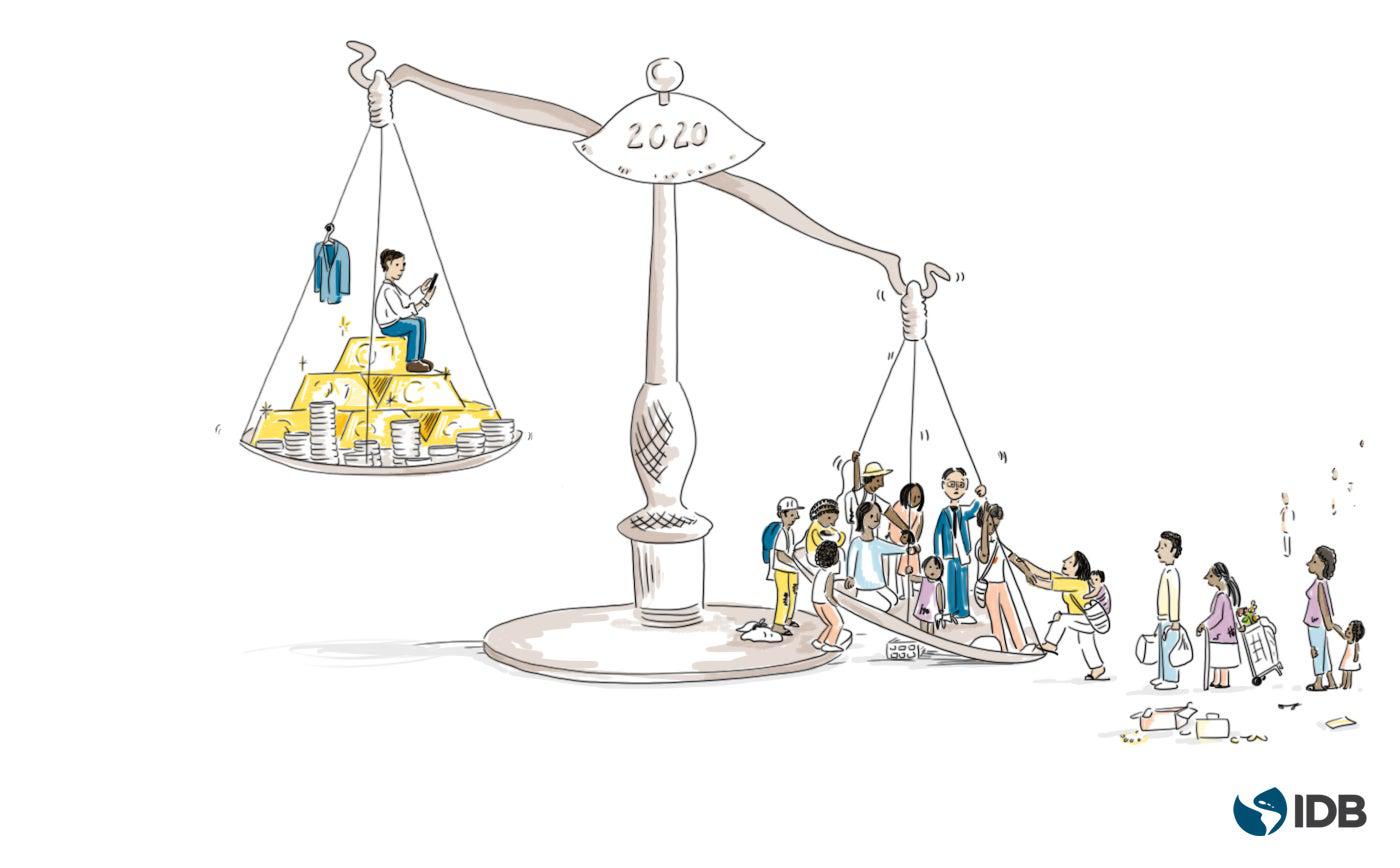
Understanding the Foundations of Inequality in Mathematical Logic
The exploration of inequalities within mathematical logic reveals more than mere numerical relationships; it unveils the underlying principles that govern reasoning itself. In this light, we can examine the seemingly innocuous statement 1 < 1. At first glance, this assertion appears categorically false since a number cannot be less than itself. However, delving into the realm of logical paradoxes illustrates how definitions and contextual framing can twist our understanding of such basic truths. It beckons the question: what assumptions underlie our interpretation of numerical comparisons, and how might alternative frameworks of logic allow for unexpected interpretations of inequality?
To further dissect the foundations of this paradox, we can contrast classical logic, where the law of non-contradiction reigns supreme, with frameworks that embrace ambiguity or multi-valued logic. Consider the following aspects that inform our understanding of inequality:
- Definitional Clarity: What does “less than” truly encompass?
- Symbolic Representation: How do symbols encode meaning within logical constructs?
- Contextual Influence: In what ways do situational variables alter our perceptions of logical assertions?
| Logical Framework | Interpretation of 1 < 1 |
|---|---|
| Classical Logic | False |
| Multi-Valued Logic | Potentially True in Specific Contexts |
| Contextual Logic | Dependent on Additional Parameters |
Understanding these nuances can illuminate how deeply embedded notions of equality and inequality pervade mathematical logic. Consequently, the case of 1 < 1 serves not only as an intriguing logical exercise but also as a gateway into contemplating the complexities of reasoning itself, challenging us to scrutinize the assumptions we often take for granted in our mathematical discourse.
Examining the Contradictions of the Statement One Less Than One
To unravel the complexities behind the assertion that one is less than one, we must delve into the foundational principles of mathematics and logic. At first glance, the expression $1 < 1$ seems straightforward, encapsulating a fundamental truth: no quantity can be less than itself. Yet, when subjected to rigorous scrutiny, the simplicity of this inequality invites a series of paradoxical reflections. One might ponder scenarios within various mathematical frameworks, such as non-standard analysis or fuzzy logic, where typical boundaries of equality and inequality can blur, leading to intriguing outcomes that challenge our conventional understanding.
This examination is further enriched by insights from philosophical discourse, notably those emanating from Aristotle’s principles of non-contradiction. These principles posit that contradictory statements cannot both be true simultaneously. For example, in contexts where fractional interpretations are applied, such as limits in calculus or probabilistic models, one might encounter constructs that allow for an infinitesimal gap between comparable quantities. To elucidate this notion, consider the following simple table that summarizes possible interpretations of the statement:
| Interpretation | Description |
|---|---|
| Standard Arithmetic | $1$ cannot be less than $1$. |
| Fuzzy Logic | Ambiguity in boundaries allows for $1$ to be approached but not attained. |
| Non-Standard Analysis | Infinities create scenarios where strict inequalities are redrawn. |
This interplay between different mathematical frameworks exemplifies the philosophical depth embedded in seemingly simple numerical statements, highlighting the need for a nuanced approach to logic and reason in mathematical discourse.
Implications of Logical Paradoxes in Philosophical Discourse
The realm of logical paradoxes presents a compelling intersection of philosophy, mathematics, and language, demonstrating how seemingly simple statements can elicit complex interpretations. The assertion “$1 < $1," while evidently false at face value, beckons deeper examination. These paradoxes challenge traditional notions of truth and rationality, prompting scholars to reconsider the foundations of logical reasoning. When engaging with such contradictions, a critical perspective reveals how they can illuminate the limitations of our conceptual frameworks and compel us to explore alternative logics that accommodate paradoxical phenomena. By engaging with these logical anomalies, we unlock a dialogue about the flexibility of truth in cognitive discourse.
Moreover, the implications of such logical puzzles extend beyond philosophical theory into practical applications within economics and decision-making. In a world where financial markets are influenced by perceptions and rhetoric as much as by quantitative metrics, the statement “$1 < $1" exemplifies the disconnect between objective values and subjective interpretations. This paradox can be dissected through various lenses, including the role of context and the impact of cognitive biases on financial behaviour. As individuals and institutions navigate ambiguity in economic landscapes, the resonance of such logical contradictions necessitates not only a reevaluation of strategies but also a reconsideration of underlying beliefs about value and reality. The interplay between these concepts provides fertile ground for further research and exploration within both philosophical and economic domains.
Strategic Approaches to Resolving Discrepancies in Mathematical Notation
Resolving discrepancies in mathematical notation requires a careful examination of the underlying definitions and assumptions that dictate the application of symbols. In the case of the expression $1 < 1$, it is essential to understand that mathematical notation is not merely a representation of relationships but also encapsulates the foundational principles of logic and set theory. By adopting a systematic approach to evaluating the conditions leading to inconsistencies, we can identify and rectify potential misinterpretations. This can be achieved through:
- Clarification of Terms: Ensure that all mathematical symbols are clearly defined within the context they are used.
- Contextual Analysis: Scrutinize the surrounding text for contextual clues that might alter the significance of the expression.
- Logical Frameworks: Utilize established logical frameworks to analyze the validity of the relationships proposed by the notation.
Furthermore, employing visual aids, such as truth tables, can effectively illustrate the implications of the notation and enhance comprehension among readers. An example of this can be illustrated in a simplified truth table correspondingly associated with the relations in question:
| Condition | Result |
|---|---|
| $1 < 1$ | False |
| $1 = 1$ | True |
| $1 > 1$ | False |
This structured analysis not only aids in identifying discrepancies but also fosters a rigorous mindset towards the evaluation of mathematical assertions, ultimately bridging the gap between notation and logical reasoning.
The Conclusion
the exploration of logical paradoxes, particularly the intriguing case of (1 < 1), underscores the complexities and nuances inherent in mathematical reasoning and philosophical discourse. This paradox not only challenges our conventional understanding of inequality but also invites a deeper investigation into the foundations of logic itself. By engaging with the core assumptions that govern mathematical relationships, we are compelled to reassess the parameters we often take for granted. This examination serves as a reminder of the richness of inquiry within mathematical logic and the potential for unforeseen implications that arise when we confront paradoxical statements. As we continue to dissect these logical conundrums, it becomes evident that they are not mere intellectual curiosities, but essential elements in our pursuit of knowledge and understanding in the realms of mathematics and philosophy. Future investigations into logical paradoxes will undoubtedly yield further insights, encouraging a more robust dialogue among scholars as we collectively navigate the labyrinth of reasoning that defines these compelling anomalies.