

 DAN: The Quantity Theory of Money is a theory that states that the amount of money in circulation is directly proportional to the price level of goods and services. This theory was first proposed by the Polish astronomer Nicolaus Copernicus in 1526. The theory states that when the amount of money in circulation increases, the prices of goods and services also increase. This is because the increased money supply allows people to purchase more goods and services, thus driving up prices. The Quantity Theory of Money is an important concept in economics and is used to explain the relationship between money supply and inflation. It is also used to explain the effects of changes in the money supply on the economy. The Quantity Theory of Money is an important tool for economists and policymakers to understand the effects of changes in the money supply on the economy. It is also used to explain the effects of changes in the money supply on the price level of goods and services. The Quantity Theory of Money is an important concept in economics and is used to explain the relationship between money supply and inflation. It is also used to explain the effects of changes in the money supply on the economy. The Quantity Theory of Money is an important tool for economists and policymakers to understand the effects of changes in the money supply on the economy. It is also used to explain the effects of changes in the money supply on the price level of goods and services.
When Nicolaus Copernicus formulated his revolutionary heliocentric model of the cosmos in the 16th century, it was a groundbreaking scientific discovery that changed the way people viewed the earth’s place in the universe. It wasn’t until more than 400 years later, in the 1950s, that a manuscript written by the famous astronomer was unearthed, revealing his little known insight into economics and money: The Quantity Theory of Money. This article delves into this secret theory and its implications.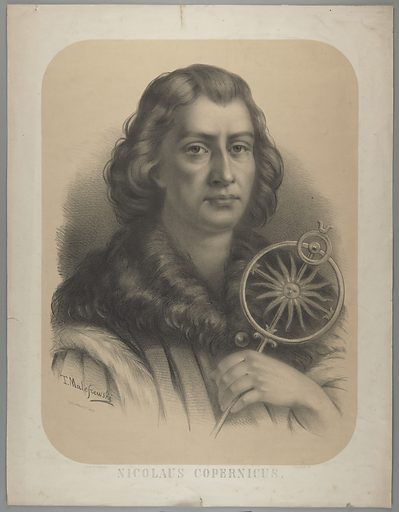
1. How Copernicus Discovered a Forgotten Theory of Money
In the early 1500s, Polish astronomer Nicolaus Copernicus rediscovered a forgotten economic theory that had been around for centuries, known as the ‘Quantity Theory of Money’. Copernicus was having difficulty understanding the variations in grain prices and wrote a treatise which proposed the idea that it wasn’t supply and demand that determined the value of a currency, that it was instead the amount of currency in circulation that determined its worth.
Today, the Quantity Theory of Money is again being put forth as a viable economic theory and is seen as a valuable tool for understanding how to implement appropriate monetary policy. It works on the supposition that when the amount of money in circulation increases, the overall value of the currency decreases – conversely, if the amount of money being circulated decreases, its value increases.
The Quantity Theory of Money has been useful in understanding how different economic scenarios can play out, and it provides a valuable tool in analyzing the pros and cons of various types of government spending. It also gives insight into how changing the money supply can have a direct, measurable effect on economic activity.
- Copernicus was the first to re-discover the Quantity Theory of Money
- The Quantity Theory of Money states that the amount of money in circulation affects its value
- It provides a useful tool for analyzing impact of economic policies and money supply changes.
2. The Quantity Theory of Money: A Brief History
The Quantity Theory of Money has been around since the 17th century. It was first proposed by the famous French economist Jean-Baptiste Say in the early 1800s. Later on, the theory also became popular in the UK and US, with many economists like David Hume, Thomas Malthus, and even John Maynard Keynes being proponents of it.
The basic concept of the Quantity Theory of Money is that changes in the money supply lead to changes in the prices of goods and services. This economic theory states that when the money supply increases, prices go up proportionally. On the other hand, when the money supply decreases, prices go down proportionally.
The key principle that underlies the Quantity Theory of Money is that of monetary equilibrium. According to this principle, the price level is determined by the quantity of money available in the economy, the velocity of circulation, and the total money supply. Hence, when the quantity of money is fixed, the only way for prices to change is for the velocity of circulation to change. It is believed that by controlling the monetary supply, it is possible to maintain a relatively stable level of prices in the economy.
3. The Relevance of the Quantity Theory of Money Today
The Quantity Theory of Money (QTM) has great relevance in economics today. It states that the overall price level of goods and services is proportional to the amount of money in circulation. Despite its limitations, it remains a central view of how the economy works and has been successfully applied in predicting outcomes in a range of economic circumstances.
Monetary Policy
The QTM is useful in understanding modern Central Bank monetary policy. It implies that inflation is primarily determined by changes in the amount of money circulating in the economy, so therefore, Central Banks manipulate a nation’s supply of money to achieve a desirable level of inflation. Through quantitative easing, asset purchases, and interest rate adjustments, Central Banks increase or decrease the amount of money available in the system.
Analysis and Predictions
The QTM has relevance in economic analysis and forecasting. Changes in money supply can be used to explain changes in the overall price level, exchange rates, and other economic variables. Because of this, economic analysts can use it to make a prediction for a variety of economic outcomes. It can provide insight into the effects of public policy and financial decisions made by businesses.
- The Quantity Theory of Money (QTM) is important in understanding modern Central Bank monetary policy.
- QTM is useful for economic analysis and forecasting, providing insight into the effects of public policy and financial decisions made by businesses.
- Changes in money supply can be used to explain changes in the overall price level, exchange rates, and other economic variables.
4. Investigating Copernicus’ Lost Secret
Nicolas Copernicus, the famous 16th century astronomer and mathematician, is known for his landmark work on heliocentrism and the revolutionary view of a sun centered solar system. Despite his accomplishments, Copernicus kept many secrets, most of which have since been lost to history. But by studying his papers and examining his thoughts, we can uncover some of his unexposed ideas.
Theory #1: Planetary Motion
Copernicus saw the universe as a perfect celestial machine with all nine planets moving in perfect harmony. He surmised that the planets moved in perfect circles governed by a universal law he called “Causal Order of Nature”. He believed that by unlocking this law, he could predict the future position of planets in the Solar System, therefore explaining the intricate details of their orbital motions.
Theory #2: Celestial Music
Not satisfied with his first theory, Copernicus began to investigate the potential connection between music and celestial motion. He theorized that planets moved through “celestial music” orchestrated by an unknown force, and that his Causal Order of Nature was a sort of “harmonious dance” that could be discovered with further investigation. He conducted experiments to quantify the movements of planets and stars and how they interacted to create this unified music of the universe.
Theory #3: Divine Mathematics
Copernicus was fascinated by the idea that the perfect harmony of the universe could be achieved by mathematics. He believed that by combining the principles of mathematics with his Causal Order of Nature, he could explain the universe in terms of universal divine mathematics. He worked on perfecting a system that could form equations and functions to explain the movements of the planets, and his work was even taken up by other scientists and mathematicians from the 17th and 18th centuries.
In light of its historical significance, Copernicus’ lost secret has stoked interest among modern economists and historians over the long-forgotten theory. While his work may still be fully untangled and explored in the future, Copernicus’ valuable contribution to the Quantity Theory of Money will remain a cornerstone of economics.