

The rising influence of digital currencies has led to an increasing level of excitement by investors around the world. Bitcoin is one of the most popular digital currencies with its use and market capitalization steadily growing over the past few years. As the cryptocurrency genre continues to expand, investors have started awakening to the power of data-driven analysis of the digital currency markets. This article looks into Bitcoin’s Market Dynamics, examining On-Chain Trends and Realized Market Capitalization.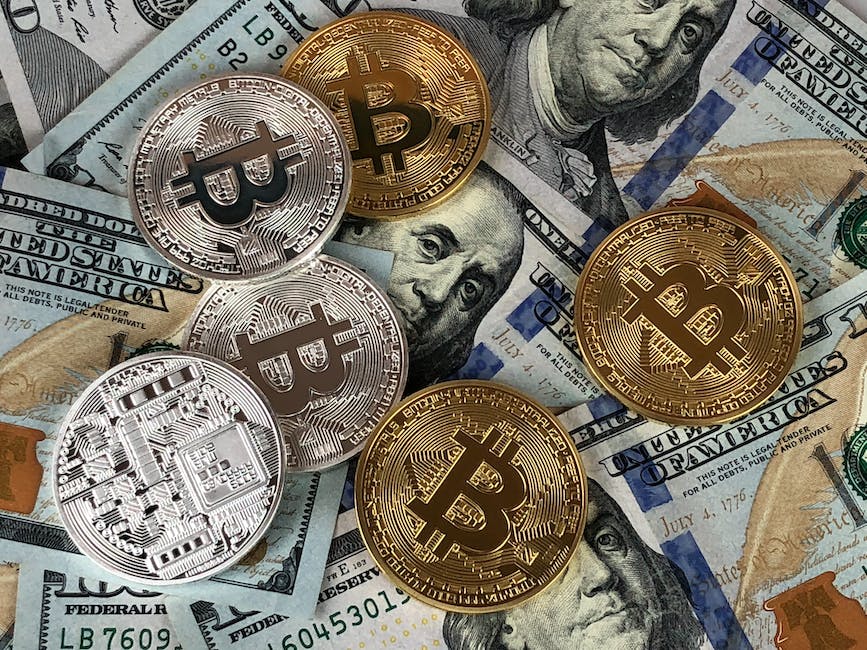
I. Introduction to Bitcoin Market Dynamics
The Bitcoin market can be a difficult place to understand, and understanding the dynamics of it can be even more challenging. In this section, we’ll look at the factors that drive the Bitcoin price and how these influences change over time.
The first and most obvious influence on the Bitcoin market is demand. As the demand for the digital currency increases, so does its value. Investors tend to buy up Bitcoin when its prices are low, resulting in an increase in value. Conversely, when the demand drops, the value of Bitcoin will decrease.
Secondary factors that affect Bitcoin markets include current events, regulatory updates, and general market sentiment. Events such as technological advancements or financial crises can move the Bitcoin market in either direction, depending on how markets read and react to the news. Regulatory updates, whether in the form of new laws or enforcement actions, may also have a huge impact on the Bitcoin market. And finally, market sentiment can cause Bitcoin prices to rise or fall dramatically as investors feel more or less optimistic about the future of Bitcoin.
II. On-Chain Trends in Bitcoin
The adoption of Bitcoin has seen its network grow exponentially since its launch in 2009. But how has its on-chain activity changed over time? Let’s take a look at a few of the key trends:
Continued Increase in Volume: On-chain volume has gradually increased since Bitcoin’s inception. Volume is a measure of the total number of transactions, such as transfers and smart contracts, processed on the network. According to CoinMetrics, monthly transaction volume in Bitcoin has surged from 379,000 in 2018 to 880,000 in April of 2021.
- Processing more transactions per day, resulting in a higher volume of on-chain activity
- Growth of the size of blockchain and increase of nodes to the network, leading to greater decentralization
- The use of various scalability and improvements solutions, such as the Lightning Network and SegWit, to address the issue of transaction cost and speed
Inflationary Supply Structure: Bitcoin’s supply structure is regulated by its inflation rate, meaning that the inflation rate dictates the rate at which new Bitcoin tokens are created and distributed. The current inflation rate is 3.8% per year, and this rate is set to halve in 2024 to 1.8% per year. This means that there is a limit to the number of Bitcoin that can ever exist, and this will decrease over time. This supply structure creates a scarcity effect, which has been seen to lead to increased value of the digital asset.
III. Realized Market Capitalization of Bitcoin
Bitcoin is one of the most valuable digital asset classes in the world. As a result, the market capitalization of Bitcoin has become a key metric for investors to track. In this post, we will look at the historical realized market capitalization of Bitcoin.
A Decade of Growth
Bitcoin’s market capitalization has grown rapidly and steadily in the decade since its launch. According to data from CoinMetrics, the market capitalization of Bitcoin crossed $100 billion in 2021 and has since climbed much higher. As of May 2021, the market capitalization of Bitcoin stood at around $660 billion.
The growth can be attributed to a variety of factors, including:
- Increased institutional adoption of Bitcoin
- The perception of Bitcoin as a safe haven asset
- Publicly traded derivatives of Bitcoin, such as futures and options
- The growth of the wider crypto market sector
Could Bitcoin Reach $1 Trillion?
Given Bitcoin’s recent rally, it is possible that the market capitalization could reach $1 trillion sometime in the near future. This milestone could be achieved if the bullish sentiment around Bitcoin continues, coupled with continued institutional adoption. Such a development would represent an important milestone in the evolution of Bitcoin and the wider cryptocurrency sector.
IV. Bitcoin’s Future Outlook
Bitcoin’s Price Predictions
Despite the complexities that accompany forecasting the market, financial experts and tech investors alike have tried to make predictions for Bitcoin. Many Bitcoin price predictions for 2020 have been breached already. For example, Morgan Creek Capital chief executive marked $100,000 price per BTC by 2021, which is twice higher than the 2019 peak. On the other hand, chief executive of GSR Capital, George Wei, believes that the price of Bitcoin will reach up to $500,000.
The Halving Theory
The so-called Bitcoin Halving, an event that takes place every four years and cuts miners’ rewards for verifying transactions on the blockchain in half, is one of the fundamental principles that Bitcoin is built upon. Historically, cryptocurrency prices have grown shortly after halving events. This means that Bitcoin could be reaching a fair higher value in 2020.
The Influence of Institutions
Increasing institutional involvement has been one of the biggest drivers of the Bitcoin price this year. This includes some of the world’s biggest companies investing in cryptocurrencies, such as Visa, PayPal and Mastercard, as well as major banks investing in blockchain technology. Such measures could prove invaluable in giving digital assets the widely recognized credibility they need to reach the main stream.
- Many Bitcoin price predictions for 2020 have been breached already.
- The Bitcoin Halving has historically increased the Bitcoin price.
- Big companies such as Visa, PayPal and Mastercard have invested in cryptocurrencies.
Overall, the analysis of Bitcoin’s realized capitalization and on-chain trends provides a deeper understanding of the current dynamics of the cryptocurrency market. Going forward, this data could serve as a valuable tool among investors in understanding the potential impact of new capital entering the Bitcoin market. Keeping up to date on the underlying indicators of Bitcoin’s market forces is the key to understanding the ever-evolving nature of the cryptocurrency.