
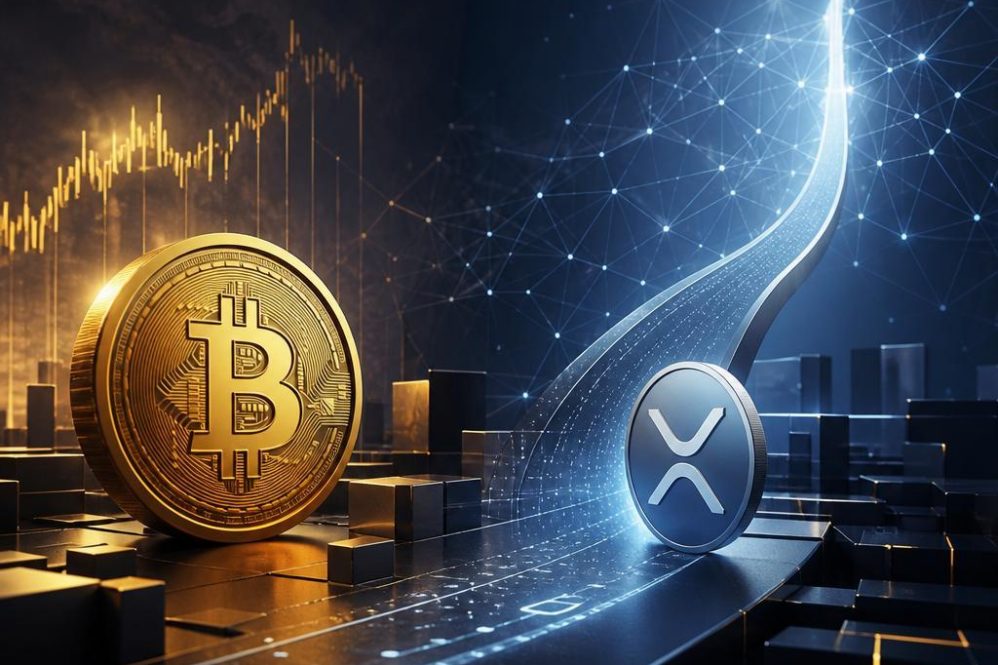
The Case for XRP Over Bitcoin
When considering investments in the digital currency arena, one frequently enough pits Bitcoin against other altcoins like XRP. While Bitcoin is revered for its pioneering status and the security of its blockchain technology, XRP offers a unique proposition centered around its intended role in facilitating fast and cost-effective cross-border transactions. Unlike Bitcoin, XRP’s creators designed the cryptocurrency with the global financial system in mind, aiming to solve real-world pain points in international payments and remittances. This purpose-driven design sets XRP apart from the speculative nature that often surrounds Bitcoin.
The XRP Ledger operates on a different protocol than Bitcoin’s proof-of-work mechanism. XRP transactions are processed through a consensus mechanism that is both faster and more energy-efficient, reducing the environmental impact and transaction times drastically. This efficiency is particularly compelling for financial institutions and companies looking for stable, scalable solutions to customary payment problems. However, the debate around XRP is not without its critics. Skeptics argue that XRP’s centralized governance model and pre-mined supply contrast sharply with Bitcoin’s decentralized ethos and ongoing innovation that emerges from its community-driven approach.
XRP’s potential is evident not just in its technological promise but also in the partnerships and integrations it has inked with various financial institutions worldwide. These strategic collaborations underscore XRP’s utility and acceptance in the mainstream financial sector, which Bitcoin has yet to fully realize on a comparable scale.Yet,it’s crucial to remember that Bitcoin,too,has a resilient community and continues to attract a diverse range of supporters,from tech enthusiasts to institutional investors. This complex interplay of advantages and disadvantages means that while XRP holds its ground with practical applications and efficiency, Bitcoin’s legacy and ongoing innovations keep it a formidable contender in the cryptocurrency cosmos.
Investor Sentiment Shifts Towards XRP
Recent developments suggest that investor sentiment is tilting in favor of XRP, a cryptocurrency with a storied history and a dedicated community. Following a series of positive legal developments and regulatory clarifications, holders of XRP appear more confident, leading to increased trading volume and a more favorable outlook for the token. This shift is particularly noteworthy given XRP’s previously uncertain status in the regulatory arena, which has historically constrained its market performance.
The renewed interest in XRP can also be attributed to its underlying technology and the growing acceptance of decentralized finance (DeFi) principles within the broader cryptocurrency space. XRP’s ability to facilitate fast and efficient cross-border transactions has long been seen as beneficial; however, the current market dynamics are highlighting these attributes more prominently than ever before. several partnerships and integrations with prominent financial institutions have bolstered XRP’s credibility and utility, making it an appealing choice for investors seeking stable growth amidst market volatility.
Despite the positive sentiment, investors are advised to stay cautious. The cryptocurrency market remains volatileand XRP is not immune to broader industry fluctuations. regulatory environments around the world are dynamic and can have a significant impact on individual tokens like XRP. Investors should thoroughly research current regulatory frameworks and be prepared for potential shifts that could affect XRP’s performance and value. Ultimately, while the sentiment shift is promising, it is indeed crucial to maintain a balanced view and consider both the potential benefits and challenges associated with investing in XRP.
Technical Advantages Powering XRP’s Surge
Recent developments in the cryptocurrency arena suggest that XRP may be on the verge of a significant shift, driven by a combination of technical factors and market dynamics. One of the key elements fueling this potential surge is the unique architecture of the XRP Ledger. Unlike many other cryptocurrencies that rely on proof-of-work or proof-of-stake consensus mechanisms, XRP operates on a patented consensus protocol designed for faster transaction times and lower fees. This approach positions XRP to handle significant volumes of transactions efficiently, an advantage that could be crucial in the rapidly expanding marketplace of financial services.
the integration of XRP into various financial applications and platforms is gaining traction. Banks and payment companies looking to simplify cross-border transactions are increasingly examining the benefits offered by XRP’s scalability and speed. This real-world applicability not only bolsters XRP’s standing within the cryptocurrency community but also broadens its appeal to traditional financial institutions. As more players in the financial sector adopt and integrate XRP, the ecosystem grows, creating a positive feedback loop that could drive adoption and utility further.
Despite these promising signs, it’s critically important to note the challenges that XRP faces. Regulatory scrutiny remains a significant hurdleand legal issues can affect investor confidence and market liquidity. while XRP’s technical strengths are clear, they must also compete with a growing list of alternative solutions offering similar features. The market’s shift towards more utility-driven coins and the rise of decentralized finance (DeFi) projects have also cast a spotlight on different approaches to solving similar problems. Nonetheless,as XRP continues to evolve and address these challenges,its potential position in the cryptocurrency landscape remains an area of keen interest and active discussion.
The Regulatory Edge XRP Holds Over Bitcoin
XRP, the native token of the Ripple platform, often finds itself in the crosshairs of regulatory scrutiny, yet it has carved out a niche by aligning with regulatory clarity. Unlike Bitcoin, which remains a regulatory gray area in many jurisdictions due to its classification as a security or a commodity, XRP operates under a set of clearer guidelines. Ripple has actively engaged with regulatory bodies, aiming to establish XRP as a form of payment innovation rather than a speculative asset, which has helped in navigating through legal uncertainties more efficiently.
Regulatory clarity has its advantages; for XRP, this means more stable relationships with financial institutions and clearer pathways to integrate with traditional banking systems. Ripple’s focus on global payments has led to its token being seen more as a utility tool within a regulated financial framework, thus reducing the risks associated with speculative use of cryptocurrencies. This approach by Ripple has also created a blueprint for other digital assets, showing how aligning with existing regulations can facilitate broader acceptance and integration within the financial world.
Though, it’s critically important to note that XRP’s regulatory edge doesn’t guarantee immunity from future legal challenges. The evolving nature of financial regulations globally means that what is clear today could shift tomorrow. Similarly,while Bitcoin’s lack of clear regulation has made it a symbol of individual financial freedom,it also subjects it to more unpredictable legal landscapes and greater scrutiny in terms of compliance and operational risks for businesses. Despite this, XRP’s strategic engagement with regulatory frameworks positions it uniquely to navigate regulatory waters effectively.