
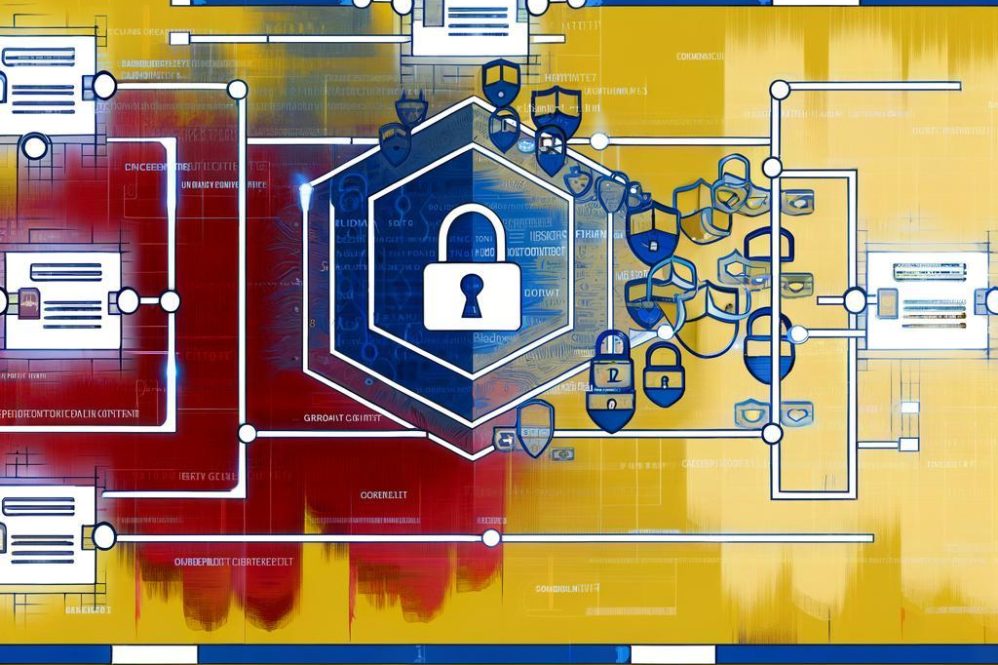
Decentralized Client Architecture and Relay Ecosystem: data flows, relay roles, attack surfaces, and resilience strategies
The protocol implements a minimal client-relay topology in which end-user software holds cryptographic identity and relays act as ephemeral storage and routing agents. Clients create and sign discrete events with a private key; those events are assigned deterministic identifiers and are propagated to one or more relays via persistent WebSocket connections or equivalent transports. Subscriptions are expressed as filter queries and relays respond by returning matching events; integrity and origin are verified by clients through cryptographic signatures, while confidentiality is not implicit in the base data flow and must be layered separately. This separation of identity, transport, and storage simplifies client logic but shifts many operational concerns-indexing, persistence, and availability-to the relay layer.
The relay ecosystem exhibits differentiated roles and attendant threats. Common relay types include:
- Public feed relays that prioritize broad distribution and high read throughput.
- personal/private relays used by single operators for archival and control.
- Topic-specialized relays that enforce thematic indexing or moderation rules.
- Indexer relays designed to provide rich queryability and analytics.
Key attack surfaces arise from this role diversification: censorship and selective withholding by relays, Sybil and replication attacks that amplify malicious nodes, traffic correlation linking IPs to identity-derived public keys, DoS against resource-constrained relays, and metadata leakage through subscription patterns. Even though events are cryptographically authenticated,adversaries can still disrupt availability,deanonymize users,or introduce stale or misleading timelines by manipulating relay behavior.
Mitigation requires layered resilience: clients should adopt multi-relay publication and subscription, randomized relay selection, and client-side verification of event provenance and temporal order. Additional strategies include opportunistic use of encrypted channels and NIP-based encrypted direct messages for confidentiality, relay reputation systems and attestation logs to detect and isolate misbehavior, and distributed archival relays or content-pinning services to prevent single points of loss. Longer-term enhancements that would materially improve privacy and robustness include multi-path publishing with threshold signing, privacy-preserving revelation (e.g., DHTs with selective query routing), encrypted indices to reduce subscription leakage, and optional use of anonymity networks (Tor/ONION) for transport-level unlinkability. Taken together, these measures balance the protocol’s simplicity with practical defenses against censorship, correlation, and availability attacks while preserving the end-to-end verification guarantees that are central to the design.

Cryptographic Key Management in Nostr: secp256k1 key lifecycle, secure storage, rotation, recovery, and threat-model-driven policies
The secp256k1 keypair used by clients is treated as the primary cryptographic identity: the private scalar is a 32‑byte secret and the corresponding x‑only public key is encoded by clients as hex or bech32 (commonly rendered as npub). Generation must originate from a cryptographically secure entropy source or a deterministic seed derivation (e.g., a BIP‑39 mnemonic used intentionally by the user), and signatures are produced with a Schnorr‑style scheme compatible with secp256k1. Lifecycle stages that must be explicitly managed include key generation, local usage for event signing, selective export (for delegated or multi‑key workflows), rotation, and eventual archival or destruction. Best practices in each stage depend on measurable risk: such as, generation on an air‑gapped device with hardware RNG reduces the risk of remote exfiltration, whereas deterministic seed derivation eases recovery at the cost of a single point of compromise.
Secure storage and rotation policies are primarily engineering tradeoffs between usability, continuity of identity, and attack surface. Recommended storage modalities, listed in approximate order of increasing tamper‑resistance, include:
- encrypted keystore files protected by a high‑entropy passphrase;
- platform keystores and secure enclaves (TEE) on mobile and desktop OSes;
- hardware wallets or dedicated HSMs that keep the private scalar non‑exportable.
Rotation must be treated as a continuity problem: because reputation and addressability in the network are pubkey‑centric, key replacement should be accompanied by a cryptographically signed rotation statement published to relays that links the old and new pubkeys (signed by the old key) and by propagation strategies to inform followers and discovery services. For low‑risk uses, prefer short‑lived ephemeral keys for relay sessions or automated clients; reserve hardware‑backed keys for high‑value identity and long‑term attestations.
Recovery and policy design should be threat‑model driven: identify adversaries (remote compromise, physical coercion, relay or developer compromise, or targeted correlation) and select mitigations accordingly.Practical recovery options include offline encrypted mnemonic backups, geographically separated paper or steel backups, and threshold/shamir schemes for distributed recovery when available; for highly sensitive identities, consider threshold Schnorr or multi‑party signing where supported. Policy elements to encode into clients and user guidance are: least‑privilege key usage (separate keys for posting, automation, and administrative actions), explicit revocation/rotation protocols (signed mapping events and broadcast procedures), and auditability and rate limiting (local logging of signing operations and optional transaction caps). Together these controls balance the imperatives of censorship‑resistance, continuity of identity, and resilience against practical compromise scenarios.
Message Privacy and Encryption mechanisms: evaluation of NIP-04 end-to-end encryption, metadata leakage vectors, and practical alternatives for confidential messaging
NIP-04 implements end-to-end confidentiality by deriving a symmetric key from an elliptic-curve Diffie-Hellman (ECDH) exchange on secp256k1 and using that key to encrypt direct-message payloads. In practice, many clients derive the shared secret, hash it to a 32‑byte key, and then apply an AES-based cipher before base64 encoding the ciphertext. This approach provides a straightforward confidentiality primitive but suffers from two architectural limitations: first,the specification leaves cipher mode and associated integrity checks under-specified,which has led to interoperable implementations that do not consistently provide authenticated encryption; second,the single ECDH-derived symmetric key per conversation offers limited forward secrecy unless ephemeral keys or per-message key derivation are adopted. as an inevitable result, NIP-04 as commonly deployed yields confidentiality against passive relay operators but only partial protection against active tampering, key compromise, or long-term surveillance unless clients augment the protocol with integrity and forward-secrecy mechanisms.
Metadata exposure remains the dominant privacy surface even when message contents are encrypted. Relays and network observers can correlate activity using a variety of easily observable signals; these include:
- Public key visibility: senders and recipients are represented by public keys in cleartext, enabling social graph reconstruction.
- Timing and volume: precise timestamps, message frequency and size permit correlation attacks and behavioral fingerprinting.
- Relay subscriptions and tags: explicit recipient tags, relay subscriptions and event IDs reveal routing and association patterns.
- Network-layer metadata: client IPs, TLS session characteristics and long-lived connections to relays expose topological information independent of payload encryption.
These vectors imply that encrypting payloads alone dose not prevent deanonymization: adversaries who control or observe relays can still infer relationships, causality and conversation membership from non-content signals.
Practical mitigations and option designs should therefore treat confidentiality and metadata-resilience as distinct problems. Recommended countermeasures include adopting authenticated encryption with associated data (AEAD) such as AES-GCM or ChaCha20-Poly1305 to ensure integrity and explicit AEAD provenance, and incorporating ephemeral keys or a ratcheting scheme (e.g., Double Ratchet or MLS for groups) to attain forward secrecy and post-compromise recovery. To reduce metadata leakage, clients and relay protocols can use batching, randomized delivery delays, message padding, multi-relay mirroring, and optional anonymity networks (Tor or tunnelled connections), while exploring blinded or one‑time recipient identifiers to avoid persistent public-linkage. In trade-off terms,these enhancements increase complexity and resource costs and may hinder discoverability and spam moderation; therefore implementation choices should be guided by threat modeling,with high-privacy deployments favoring ratcheting + AEAD + network-layer anonymity and mainstream deployments balancing usability with selective metadata minimization.
Security Trade-offs and Operational Recommendations: relay selection, metadata minimization, auditability, hardening practices, and recommended deployment controls
Operational choices around which relays a client uses embody a fundamental trade-off between availability, latency, and privacy. Choosing many geographically and administratively diverse relays increases message availability and reduces single-point failures, but it amplifies metadata dispersion and raises the probability of correlation attacks by colluding relays. Conversely,relying on a small set of trusted relays reduces the attack surface for metadata leakage but concentrates trust and decreases censorship resistance. Practical mitigation strategies include selective replication (subscribe to multiple relays for critical events only), end-to-end encryption of private payloads (NIP-04 or equivalent), and using ephemeral keys or per-channel keys to limit long-term linkability. these measures reduce the information exposed to relays while accepting higher complexity in key management and potential increase in latency from multiplexed connections.
Maintaining auditability without sacrificing privacy requires intentional instrumentation and cryptographic hygiene. Clients should validate event signatures and deterministic IDs locally to preserve non-repudiation while recording a minimal, privacy-preserving audit trail. Audit logs must be designed to capture verification outcomes and relay identifiers without retaining full message content or long-lived metadata fields. Hardening best practices include isolating private key material in secure enclaves or hardware-backed keystores,enforcing strict input validation on received events to mitigate injection or resource exhaustion attacks,protecting transport channels with TLS for WebSockets,and enabling automated integrity checks for dependency and binary updates. Penetration testing and cryptographic review cycles should be scheduled regularly to detect logic errors in encryption, signature handling, and replay protections.
Recommended deployment controls emphasize defense-in-depth and least-privilege principles. Implementing these controls reduces operational risk while accommodating Nostr’s decentralized architecture:
- Secret management: store seeds/keys in HSMs or OS-keystore backends; rotate keys and backup encrypted key material off-line.
- Network controls: use network segmentation, egress filtering, and circuit-breaker rules to limit exposure to malicious relays and reduce correlation vectors.
- Runtime hardening: run clients in minimal privileged containers, enable address space layout randomization (ASLR), and apply kernel-level mitigations.
- Observability and response: collect verification-only telemetry,monitor relay behavior for anomalies,and maintain incident playbooks that preserve user privacy during investigations.
- Operational policies: enforce secure default configurations, mandatory updates, reproducible builds, and third-party relay vetting criteria.
these controls should be tailored to the threat model of the deployment (individual user, application operator, or high-value account), balancing privacy, resilience, and operational complexity.
In sum, the Nostr protocol client exemplifies a deliberately minimal, client-centric approach to decentralized social networking: lightweight clients generate and cryptographically sign events, while a loose network of relays stores and propagates those events according to client-driven subscriptions. This architecture yields clear advantages – simplicity, interoperability, and resistance to single‑point censorship - but it also creates precise security and privacy trade‑offs. Reliance on untrusted relays concentrates metadata exposure (who subscribes to which feeds, which relays see which events), and the default model does not provide universal end‑to‑end confidentiality or forward secrecy for user content.
Mitigations are available and should be pursued along two complementary axes. First, cryptographic and client‑side measures – hardware‑backed key storage, user‑pleasant key backup and rotation, standardized end‑to‑end encryption for private messages, and optional use of ephemeral keys or forward‑secret key agreement – reduce the impact of key compromise and limit content exposure. Second, network and protocol enhancements – multi‑relay publication, relay reputation and attestation mechanisms, query privacy techniques, and opportunistic metadata minimization - can improve resilience and reduce the information relays can observe or correlate. Operational controls such as authenticated relay policies, rate limiting, and transparent logging further strengthen the ecosystem.
Looking forward, the most productive path combines incremental technical hardening with community governance and standardization. Formal threat modeling and empirical measurements are needed to quantify metadata leakage and assess the performance cost of stronger privacy mechanisms. Parallel work on developer tooling, audited reference clients, and clear NIP (Nostr Betterment Proposal) specifications will help align implementations on secure defaults that preserve the protocol’s core simplicity.
Ultimately,Nostr’s value proposition rests on a balance: preserving the protocol’s low‑complexity,client‑centric model while implementing targeted cryptographic,architectural,and operational improvements that materially raise the bar for abuse and surveillance. Continued coordination among researchers, implementers, and operators – guided by rigorous analysis and real‑world testing – is essential to realize a system that is both resilient and respectful of user privacy. Get Started With Nostr