

As Bitcoin continues to grow in popularity and increasingly widespread adoption, more attention is being paid to the mempool – the repository of unconfirmed transactions. In a new series, the Bitcoin Optech organization has released information and insights into mempool behavior and how it relates to transaction confirmation policies. In this article, we’ll take a look at this new initiative and how it could benefit Bitcoin users.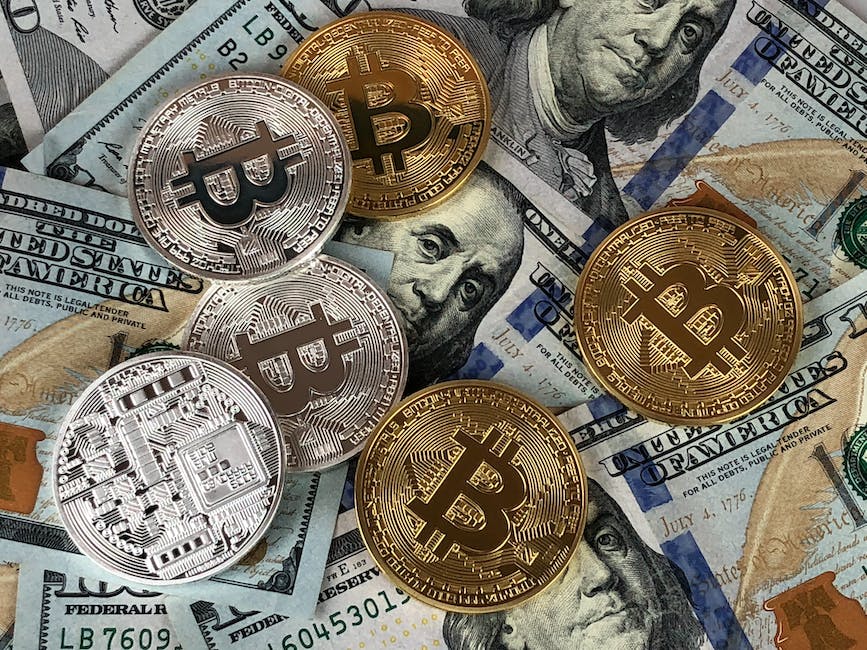
1. Understanding Bitcoin’s Transaction Process: Exploring the Crypto Mempool
In the world of digital currencies, understanding Bitcoin’s transaction process is essential. Bitcoin transactions must be verified by miners before being added to the “crypto mempool”—an ever-visiting list of recent transactions waiting to be confirmed.
For miners to confirm these transactions, they must use specialized computer hardware to solve the cryptographic calculations that determine which transactions will be added to the mempool. As miners are rewarded for their work, a transaction fee is paid to miners if funds are sent from one Bitcoin wallet to another. This fee varies depending on the size of the transaction, such as the amount of data included in it.
To check the current mempool status, be sure to look up the Cryptocurrency mempool exposer website. This will provide live updates of recent transactions and their status, as well as how much data is currently stored within the mempool. It will also detail the current “miner’s fee” that must be paid in order for a transaction to be confirmed.
- Cryptocurrency mempool exposer website: Gives live updates on recent transactions, mempool status, miner’s fee and transaction size.
- Transaction fee: Paid for miners when funds are sent from one Bitcoin wallet to another.
- Cryptographic calculations: Determine which transactions are added to the mempool.
2. The Current State of Bitcoin’s Transaction Confirmation
Confirmation time
Botcoin’s network utilizes an algorithm called Nakamoto consensus to maintain the integrity of the blockchain ledger and confirm current network transactions. Current estimates show that the average confirmation time for Bitcoin transactions is slightly under 10 minutes per transaction. This confirmation time has generally remained constant over the past few years, though it has varied slightly depending on network congestion.
Besides average confirmation times, users can also observe the number of confirmations each transaction receives. The number of confirmations is the number of blocks that have been added to the blockchain ledger after the transaction has been broadcasted. Generally, a transaction is considered to be fully confirmed if it receives six confirmations, however, for smaller amounts, this can vary.
Fees
Transaction fees are usually included as an incentive for miners to include transactions in the next block, and may change depending on market conditions. This ensures that miners have an incentive to continue to participate in the Bitcoin network and compete with each other to confirm transactions. The fees are set by the user when composing a transaction, with users able to set custom fees or use suggested fees.
3. Analysing Bitcoin Optech’s Policy on Mempool Confirmation
Bitcoin Optech has laid out policies and standards for accelerating transactions on the Bitcoin network. According to their Mempool Confirmation page, Optech has made several recommendations to assist users and developers in attaining faster transaction confirmations.
In particular, Optech has recommended the inclusion of profit-minimizing fees when sending Bitcoin transactions. This involves setting fees that are greater than the current lowest fee rate but still lower than the average fee rate. That way, users can benefit from faster confirmation times without paying too much for the fee. Additionally, they suggest double-spending protection techniques, such as forcing transactions with different addresses to follow different rulesets.
Optech has also advocated for the use of Child-Pays-for-Parent (CPFP) to speed up transaction confirmations. This involves a parent transaction prompting an additional child transaction which pays for the fee of the parent, allowing transactions to be confirmed with a greater fee rate sooner. Lastly, they suggest the re-use of bech32 addresses, which present users with the ability to pay less fees, eliminating unnecessary transaction cost altogether.
- Profit-minimizing fees
- Double-spending protection
- Child-Pays-for-Parent
- Bech32 addresses
4. Moving Towards Faster Transaction Processing with Bitcoin Optech
Bitcoin Optech is an organization whose primary focus is to help modernize the infrastructure of the Bitcoin payment network. This includes helping businesses integrate existing technologies, deploying new software and techniques, making sure that all nodes follow Bitcoin’s consensus rules, and running research to assist current and potential implementations.
The Bitcoin Optech newsletter has become the primary source of information on the industry for participants. The newsletter contains information on current Bitcoin news, technical analysis, guides, upcoming projects, and events. By subscribing to the newsletter, participants get access to the information they need to stay informed on the progress of the payment network and make the most out of their Bitcoin experience.
One of Bitcoin Optech’s main objectives is to lead the way in faster transaction processing with Bitcoin. This includes the integration of advanced technologies like Segregated Witness (“Segwit”), Schnorr signatures, Bech32 addresses, and more. The organization is constantly working to improve the efficiency of Bitcoin payments and making them more secure than ever before. With its combination of knowledge, expertise, and strong community efforts, Bitcoin Optech is helping to move the industry towards a faster and more secure ecosystem.
- Optimizing existing Bitcoin technologies
- Frequely updating current Bitcoin news
- Leading the way in faster transaction processing
Bitcoin Optech’s work with mempools and policy is expected to create tangible benefit for the Bitcoin ecosystem. In particular, confirming transactions more quickly is seen as an important step towards constantly improving scalability, and thus a key part of the road to widespread cryptocurrency adoption. As the work progresses, users of Bitcoin remain in waiting for confirmation on the positive results.