

The digital currency revolution of recent years presents an increasingly intriguing development to the financial world, and none is more mysterious and enigmatic than Bitcoin. Since its inception in 2009, its rapid growth in popularity and traction has been met with various amounts of speculation and scrutiny. To truly understand the root of the cryptocurrency phenomenon, one must continue to unravel the mysteries of Bitcoin.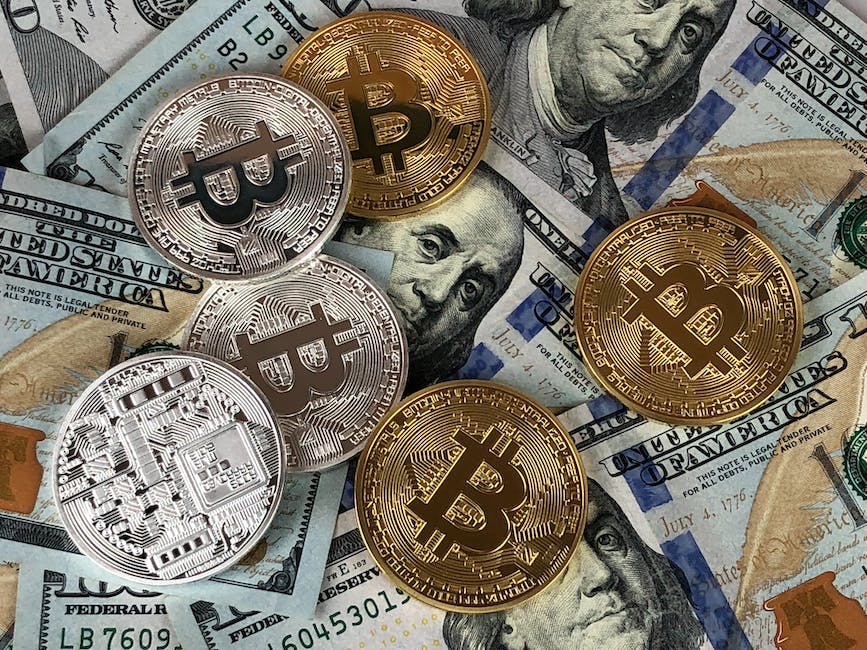
I. Introduction to Bitcoin
What is Bitcoin?
Bitcoin is a revolutionary digital currency that was created in 2008 and introduced to the general public in 2009. It is a form of digital money that is meant to be used in the same way cash is used in everyday life. Bitcoin is a decentralized currency and not controlled by any government or centralized financial institution, meaning it is open to anyone who wishes to use it.
Functionality of Bitcoin
Bitcoin enables users to make payments without the need for a third-party intermediary. This allows it to be both secure and faster compared to traditional payment methods. Bitcoin offers users a variety of advantages such as:
- Efficiency: Bitcoin payments can be made and received within minutes, compared to days or weeks for traditional methods.
- Secure: Bitcoin payments are secured and encrypted using cutting-edge technology.
- Anonymous: Bitcoin payments are anonymous, meaning no personal information needs to be shared to make a payment.
Bitcoin is rapidly becoming a popular payment method and has the potential to revolutionize the way we make payments online.
II. Understanding the Mechanism behind Bitcoin
Before diving into understanding bitcoin, let us first take a closer look at the underlying technology, the blockchain. The blockchain is basically a digital ledger or a record of all the transactions that have been carried out on the bitcoin network. Every time a transaction is made, a ‘block’ is added to the blockchain containing the transaction information.
The power of blockchain is its decentralized nature. It is spread across numerous computers worldwide, meaning that it is virtually impossible to alter or tamper with transaction information. In addition, it is completely secure, thanks to its cryptographic encryption techniques, and can be accessed by anyone in the world.
- Decentralized nature – unlike traditional banking systems, the blockchain stores information on computers all over the world and is run by millions of computers as opposed to one central authority.
- Secure – its cryptographic techniques mean that the data on the blockchain is encrypted and securely stored in the network, making it extremely difficult to tamper with.
- Universal access – anyone in the world can access the blockchain and view the transaction data with the appropriate authorization.
In essence, the blockchain is the backbone of the Bitcoin network and is what allows it to function and be reliable. It allows users to securely send and receive money without the need for a centralized authority.
III. Steps to Acquiring Bitcoin
Step 1: Get a Bitcoin wallet
The first step in acquiring Bitcoin is to get a Bitcoin wallet. A wallet is what stores the Bitcoin you buy and is also the source from which you can send and receive Bitcoin. Wallets can be stored either online in the cloud or on a device (computer or phone) and come with different levels of security. Some wallets also provide functionality to store Bitcoin in offline cold storage. If you plan to trade Bitcoin, we suggest using a secure hardware wallet.
Step 2: Choose a wallet-exchange combo
Once you have chosen a wallet, the next step is to select a wallet-exchange combo. There are several providers who offer wallet-exchange combos such as:
- Coinbase
- CEX.io
- Bitstamp
- Coinmama
- Kraken
These providers enable users to quickly buy, sell, store, and exchange Bitcoin and other cryptocurrencies. Make sure to review the fees and services associated with any provider before signing up. Additionally, you can find a number of exchanges listed at CoinMarketCap to review.
IV. Exploring the Potential of Bitcoin
In recent years, Bitcoin has taken the world by storm, and for good reason. Its significant potential has been the source of excitement for many people around the world. Bitcoin’s potential lies in the way it functions as a currency and payment system, as well as the open source code that enables its existence and usage.
- As a digital currency, Bitcoin has advantages over traditional currencies in terms of speed, portability, and cost. The reduced paperwork and lack of third-party interference makes it incredibly efficient. Transactions take place quickly and securely.
- The open source code of Bitcoin is a major advantage in comparison to other digital currencies, as it provides transparency and allows users to verify transactions in real time. This reduces the risk of fraud and ensures trust in the system.
- Additionally, Bitcoin utilizes blockchain technology which enables it to be used in a variety of applications, ranging from digital payment systems to secured data storage.
It is clear that Bitcoin has vast potential for various uses. While Bitcoin may not yet be commonly accepted by merchants or banks, it is slowly gaining traction in the financial landscape. There is still much to discover and the possibilities are seemingly endless, and it’s not hard to imagine why Bitcoin has attracted so much attention.
Bitcoin still raises questions for many, but its potential goes beyond providing a secure currency to individuals. Bitcoin has the potential to become an important tool in the global economy, one that can revolutionize the way value is exchanged as we know it. With the continued research from both the public and private sectors, the mysteries of Bitcoin can be tackled and its disruption may soon be felt in our everyday lives.