

What Are Smart Contracts? An Introduction to the Basics
Smart contracts are self-executing agreements with the terms of the contract directly written into code. This digital contract is stored on a blockchain, allowing it to operate in a decentralized manner. The key feature of smart contracts is their ability to automate processes and transactions, reducing the need for intermediaries and enhancing efficiency. The automation results in faster transaction times and greater accuracy since the contracts execute automatically onc the predetermined conditions are met.
One of the major advantages of smart contracts is their security and openness. Because they reside on a blockchain, they inherit the immutable characteristics of this technology. this means that once a smart contract is deployed, it cannot be altered or tampered with, ensuring that all parties involved can trust the integrity of the contract. Additionally, the execution of smart contracts is open to all participants on the network, allowing for full traceability of transactions and actions taken under the contract.
Moreover, smart contracts promote decentralization, wich is a essential principle of blockchain technology. By removing intermediaries,they reduce costs associated with contract enforcement and transaction processing. This shift not only democratizes access to contractual agreements but also enhances privacy since the participants can engage without disclosing their identities to a central authority. The versatility of smart contracts also allows them to be applied across various industries, including finance, real estate, and supply chain management, where programmable agreements can streamline numerous processes.
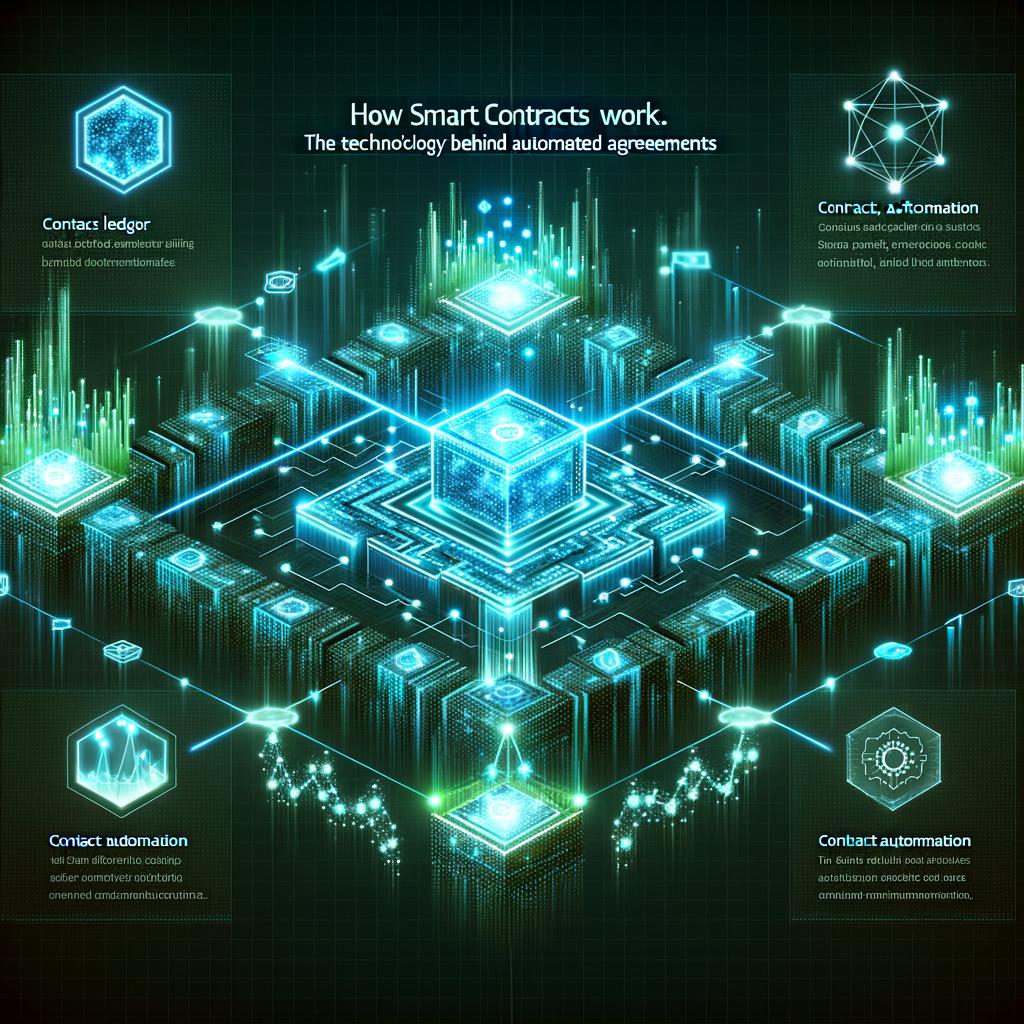
How Smart Contracts Work: the Technology Behind Automated Agreements
The backbone of smart contracts lies in blockchain technology, which provides a decentralized and secure platform for executing agreements without the need for intermediaries. A smart contract is essentially a self-executing contract where the terms are directly written into lines of code. This code resides on a blockchain, a distributed ledger that ensures transparency and immutability. By eliminating the reliance on centralized authorities,smart contracts reduce the risk of fraud and enhance trust among parties involved.
When a smart contract is created, it is indeed programmed with specific rules and conditions that must be met for the contract to be executed. These conditions can include various inputs and triggers that determine when the agreement comes into effect. Such as, a smart contract in a real estate transaction might automatically transfer ownership of a property when payment is confirmed. The use of if/then statements allows these agreements to function autonomously, minimizing the chances of human error and ensuring compliance with the contract terms.
The execution of smart contracts is facilitated by the concept of decentralized applications (dApps),which are built on blockchain platforms like Ethereum. dApps leverage the capabilities of smart contracts to perform complex functions, ranging from financial services to supply chain management. By utilizing a network of computers (or nodes), dApps ensure that all transactions and contractual changes are validated and recorded across the entire network, making it virtually impractical for any single entity to manipulate the outcome. This inherent security feature, coupled with the transparency of blockchain, represents a significant advancement in how agreements can be structured and enforced in the digital age.
Real-World applications: transforming Industries with Smart Contracts
Smart contracts are revolutionizing various industries by automating processes and enhancing transparency. These self-executing contracts, with the terms of the agreement directly written into code, eliminate the need for intermediaries. Consequently, organizations can expect significant time and cost savings. The use of smart contracts can be seen across diverse fields, including:
- Finance: Automating transactions and reducing settlement times.
- Supply Chain: Providing real-time tracking of goods and ensuring quality assurance.
- Healthcare: managing patient records securely and ensuring data integrity.
In the realm of real estate, smart contracts simplify complex transactions by enabling automatic property transfers once predefined conditions are met. Buyers and sellers can avoid customary escrow services, resulting in quicker sales and reduced costs. moreover, the potential for fractional ownership becomes more feasible, allowing multiple parties to invest in properties through tokenization. This innovation could democratize access to high-value real estate investments that were previously reserved for wealthy individuals.
The gaming industry also stands to benefit significantly from smart contract technology. By utilizing blockchain, developers can create in-game assets that players truly own, enabling a new marketplace where items can be traded securely. This shift not only empowers gamers but also creates new revenue streams for developers through smart contract-enabled transactions. As these practical applications gain traction, industries that adopt smart contracts will likely see enhanced efficiency and consumer trust.
As we conclude our exploration of smart contracts, it’s clear that this technology presents a transformative approach to facilitating agreements in a digital world. By automating processes and enhancing transparency, smart contracts have the potential to disrupt traditional legal frameworks across various sectors, from finance to supply chain management.
Understanding the principles and functionalities of smart contracts is essential for anyone looking to navigate the increasingly complex landscape of digital transactions. as these contracts continue to evolve and integrate into our daily lives, staying informed will empower individuals and businesses alike to harness their full potential.
In a world where efficiency and security are paramount, embracing the possibilities of smart contracts may very well be the key to unlocking a new era of trust and innovation. As you embark on your journey into this engaging technology, remember that the future of agreements is here-and it’s smarter than ever.
For further insights and updates on smart contracts and other blockchain technologies, continue to explore our resources and stay ahead in this swiftly advancing digital age.