

The Foundations of Peer-to-Peer Networks: Connecting Without Central Servers
At the heart of peer-to-peer (P2P) networks is a revolutionary concept that allows users to connect directly without the need for centralized servers. This decentralization is pivotal because it reduces the dependency on a single point of failure and enhances the resilience of the network. Each participant, or “peer,” acts both as a client and a server, sharing resources and services with other users. This unique configuration leads to improved efficiency and scalability, as resources can be distributed and utilized more effectively across the network.
The architecture of P2P networks is primarily characterized by the following features:
- Decentralization: Unlike customary client-server models, where one central server handles all requests, P2P networks distribute the data and processing load among peers, reducing potential bottlenecks.
- Direct Communication: Peers can communicate directly with one another, facilitating faster data exchange and lower latency, which is especially beneficial in applications like file sharing and real-time communications.
- Resilience and Redundancy: With data stored across multiple peers, P2P networks are inherently more resistant to outages and attacks. If one peer goes offline, others can still provide the necessary resources.
Security is another critical aspect of P2P networks. Since there is no central authority to manage permissions and authenticate users, many P2P systems implement robust cryptographic measures to ensure secure transactions and data integrity. Additionally, protocols such as Blockchain add layers of clarity and verification, allowing peers to trust one another without relying on third parties. This shift towards decentralization not only democratizes data sharing but also empowers users by giving them more control over their digital interactions.
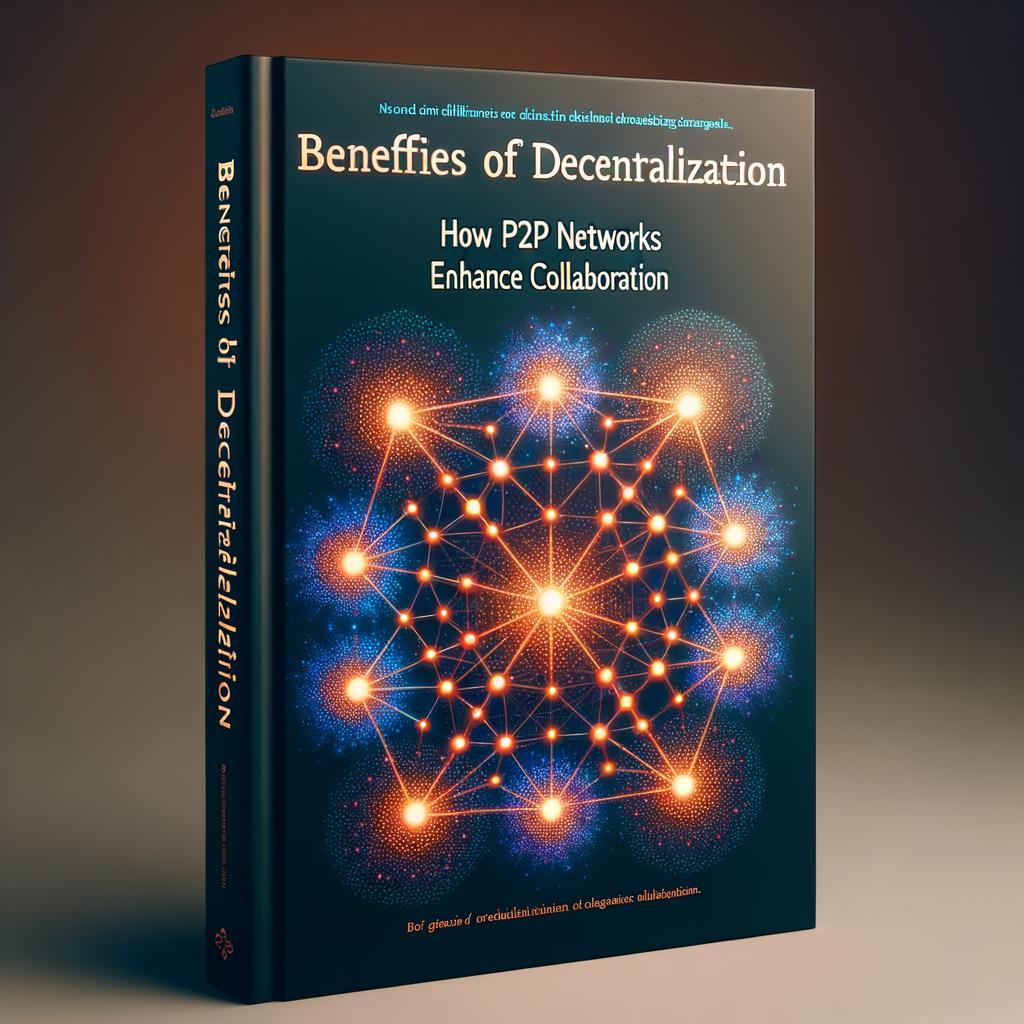
Benefits of Decentralization: How P2P Networks Enhance Collaboration
Decentralization is at the core of peer-to-peer (P2P) networks,facilitating direct communication between users without reliance on a central authority. This structure promotes greater autonomy among participants, allowing them to engage in data sharing and collaboration designed to meet their specific needs.The absence of a central server reduces bottlenecks commonly associated with hierarchical models, leading to more responsive and efficient interactions. In essence, users become both producers and consumers of shared content, fostering an environment where collaboration transcends traditional limitations.
Moreover, P2P networks offer enhanced resilience and robustness.In a decentralized setting, the failure of one node does not compromise the entire system, as multiple nodes can take over the roles of those disconnected. This inherent adaptability not only bolsters reliability but also encourages greater participation since users are more confident in contributing to a system that minimizes the risk of information loss or disruption. The collaborative nature of thes networks ensures that resources remain continuously available, further driving engagement and community-building among participants.
Security is another critical advantage of decentralized P2P networks.With data distributed across numerous nodes,the attack surface for potential cyber threats is considerably broadened,making it more difficult for malicious entities to compromise information. Users can share sensitive files or collaborate on projects with less concern over centralized surveillance or data breaches. Additionally, many P2P platforms implement encryption and other security measures, empowering users to maintain control over their data and enhancing trust in the collaborative processes that define these networks.
Real-World applications: Transforming Industries Through P2P Technology
Peer-to-peer (P2P) technology is revolutionizing a range of industries by enabling direct interactions between users,bypassing traditional intermediaries. One of the most impactful applications is in the realm of finance, particularly through decentralized finance (DeFi). This sector leverages smart contracts on blockchain networks to allow users to engage in lending, borrowing, and trading without relying on centralized banks or financial institutions. The benefits include:
- lower transaction fees: Reduced costs for transfers and trades.
- Increased accessibility: Financial services available to unbanked populations.
- Enhanced transparency: Public blockchain records ensure that all transactions are visible and verifiable.
In addition to financial services, P2P technology is making waves in the sharing economy by facilitating the exchange of goods and services between private individuals. Platforms like Airbnb and Uber have utilized P2P mechanisms to create marketplaces that connect service providers and consumers directly. This model fosters a more collaborative economy while providing benefits such as:
- Flexibility: Users can offer services based on their schedule.
- Economic efficiency: Utilization of underused assets leads to lower costs for consumers.
- Community engagement: Local hosts often provide unique experiences for guests,promoting cultural exchanges.
Moreover, industries such as supply chain management and logistics are harnessing P2P technology to improve efficiency and traceability of products. By allowing direct communication between manufacturers, suppliers, and retailers, P2P platforms streamline operations and reduce delays. This transformation offers several advantages, including:
- Real-time tracking: Enhanced visibility of inventory and shipment status.
- Reduction of fraud: Immutable records on blockchains help authenticate products.
- Cost savings: Lower operational costs associated with intermediaries.
As we conclude our exploration of peer-to-peer (P2P) networks, it is clear that this technology represents a transformative approach to digital communication and data sharing. By leveraging decentralized frameworks, P2P networks empower users to connect directly with one another, facilitating more efficient collaboration and resource utilization. The adaptability and scalability of P2P systems are redefining how we think about networking, impacting various domains from file sharing to blockchain applications.
As we move into a future increasingly driven by digital interactions, understanding the nuances of P2P networks becomes essential for anyone engaged in technology, business, or community-oriented projects. embracing this paradigm not only promotes innovation but also raises important questions about security, governance, and sustainability. Whether you are a tech enthusiast or a professional in the field,the insights gained from this guide will enhance your comprehension of one of the most dynamic and influential aspects of our interconnected world.
In a landscape where traditional models are constantly being challenged, P2P networks stand as a testament to the power of collective synergy. We encourage our readers to delve deeper into this fascinating subject, as the potential of P2P technology continues to unfold, promising exciting developments for years to come.