
Unraveling the Core: What is Entropy in Thermodynamics?
Entropy, a pivotal concept in thermodynamics, serves as a measure of disorder or randomness in a system. It essentially captures the degree to which energy is distributed within a physical system. In thermodynamic terms, as systems evolve, thay tend to move toward a state of maximum entropy, reflecting a natural tendency towards disorder. This tendency can be interpreted through the lens of the Second Law of Thermodynamics, which states that in any energy transfer, the total entropy of an isolated system can never decrease; it can only increase or remain constant, suggesting a one-way street toward chaos.
In practical applications, the manifestations of entropy can be observed in various phenomena. As an example, consider the following examples:
- Heat Transfer: The flow of heat from a hotter object to a cooler one exemplifies a drive towards equilibrium, increasing overall entropy.
- Molecular Motion: Gases,which exhibit more random molecular motion compared to solids or liquids,fundamentally possess higher entropy levels.
- Spontaneous Reactions: Chemical reactions tend to progress in a direction that increases the system’s entropy, reflecting the natural movement toward disordered states.
Entropy also has captivating implications beyond traditional thermodynamics, extending into fields such as information theory and economics.In these disciplines, entropy can represent uncertainty, information richness, or the level of unpredictability within a dataset. As systems evolve—whether they are physical, ecological, or financial—the underlying patterns of entropy offer insights into stability and sustainability, challenging us to contemplate the balance between order and chaos in our interconnected world.
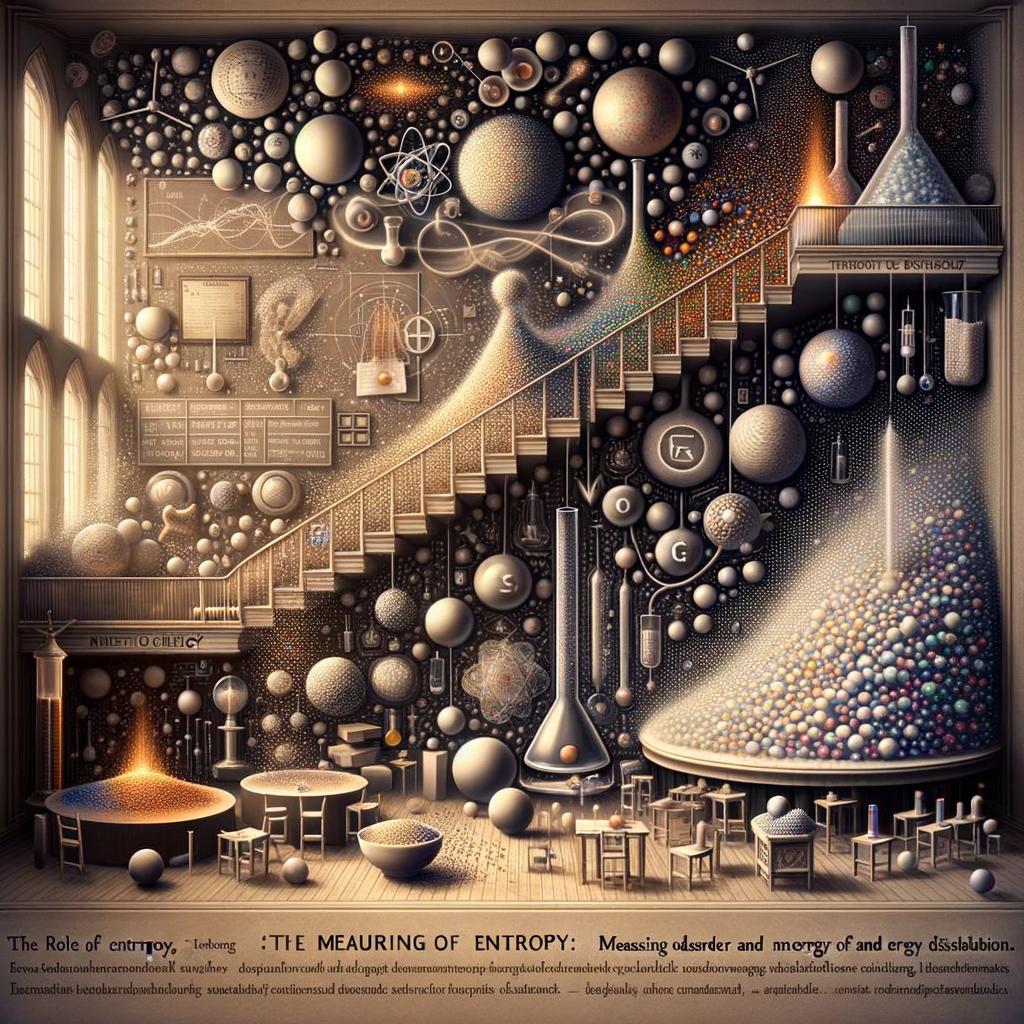
The Role of Entropy: Measuring Disorder and Energy Distribution
Entropy serves as a fundamental concept in various scientific and engineering disciplines, particularly in thermodynamics and information theory. It quantitatively assesses the level of disorder within a system,providing insight into how energy is distributed across that system. In essence, higher entropy indicates greater disorder, while lower entropy reflects a more organized state. Understanding this measurement allows scientists and engineers to predict how systems will behave under certain conditions, thereby influencing design decisions and operational strategies.
In thermodynamics, entropy is crucial in understanding energy transformations.When energy is transferred or transformed, some is invariably lost to disorder, increasing the system’s entropy.This intrinsic tendency towards disorder governs the efficiency of machines and natural processes alike. Here are several key applications of entropy in this context:
- Heat Engines: The efficiency of heat engines is fundamentally limited by the second law of thermodynamics, which states that entropy will always increase in an isolated system.
- Chemical Reactions: entropy helps predict the spontaneity of reactions; reactions that increase entropy tend to occur naturally.
- Phase Transitions: Entropy changes provide insights into phase changes, such as melting and boiling, which involve shifts in molecular order.
In information theory, entropy measures the unpredictability or information content within a dataset. A higher entropy indicates a greater level of uncertainty, which directly affects data compression and security methods. By analyzing the entropy of a message or signal, engineers can enhance algorithms for effective data transmission and storage. Some applications of this concept in information theory include:
- Data Compression: Algorithms can achieve optimal compression by understanding and calculating the redundancy of information based on its entropy.
- Cryptography: High entropy is crucial for secure communications, as it makes it challenging for unauthorized parties to predict or decipher encoded information.
- Machine Learning: Measuring entropy helps evaluate the performance of models, guiding improvements in algorithms for better accuracy and reliability.
Entropy’s Implications: From the Universe to Everyday Life Applications
Entropy, a fundamental concept in the second law of thermodynamics, describes the degree of disorder or randomness in a system.This principle applies not only to physical processes in the universe but also offers profound insights into everyday life. As systems naturally evolve towards greater entropy, the implications extend to various disciplines, including physics, biology, and even social sciences.Understanding entropy helps elucidate phenomena ranging from the behavior of gases to the aging process in living organisms.
In practical applications, the concept of entropy can be observed in several everyday contexts:
- Cooking: The process of mixing ingredients or the breakdown of food during cooking exemplifies an increase in entropy as order is disrupted.
- Economics: Market systems exhibit entropy as resources become dispersed, leading to fluctuations in supply and demand.
- Technology: From data storage to information technology, systems strive to minimize entropy for efficiency, yet they must contend with the inevitable increase in disorder over time.
Moreover, the awareness of entropy encourages a sustainable mindset.In the context of environmental science, recognizing the entropic nature of resource consumption can drive innovation in recycling and renewable energy. By understanding how energy disperses and systems become less ordered, individuals and communities can develop strategies to mitigate waste and optimize resource use, paving the way for a more sustainable future. Embracing the implications of entropy inspires holistic thinking about interconnected systems, urging us to act with foresight in both personal and global contexts.
understanding entropy is not just an academic exercise; it is a vital key to unlocking the complexities of thermodynamics and the natural world. as we navigate through the principles of energy, order, and disorder, we gain insights that extend far beyond the confines of a textbook. From the engines that drive our technologies to the biochemical processes that sustain life, entropy influences a myriad of systems around us. By grasping the nuances of this fundamental concept, we equip ourselves with the knowledge to address some of the most pressing challenges in energy efficiency, climate science, and beyond. As we continue to explore the intricate dance of energy through our universe, let us carry forward this understanding of entropy—a concept that lies at the heart of change and innovation. Embrace the complexity, for in the world of thermodynamics, every measure of disorder holds the potential for new beginnings.