
– The Fundamentals of Bitcoin’s Supply Cap: Exploring the 21 Million Limit
The supply cap of Bitcoin is one of its most defining characteristics, shaping its appeal and practical use as a digital currency. With a maximum limit set at 21 million Bitcoin, this feature not only draws parallels with precious metals like gold but also instills a sense of scarcity that has intrigued investors and analysts alike. Each Bitcoin can be subdivided into 100 million units,called Satoshis,which allow for finer transactions. This subdivision means that the total possible supply of Satoshis reaches an amazing 2.1 quadrillion, providing versatility for microtransactions and everyday use without compromising on its finite nature.
The decision to limit Bitcoin to 21 million coins is fundamentally rooted in the principles of scarcity and monetary policy. Just as governments can inflate their currencies, Bitcoin’s programmed supply cap guarantees that no more than 21 million coins can ever exist.As the mining process slows and rewards halve approximately every four years, the diminishing supply will likely lead to increased demand, especially as more people engage with cryptocurrency. This crucial aspect positions Bitcoin uniquely within the financial landscape, where conventional currencies can be printed at will by central banks, thereby affecting their value over time.
Moreover, the fixed supply cap plays a pivotal role in Bitcoin’s value proposition as a store of wealth. As individuals and institutional investors continually seek a hedge against inflation, the assurance of a capped supply becomes increasingly meaningful. Manny advocates conjecture that bitcoin could possibly simulate the properties of hard assets while offering the advantages of a decentralized digital currency. This combination could lead to transformative shifts in how value is stored and transferred in the digital age, as Bitcoin matures and garners mainstream adoption.
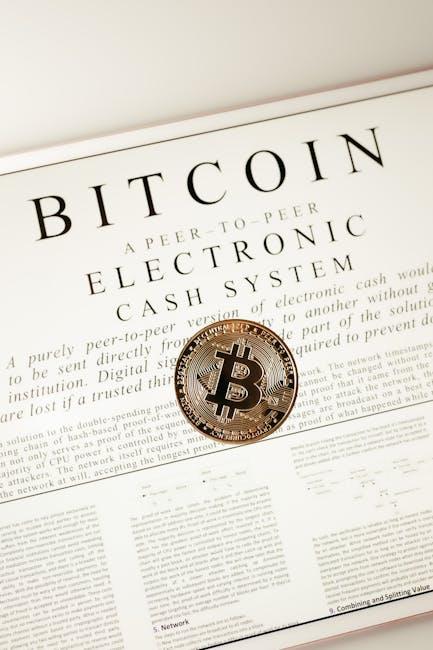
– The Significance of Satoshis: Understanding the Unit of Bitcoin and Its Role in Finite Supply
At the heart of Bitcoin’s economic architecture lies the concept of satoshis, which are the smallest unit of Bitcoin, named after its enigmatic creator, satoshi Nakamoto. Understanding the significance of 2.1 quadrillion satoshis is crucial for grasping the broader implications of Bitcoin’s monetary policy and supply limits. Each Bitcoin is divisible into 100 million satoshis, meaning that the total supply of Bitcoin is capped at 21 million coins, translating into a finite, predefined quantity that echoes the scarcity of precious metals. This capping mechanism establishes Bitcoin not only as a medium of exchange but also as a store of value, akin to digital gold.
The finite nature of satoshis introduces critical implications for value retention and price discovery within the crypto market. As interest in Bitcoin continues to swell, the demand for these digital assets grows; yet, the supply remains limited. This inherent scarcity is expected to drive long-term value appreciation, leading to potential price volatility in shorter timeframes as market dynamics ebb and flow. Factors like adoption rates, regulatory developments, and technological advancements will significantly influence the demand for satoshis, ultimately impacting the price of Bitcoin. Understanding these dynamics is essential for investors and stakeholders navigating this volatile landscape.
Moreover, the granular division of bitcoin into satoshis makes it accessible to a broader audience, allowing for microtransactions that were previously infeasible with traditional fiat currencies.This divisibility is particularly relevant in an era where digital commerce is rapidly increasing. Users can transact in fractions of a Bitcoin, enhancing the liquidity and usability of the asset. As Bitcoin continues to integrate into mainstream finance, the 2.1 quadrillion satoshis become not just a mathematical curiosity but a cornerstone of its potential as a global financial system, making the understanding of satoshis integral to appreciating Bitcoin’s growing role in the economic landscape.
– Implications for investors: How the Fixed Supply of Bitcoin shapes Market Dynamics
Bitcoin’s fixed supply of 2.1 quadrillion satoshis introduces a unique set of dynamics that fundamentally shape investor behavior and market perceptions.As the supply of Bitcoin approaches its maximum limit due to the predetermined issuance schedule, scarcity becomes a pivotal factor influencing value. The economic principle of scarcity dictates that as an asset becomes less available, its perceived value tends to increase. Investors must comprehend that this capped supply not only distinguishes Bitcoin from fiat currencies but also creates a robust incentive for accumulation, leading to potential price appreciation over time. With traditional inflationary currencies losing value, Bitcoin’s fixed supply amplifies its appeal as a hedging tool against inflation.
The implications extend beyond mere price appreciation. Market dynamics are influenced by the *perception of value*, with a finite supply creating increased demand among both institutional investors and retail participants. As Bitcoin adoption increases, the competition for available coins will likely intensify, resulting in higher volatility during crucial trading periods. Moreover, institutional interest has surged, with many entities holding Bitcoin as part of their asset allocation strategies.This growing institutional presence can lead to greater liquidity, but it also raises the stakes for price movements, as large-scale buying or selling can significantly impact market conditions.
Furthermore, the awareness of a fixed supply can shift investor sentiment towards a long-term perspective. Many investors are likely to adopt a buy-and-hold strategy, bolstered by the belief that over time, the scarcity of Bitcoin will translate into enhanced value.With limited selling pressure from long-term holders,markets may experience heightened stability. This paradigm fosters an habitat where short-term price speculation may become less prevalent, allowing for a more lasting growth trajectory. Thus, understanding the mechanics of Bitcoin’s limited supply is crucial for investors as it shapes not only the value but also the behavioral landscape of the cryptocurrency market.
– future Outlook: Navigating the Challenges and Opportunities of a deflationary Asset
The finite supply of Bitcoin, capped at 21 million coins or 2.1 quadrillion Satoshis, raises intriguing questions about its future as a deflationary asset. as the global economy straddles uncertainty and inflationary pressures,the allure of a digital currency with a capped supply grows stronger. This scarcity, however, presents challenges. The demand for Bitcoin may outpace its supply as institutions and retail investors continue to adopt cryptocurrencies. This could lead to greater price volatility, compelling investors to navigate not only the opportunities but also the risks inherent in a deflationary economic model.
Moreover, the deflationary nature of Bitcoin could redefine wealth accumulation and spending behaviors. As holders perceive Bitcoin’s value to appreciate over time, they may opt to hoard rather than spend, leading to reduced liquidity in the market. This hoarding affect could consequently stifle economic activity and transaction volume, resulting in a paradox where the very asset designed to encourage decentralized financial transactions could become a tool for speculation.Consequently, businesses and service providers may need to adapt their strategies for accepting Bitcoin, potentially pivoting towards a “hold and wait” mentality that could hinder mainstream adoption.
On the flip side, the distinct nature of Bitcoin’s supply can drive innovation in digital finance. As scarcity intensifies, solutions such as Layer 2 protocols and decentralized finance (DeFi) platforms become pivotal in addressing transaction efficiency and network usability. These advancements can facilitate a more vibrant ecosystem that mitigates the risks associated with deflation by providing alternative avenues for utility. Furthermore, the evolving regulatory landscape may foster a more secure environment for investors, ultimately bolstering confidence in Bitcoin as a legitimate asset class in both retail and institutional portfolios.
As the conversation around Bitcoin evolves,so does the understanding of its underlying economic principles-most notably,its finite supply characteristic. The 2.1 quadrillion Satoshi limit is not just a trivial detail; it serves as the bedrock of Bitcoin’s value proposition, drawing interest from investors, regulators, and enthusiasts alike. This scarcity mechanism distinguishes Bitcoin from traditional fiat currencies, which can be printed at will, potentially leading to inflation and devaluation.the implications of such a limited supply are profound, influencing everything from market dynamics to long-term investment strategies. As demand continues to rise and the global adoption of Bitcoin increases, understanding this Satoshi allocation becomes imperative for both newcomers and seasoned participants in the cryptocurrency market. The finite nature of Bitcoin may not only help secure its status as a digital gold but also usher in a new era of financial sovereignty.
In an age where digital assets are reshaping the financial landscape, grasping the fundamentals of Bitcoin’s supply cap equips individuals with the tools necessary to navigate this rapidly changing environment. The journey into the realm of cryptocurrency is just beginning; being armed with knowledge about Bitcoin’s Satoshi scarcity may prove invaluable in the years to come.