
The U.S. 30-year Treasury yield has surged past the pivotal 5% mark, a significant psychological threshold, following Moody’s recent decision to downgrade the credit rating of several major banks. this growth raises concerns about fiscal stability and investor confidence, as the rising yields signal increasing borrowing costs and potential economic headwinds. Market analysts are closely monitoring the implications of this rise, notably in the context of government spending and the overarching economic landscape. With interest rates climbing, the potential impact on housing, consumer loans, and overall economic growth remains a key focus for policymakers and investors alike.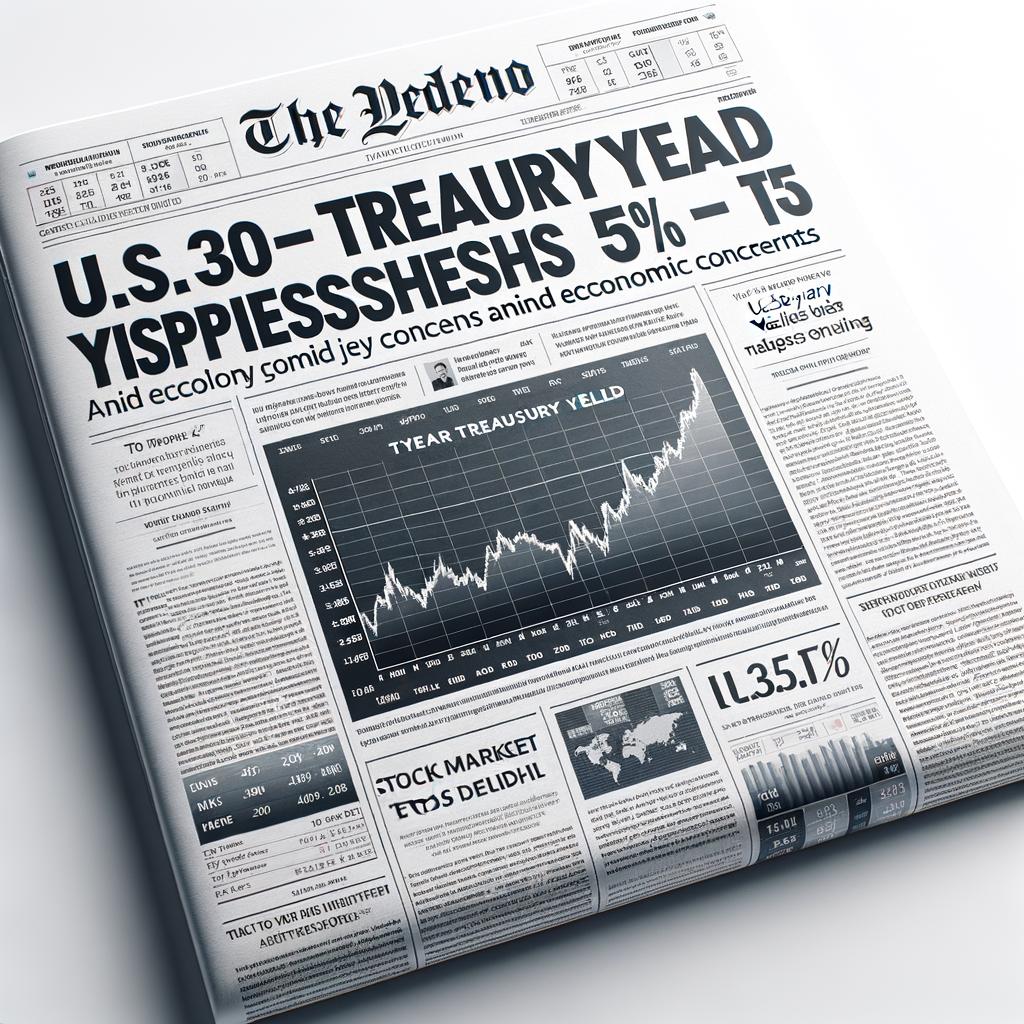
U.S. 30-Year Treasury Yield Surpasses 5% Amid Economic concerns
Recent data indicates that the U.S. 30-year Treasury yield has exceeded the critical threshold of 5%, raising alarms among investors and economists alike. This rise in yield often reflects increased borrowing costs and potential inflation concerns,which can influence various sectors of the economy. As the yield climbs, financial markets are sent into a tailspin, with many market participants reassessing their investment strategies in light of rising long-term interest rates.
Analysts suggest that the surge in the yield is largely driven by persistent inflation worries and shifting Federal Reserve policies. The central bank’s potential moves to combat inflation, including further interest rate hikes, are at the forefront of investor sentiment.Such actions may lead to reduced liquidity in the markets and could dampen economic growth, prompting a reevaluation of long-term financial strategies.
As investors digest these developments, several key indicators warrant close monitoring:
- Inflation Rates: The ongoing inflation narrative may dictate future yield movements.
- Federal Reserve Policy: Upcoming meetings could provide clarity on interest rate trajectories.
- Market Reactions: Stock market performance amid rising yields will be critical to gauge overall investor sentiment.
Understanding these dynamics will be essential for navigating the current landscape and positioning effectively for the months ahead.
Moody’s Rating Downgrade Heightens Fiscal Anxiety
The recent decision by Moody’s to downgrade the credit ratings of several municipalities has ignited concerns regarding fiscal sustainability across various regions. This downgrade is seen as an ominous indicator of potential economic distress, prompting local governments to reevaluate their financial strategies.The implications are vast,affecting everything from borrowing costs to public service funding,and raising alarms among taxpayers and investors alike.
As cities and counties grapple with the fallout from this downgrade, officials are tasked with addressing the underlying issues that prompted Moody’s assessment. Key factors contributing to this shift include:
- rising debt levels: Many local governments have accumulated significant liabilities, raising questions about their ability to service debt amidst revenue fluctuations.
- Pension obligations: Increasing pension costs are straining budgets, forcing municipalities to divert funds from essential services.
- Economic performance: Areas experiencing stagnation or decline in economic activity face challenges in generating sufficient tax revenue.
In response to the downgrade, some municipalities may seek to implement austerity measures, while others might explore innovative revenue solutions, such as public-private partnerships or tax reforms. Though, these approaches carry their own risks and uncertainties, as communities weigh the trade-offs between fiscal responsibility and the need for essential public investments. Stakeholders are urged to remain vigilant, as the ramifications of this downgrade could reverberate through the economy for years to come.
Investors React to Rising Yields and Uncertainty in Government Finances
As investors navigate the turbulent waters of rising yields and uncertain government finances, there is an increasing sense of urgency among market participants. The upward trajectory of bond yields has raised alarms, particularly as it signals potential inflation concerns and the prospect of tighter monetary policies from central banks. This shift has prompted investors to reassess their portfolios, weighing the impact of these macroeconomic factors on various asset classes, especially equities and fixed-income securities.
In response to the fluctuating yields, many are shifting their focus towards dividends and value-based investments. This strategy is particularly appealing as high-yield bonds may no longer provide the attractive returns they once did. Some investors are also looking into choice assets, such as real estate or commodities, which may offer a hedge against the rising cost of living. Additionally, the uncertainty surrounding government finances, exacerbated by ongoing deficits and potential fiscal policy changes, is leading to a cautious approach in risk assets.
Furthermore, the disparity in responses among sectors is becoming increasingly evident. Financial institutions often benefit from rising yields, as they can charge more for loans. Conversely, technology and growth-oriented companies, which typically rely on cheap borrowing for expansion, may face headwinds in this environment. Consumer sentiment and spending behaviors are also under scrutiny, as the impact of government fiscal policies trickles down to household finances. Analysts predict that investor sentiment could remain volatile in the coming months, driven by macroeconomic developments and the evolving landscape of government finances.
the breach of the 5% threshold in the U.S. 30-year Treasury yield, coupled with moody’s recent rating downgrade and rising fiscal concerns, underscores the growing apprehension regarding the nation’s economic stability. investors and policymakers alike must navigate the implications of these developments,as they may significantly influence market dynamics and financial strategies moving forward. As the landscape evolves, close attention to fiscal policies and economic indicators will be essential to understanding the broader financial environment.