

The rise of Bitcoin has ushered in an era of digital resource allocation unlike anything we’ve seen before. As the popularity of Bitcoin has grown exponentially in recent times, it’s essential to understand the global phenomenon that has taken the world by storm. What started out as a currency for transactions on the dark web, is now being used by major businesses and financial institutions all around the world. This article provides an in-depth look at the rise of Bitcoin and its implications.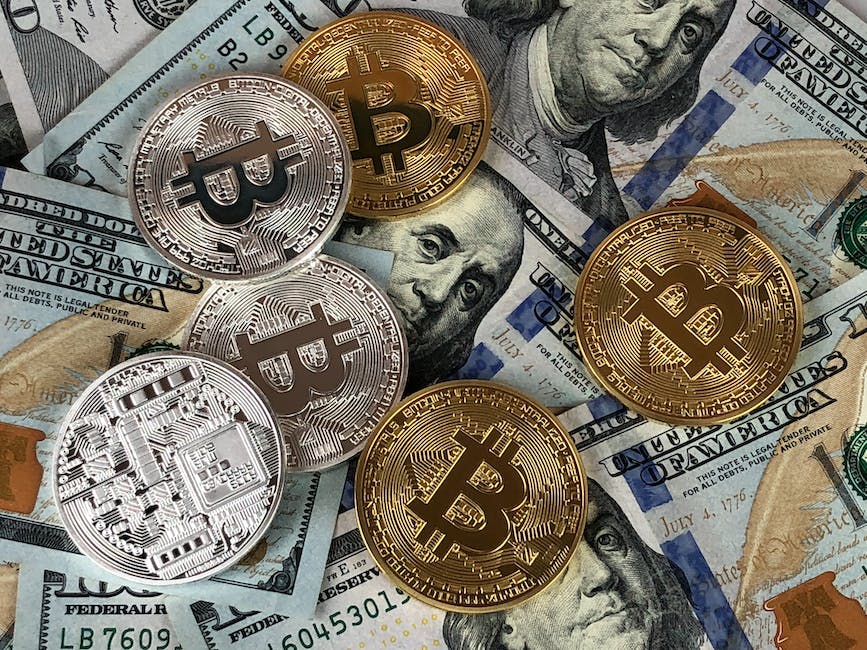
I. Introduction to Bitcoin
Bitcoin was first released to the public in 2009, shortly after the fateful financial crisis. Built on a decentralized, permissionless blockchain network, Bitcoin is the world’s first digital, decentralized currency that enables individuals to transact securely and confidently, without requiring a middleman or third-party intermediary. This form of digital store of value can be accessed anywhere and anytime, providing a great benefit to individuals all around the world.
Some of the main benefits of Bitcoin include:
- Security: Peer-to-peer transactions are secure and encrypted, and the Bitcoin blockchain ledger is immutable.
- Control: Bitcoin eliminates the need for any middleman or third party, providing users with full control of their funds.
- Accessibility: Bitcoin can be accessed from anywhere, anytime, on any device.
As Bitcoin is becoming more widely adopted and accepted, it has now become a true digital store of value that can be easily moved, stored and exchanged without any third-party interference.
II. Evolution of Bitcoin
The launch of Bitcoin in 2009 marked a revolutionary turning point in financial technology. Since then, numerous improvements have been made to the Bitcoin network, allowing for more efficient, secure, and speedier transactions. Here are some of the key advancements made in Bitcoin’s evolution:
- Increased Capacity: Bitcoin blocks have increased in size from 1 MB to 4 MB, resulting in a capacity increase of four times. Transaction speeds can now process up to 4 times more transactions per second.
- Optional Privacy: Bitcoin’s transparency does not have to clash with the anonymity of transactions thanks to the development of wallet technology and the introduction of ring signatures which preserve users’ privacy.
- Faster Payments: SegWit was designed to increase the block size limit on a blockchain network. This enabled faster transaction times of up to four times faster.
Bitcoin also forked in 2017 with the launching of Bitcoin Cash. The latter was designed to increase the block size limit even further, this time to 8 MB, to process even more transactions in every block and reduce the fees. However, compared to segwit, this is only a temporary solution.
III. Examining the Benefits of Bitcoin
Bitcoin comes with numerous associated advantages, some of which are unique to the cryptocurrency. It can be difficult to identify the advantages of a singular cryptocurrency, as there may be many similar advantages shared by other cryptos.
Nevertheless, there are several noteworthy benefits of Bitcoin:
- Ease of use – Bitcoin is easy to use for anyone with basic cryptocurrency knowledge, due to its user-friendly interface.
- Quick and cheap cross-border payments – With traditional payment networks, cross-border payments often take several days to complete. However, Bitcoin can complete these transactions almost instantly for a fraction of the cost.
- Anonymity – Using Bitcoin usually does not require users to reveal their identity, providing an extra layer of privacy protection for users.
- Durability – Cash and other physical assets can easily be destroyed or lost. Conversely, Bitcoin is extremely durable and virtually impossible to damage.
- Holding potential – Much like other financial assets, users can hold Bitcoin as an investment if they think its value will increase over time.
It is clear to see that Bitcoin offers numerous advantages that other cryptocurrencies may not be able to provide. Hence, it might be worthwhile for investors to look into opportunities with Bitcoin.
IV. The Future of Bitcoin
As the world rapidly progresses into a digital era, the future of Bitcoin remains unforeseeable. There are several potential impacts Bitcoin may have on the future of finance and society.
The most obvious potential Bitcoin holds is for financial processes. It allows for secure, low-cost transactions, allowing for changed perspectives on how financial processes are conducted. There is a potential for the currency to become the main form of international currency, significantly more efficient than the current system. Additionally, it has the potential to transform finance on a global scale by providing an alternative currency model, as well as a foundation for decentralized applications, allowing for flexibility in both accessing and providing financial services.
Some argue that Bitcoin could revolutionize the financial industry as a whole, leading to the rise of digital money and greater transparency. In addition, this could also lead to the standardization of online payment, providing users with more secure, low-cost transactions. Furthermore, Bitcoin could potentially disrupt traditional banking, creating a global financial infrastructure, and eliminating the need for central bank regulation.
- Bitcoin could revolutionize the financial industry as a whole, leading to the rise of digital money and greater transparency.
- It has the potential to transform finance on a global scale by providing an alternative currency model and foundation for decentralized applications.
- Bitcoin could potentially disrupt traditional banking, creating a global financial infrastructure, and eliminating the need for central bank regulation.
As a whole, it is evident that the rise of Bitcoin has far reaching implications across industries and sectors. As the technology continues to rapidly evolve, so too will the global perception of Bitcoin and cryptocurrencies. Monitoring the progress and changes in the industry can ensure that all users are in a well informed position and ready to adapt to the ever changing financial landscape.