

Introduction
Inequality is a multifaceted phenomenon that permeates various realms of social and economic discourse, engendering debates that oscillate between its conceptualization as a structural flaw in capitalist systems and its portrayal as an inevitable byproduct of market dynamics. Within this intricate landscape, one of the lesser-trodden yet profoundly significant inquiries is encapsulated in the notion of “$1 < $1," which serves as both a literal and metaphorical illustration of the paradoxes inherent in economic inequality. This article aims to dissect the implications of this seemingly contradictory expression, exploring its manifestations in the distribution of resources, access to opportunities, and the subsequent impact on societal welfare. By critically examining the underlying mechanisms that contribute to this paradox, we seek to elucidate how ostensibly comparable units of currency—dollar for dollar—can diverge markedly in their real-world value and meaning depending on the socio-economic context. Through a comprehensive analysis of theoretical frameworks, empirical evidence, and case studies, this exploration will contribute to a deeper understanding of inequality's complexities and challenge prevailing narratives that oversimplify the economic experiences of disparate populations.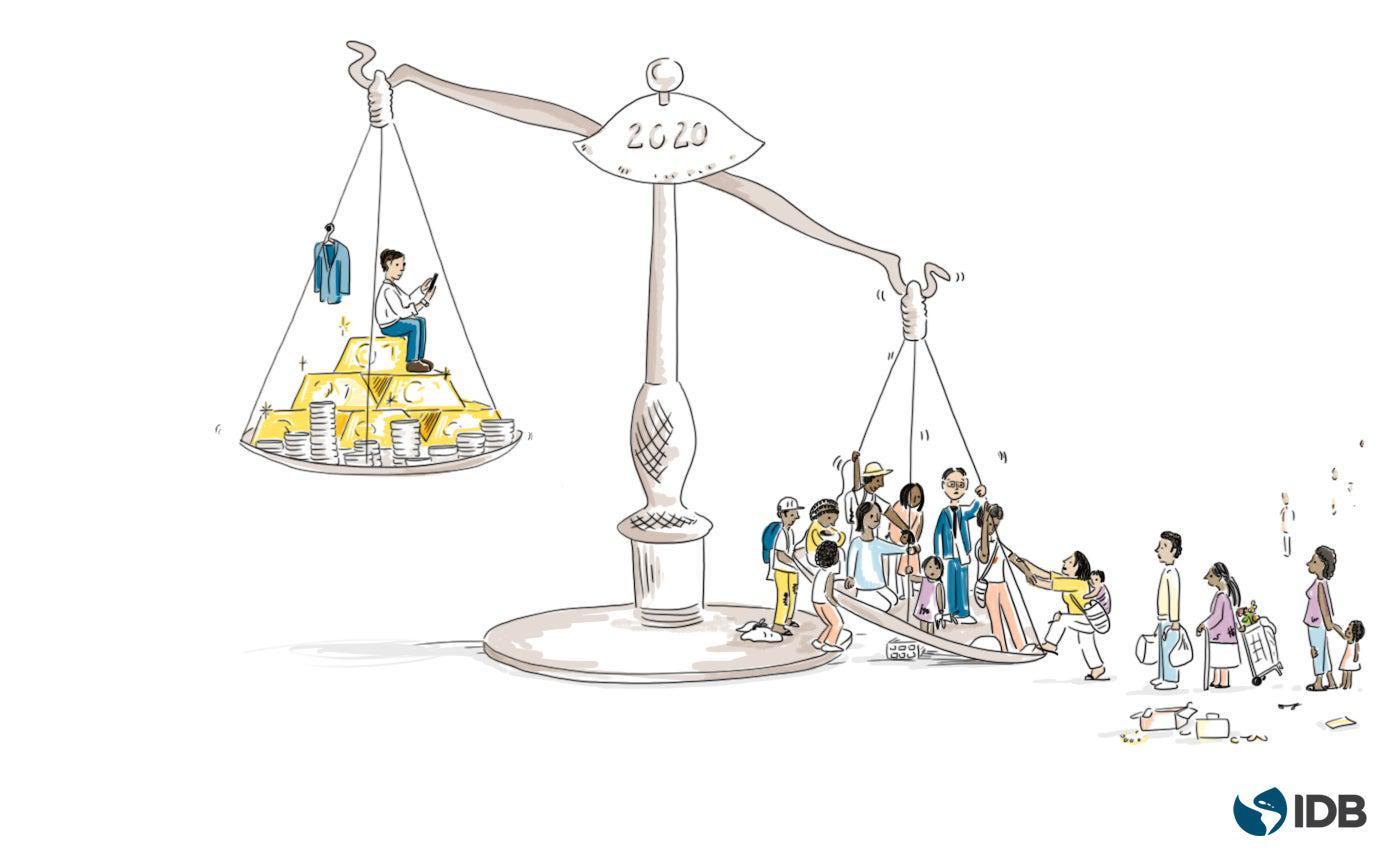
Understanding the Conceptual Framework of Inequality in Economic Theory
The investigation of inequality within economic frameworks encompasses a multitude of theories, emphasizing the dichotomy between absolute and relative measures. While absolute inequality refers to the total wealth disparity within a given population, relative inequality focuses on the comparison of wealth among individuals or groups. This distinction often leads to contentious debates among economists, particularly when confronted with situations illustrating the paradox of $1 being perceived as both less than and more than $1, depending on the context of wealth distribution or utility derived from that wealth. Economists advocate for multidimensional approaches that integrate social, historical, and institutional factors to frame a comprehensive narrative surrounding inequality.
Furthermore, economic theory posits various mechanisms through which inequality manifests, which include but are not limited to market forces, government policies, and socio-cultural norms. Each of these mechanisms highlights systemic structures that not only maintain but often exacerbate inequality over time. For instance, consider the following table that summarizes key theoretical perspectives on inequality:
| Theoretical Perspective | Key Features | Implications for Policy |
|---|---|---|
| Neoclassical Economics | Focus on individual choice and market efficiency | Encourages minimal government intervention |
| Keynesian Economics | Emphasizes aggregate demand and government investment | Supports fiscal policies to redistribute wealth |
| Marxist Theory | Highlights the role of class struggle and labor exploitation | Advocates for systemic change in ownership structures |
Through these varied lenses, the discourse on inequality evolves, demonstrating that understanding the nuances of economic disparity requires not only theoretical rigor but also an appreciation of its profound socio-economic implications. As discussions surrounding income, wealth, and opportunity inequality continue to gain traction in policy formulation, economists must draw from an extensive repository of knowledge to effectively engage with the increasingly complex fabric of inequality.
Examining the Implications of Income Disparity on Societal Welfare
Income disparity has far-reaching consequences on societal welfare, as it not only affects individual livelihoods but also perpetuates systemic issues within communities. Research indicates that when wealth is concentrated among a small percentage of the population, access to essential services such as education, healthcare, and housing diminishes for lower-income groups. This trend can lead to a cycle of poverty characterized by limited upward mobility and an increasing gap between the affluent and the impoverished. Key implications include:
- Deterioration of Public Health: Higher income inequality correlates with poorer health outcomes in lower-income populations, exacerbating healthcare costs and reducing overall life quality.
- Decreased Educational Opportunities: Wealth disparity often translates into unequal access to quality education, hindering skill development essential for economic advancement.
- Social Fragmentation: Communities may experience division, leading to heightened tensions and a breakdown of social cohesion, as differing income levels create distinct spheres of existence.
Furthermore, economists have identified the paradoxical nature of income inequality where the accumulation of wealth by the few does not translate into widespread economic benefit. As wealth is hoarded, consumer demand often stagnates, leading to slower economic growth. This situation can be illustrated in the following table:
| Income Bracket | Wealth Accumulation (%) | Annual Spending Influence ($) |
|---|---|---|
| Top 1% | 38% | 20,000 |
| Middle Class | 42% | 5,000 |
| Lower 50% | 20% | 1,000 |
This table underscores the stark contrast in spending power among different income groups, which ultimately impacts overall economic vitality. Addressing the implications of income disparity is crucial for fostering a balanced society where equitable access to resources can facilitate collective well-being.
Evaluating Policy Interventions to Mitigate Inequality in Economic Systems
In assessing the effectiveness of policy interventions aimed at mitigating economic inequality, it is essential to adopt a multidimensional approach. Policies such as progressive taxation, targeted social welfare programs, and education reforms can dramatically alter the economic landscape. However, their success is contingent upon various factors including:
- Implementation Mechanisms: Efficient administration and monitoring of policies can significantly influence their outcomes.
- Socioeconomic Context: The existing economic structure and societal norms can either facilitate or hinder policy objectives.
- Evaluation Criteria: Clearly defined metrics for assessing impact are crucial for determining policy success.
Moreover, an effective evaluation framework must incorporate both qualitative and quantitative data. This may involve utilizing indicators such as Gini coefficients, employment rates, and income mobility data. A proposed framework can be illustrated in the following table:
| Indicator | Definition | Relevance |
|---|---|---|
| Gini Coefficient | A measure of income distribution within a population. | Indicates the level of inequality before and after policy interventions. |
| Employment Rate | The percentage of the working-age population that is employed. | Reflects the effectiveness of job creation policies. |
| Income Mobility | The ability for individuals to change their economic status over time. | Shows the long-term impact of interventions on equality of opportunity. |
Exploring Futures: Sustainable Practices for Equitable Economic Growth
In the complex interplay between economic growth and social equity, sustainable practices emerge as critical components in addressing the inherent paradoxes of inequality. A focal point of this discourse is the recognition that traditional economic models often fail to account for the disparities that exist within and across communities. To bridge these gaps, incorporating sustainable resource management, community engagement, and inclusive policy frameworks is essential. These methodologies serve not only to enhance productivity but also to foster environments where equitable growth can thrive, creating a new narrative that prioritizes the wellbeing of all stakeholders over mere profit maximization.
To further illuminate the dynamics of sustainable practices contributing to equitable economic growth, consider the following key strategies:
- Community-Based Initiatives: Empowering local communities to participate in economic decisions ensures that they benefit from the advancements made within their territories.
- Environmental Stewardship: Promoting ecological conservation as a foundation for economic activities not only protects resources but also cultivates sustainable livelihoods.
- Access to Education and Technology: Bridging the digital divide through education equips vulnerable populations with the tools necessary for economic participation.
The implications of these strategies can be quantitatively assessed to understand their effects on economic indicators. The table below highlights the potential outcomes of implementing sustainable practices in various sectors:
| Sector | Innovation Index | Equity Quotient | Growth Rate (%) |
|---|---|---|---|
| Agriculture | 75 | 85 | 5.5 |
| Renewable Energy | 90 | 80 | 8.2 |
| Technology | 88 | 70 | 10.1 |
This framework elucidates that, while economic advancement is a precursor to growth, the balance of opportunity and resource allocation plays an indispensable role in dictating the sustainability of that growth over time. The paradox lies not in the economic structures themselves but in our approach to inclusivity and the definitions that govern success within these frameworks.
To Wrap It Up
the paradox of inequality presented in the analysis of the economic relationship denoted by “$1 < $1" serves as a critical lens through which we can examine the multifaceted dimensions of wealth distribution and socio-economic status. By deconstructing this seemingly contradictory statement, we unveil the underlying complexities of macroeconomic theories, social stratification, and the implications of relative versus absolute wealth. The examination reveals that economic value is not merely a function of numerical comparison but is deeply influenced by context, perception, and societal frameworks. As we navigate the intricacies of inequality, it becomes increasingly vital to consider how policies, market dynamics, and institutional structures contribute to the perpetuation or alleviation of disparities. Future research must continue to explore these phenomena through interdisciplinary approaches, integrating insights from economics, sociology, and political science to devise informed strategies that address the challenges posed by inequality. Ultimately, recognizing that even the most fundamental assertions in economics can be laden with complexities allows for a deeper understanding of the socio-economic fabric that shapes our world. By critically engaging with these ideas, we pave the way for more equitable economic models and a more just society.