

The study of the foundations of mathematics is one of the most active areas of contemporary scientific research. At the heart of this work is the investigation of the finite and the infinite. The finite is the realm of the countable, the discrete. The infinite is the realm of the uncountable, the continuous. The tension between these two realms is one of the most fundamental and enduring in all of mathematics.
One of the most important concepts in the study of the finite is the natural number. Natural numbers are the numbers we use to count things. They are the numbers 1, 2, 3, …, and so on. The natural numbers are ordered, meaning that we can say which one is bigger than another. We can also add and subtract natural numbers. The natural numbers are a subset of the integers, which are the numbers …, -3, -2, -1, 0, 1, 2, 3, …. The integers are a subset of the rational numbers, which are the numbers that can be written as a fraction of two integers. The rational numbers are a subset of the real numbers, which are the numbers that can be represented by a decimal expansion.
The set of natural numbers is a well-ordered set. This means that every nonempty subset of the natural numbers has a least element. The least element of a set is the smallest element in the set. The well-ordering property of the natural numbers is essential for many proofs in mathematics. For example, the well-ordering property can be used to prove that the natural numbers are countable. A set is countable if it is either finite or if it has the same cardinality as the natural numbers.
The finite is often contrasted with the infinite. The infinite is the realm of the uncountable, the continuous. The most common way to think about the infinite is in terms of the real numbers. The real numbers are an uncountable set. This means that there are more real numbers than there are natural numbers. The real numbers are also continuous. This means that there are no gaps in the real numbers. Every real number is between two other real numbers.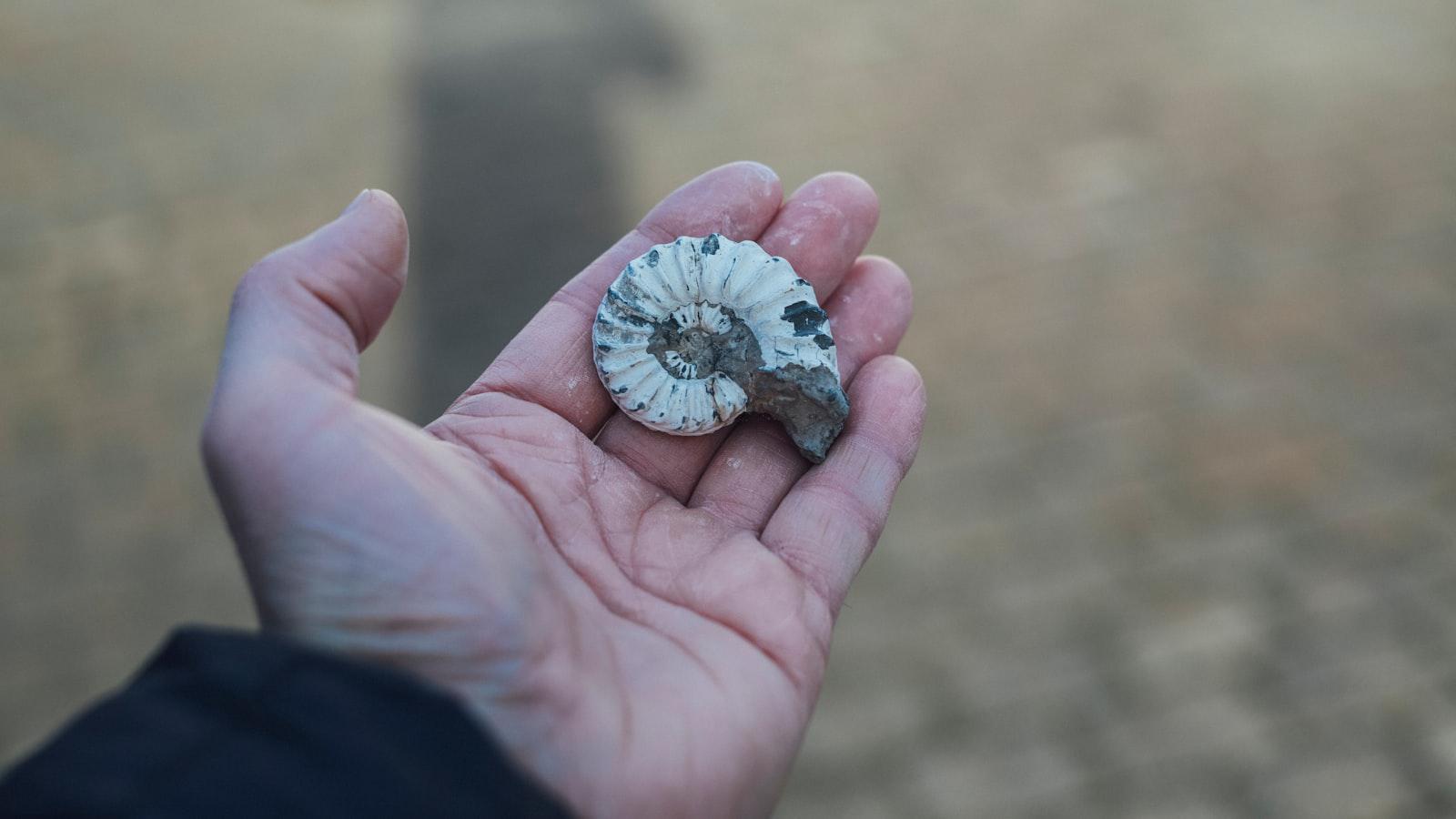
– The Ontology of Finiteness: A Metaphysical Perspective
The Finite Nature
The concept of finiteness is a fundamental ontological category that has been explored by philosophers and theologians throughout history. In metaphysics, finiteness refers to the limitation or boundedness of a being or entity in terms of its existence, essence, or properties. Unlike infinite beings that are believed to exist without limits, finite beings are subject to limitations and boundaries.
A significant aspect of finitude is its temporal dimension. Finite existence is characterized by a beginning in time and a projected end or termination. The linear and irreversible nature of time for finite beings imposes constraints on their experiences and actions. Past events cannot be undone, and future possibilities are not fully knowable, resulting in a sense of contingency and uncertainty in the lives of finite creatures.
Moreover, finiteness implies a fundamental incapacity to know or experience all aspects of reality exhaustively. Human knowledge and understanding are finite and limited by the boundaries of our sensory perceptions, cognitive abilities, and existential circumstances. The vastness of the cosmos, the mysteries of our inner selves, and the totality of human experiences remain beyond our complete grasp, highlighting the inherent boundaries of finite existence.
– The Epistemology of Finiteness: Understanding the Bounds of Knowledge
In this epistemological realm, we stumble upon the finite nature of our cognition. The human mind, despite its remarkable capacity for complex thought, faces inherent limitations. Our senses perceive only a narrow spectrum of reality, and our cognitive framework is inherently limited by the neural architecture of our brains. As such, our understanding of the world is fragmented and partial, forever bounded by the confines of our finite experience.
The implications of this epistemological finitude are profound. It challenges the notion of absolute or complete knowledge. Instead, our knowledge is perpetually provisional, subject to revision and refinement as new evidence emerges and our understanding evolves. This epistemological humility should temper our claims to certainty and foster a spirit of intellectual curiosity and openness to new perspectives.
Moreover, the finite nature of our cognition raises questions about the nature of truth itself. If our understanding is inherently bounded, can we truly claim to possess objective or universal truths? Is truth merely a social construct or a product of our cognitive limitations? These epistemological paradoxes continue to captivate philosophers and scientists alike, pushing the boundaries of our understanding of the human mind and the nature of knowledge.
– Practical Implications of Finiteness: Ethical and Societal Considerations
The finite nature of resources poses profound ethical and societal considerations. Firstly, finiteness compels us to confront the need for sustainability in all aspects of our actions. We must recognize the limits of our natural resources and strive to minimize our consumption and environmental footprint. Secondly, it raises questions about the distribution of resources and the equitable access to these resources. Finiteness challenges us to develop systems that ensure fair and just allocation of resources both within and across societies. Thirdly, finiteness necessitates a shift in our values towards appreciating the preservation and conservation of our planet and its resources.
– Beyond Finiteness: Exploring the Transcendental and the Infinite
The Finite Natur
As finite beings, humans are constrained by the boundaries of our physical and cognitive limitations. We experience time as a linear progression and space as a finite, three-dimensional realm. Our understanding of reality is grounded in the tangible and observable, shaping our perspectives and limiting our ability to fully grasp the vastness of existence.
The notion of the transcendental and the infinite challenges these finite boundaries. Transcendental experiences, such as deep meditation or mystical encounters, transcend the ordinary limits of consciousness. They offer glimpses into a realm beyond the reach of our ordinary senses, hinting at a reality that is interconnected, unbounded, and eternal.
The infinite, in contrast, transcends the limitations of quantity and time. It encompasses both the boundless expanse of the universe and the immeasurable depths of inner consciousness. Its existence suggests that our finite understanding is but a facet of a larger, cosmic tapestry that we are only beginning to unravel.
In conclusion, the concept of the Finite Nature posits inherent limitations and constraints within the realm of scientific inquiry and human knowledge. This perspective challenges the traditional notion of infinite progress and suggests that scientific understanding is circumscribed by fundamental epistemological and ontological boundaries. Recognizing the finite nature of our knowledge encourages humility, curiosity, and a deeper appreciation for the intricate interdependencies that govern our existence. By embracing the limitations of human inquiry, we can foster a more nuanced and grounded approach to scientific endeavors, focusing on what is knowable and pursuing knowledge with an understanding of its intrinsic finitude.