
Expanding the Digital Asset Spectrum in the UAE
The United Arab Emirates (UAE) continues to lead the charge in digital asset adoption, seamlessly integrating cryptocurrencies into its financial strategy with unprecedented enthusiasm. The UAE’s approach is marked by a supportive regulatory environment that fosters innovation while ensuring robust investor protection. This forward-thinking stance has garnered significant interest from both local and international stakeholders, positioning the UAE as a frontrunner in the global digital asset market.
A key element of this progress is the UAE’s commitment to educating its population about the advantages and risks of digital assets. Public awareness campaigns and regulatory frameworks that emphasize clarity and security are pivotal in building trust among potential investors. The collaboration between the UAE’s financial authorities and blockchain technology providers has resulted in a robust ecosystem that supports a wide range of applications, from blockchain-based financial services to tokenized assets. This ecosystem extends beyond trading and investment to include broader economic applications such as supply chain management and real estate tokenization.
Though, the potential benefits of the UAE’s digital asset initiative are closely tied to the challenges it faces. Regulatory clarity is essential for maintaining investor confidence, and the country must strike a balance between innovation and regulatory oversight to prevent fraud and market instability. The global nature of the digital asset market means that the UAE’s success is contingent upon its ability to collaborate internationally. This includes aligning with global regulatory standards and participating in international dialogues to shape the future of digital asset regulation.
Standard Chartered Bridges the Gap for Institutional Crypto Investors
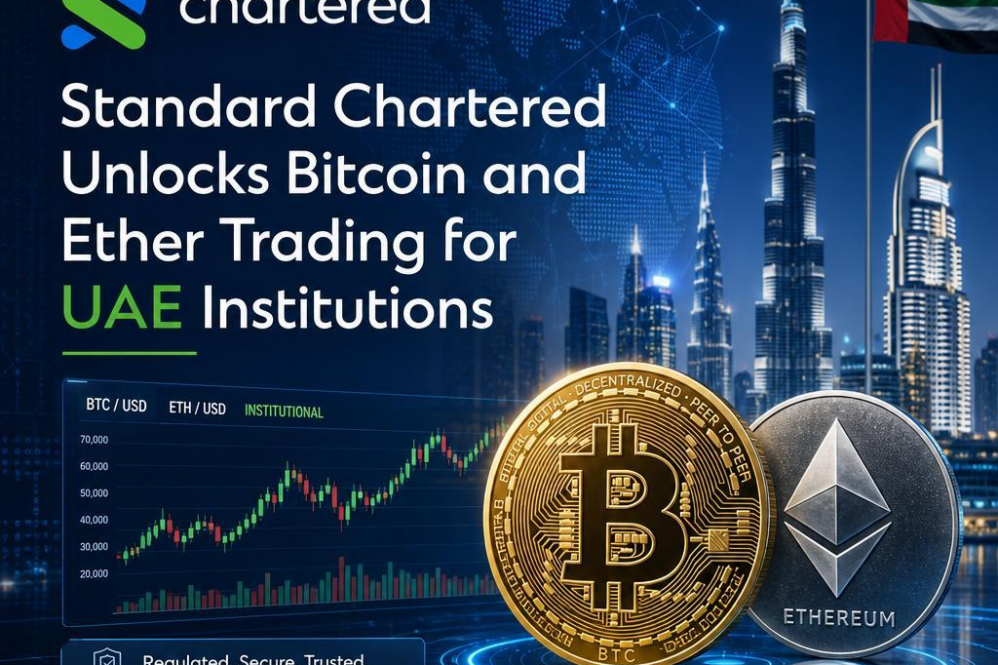
Standard Chartered, a leading international banking group, has taken a significant step in the world of digital assets by facilitating secure access to Bitcoin and Ether for institutional investors.This move comes at a time when customary financial institutions are increasingly recognizing the growing importance and legitimacy of cryptocurrencies within the broader asset landscape. Institutional involvement often brings stability and respectability to previously niche markets, signaling maturity and mainstream acceptance.
For institutions looking to diversify their investment portfolios or gain exposure to the crypto market, Standard Chartered’s initiative provides a critical bridge. Institutional money typically requires stringent security measures and regulatory clarity, both of which are now better supported with the bank’s offering. Secure access is essential because Bitcoin and Ether have faced significant volatility and require robust infrastructure to manage risks effectively. As such, the bank’s efforts cater to those seeking reliable, regulated entry points into the crypto space.
While Standard Chartered’s move is a positive progress, it also highlights the ongoing challenges faced by the crypto industry. Integrating digital assets into traditional finance systems is complex and requires careful navigation of regulatory frameworks. Despite the growing institutional interest, retail investors remain a significant part of the market, and accessibility dynamics will play a crucial role in shaping the future of digital assets. This initiative by Standard Chartered is one small but impactful step in the long journey towards greater acceptance and wider adoption of cryptocurrencies among major financial players.
### UAE’s Bold Step into the Crypto Frontier: A Strategic Play for Financial Dominance
The United Arab Emirates (UAE) is making waves in the burgeoning cryptocurrency market with a strategic vision aimed at establishing itself as a key player in the global financial landscape. This move underscores the UAE’s commitment to technological innovation and economic diversification, positioning it as a leader in the digital finance revolution. As cryptocurrencies and digital assets continue to gain traction, the UAE’s proactive engagement with this market signals its readiness to meet the growing demand for blockchain-driven financial services.
#### Crafting a Regulatory Framework for Digital Assets
The UAE’s financial leadership is committed to developing a regulatory framework that supports the safe and efficient operation of digital assets. This initiative aims to attract both blockchain startups and established firms, potentially creating a concentrated crypto hub within the region.By aligning with international trends towards regulated crypto markets,the UAE offers a stable environment for both local and international investors to navigate the complexities of digital currencies. This balanced approach to innovation and regulatory oversight sets a precedent for other nations seeking to integrate cryptocurrencies into their financial systems.
#### Navigating the Challenges of Cybersecurity and Consumer Protection
While the UAE’s strategic move presents significant opportunities for financial growth and innovation, it also comes with its share of challenges. Ensuring robust cybersecurity measures and consumer protection will be critical as the number of digital transactions increases. The success of the UAE’s involvement in crypto markets will hinge on its ability to navigate international regulatory standards and foster a collaborative environment that encourages both local and global participation. Despite these challenges, the UAE’s reputation as a leader in financial technology makes its entry into the crypto space a noteworthy development in the evolving narrative of digital finance.
### Navigating Regulatory Complexities for Institutional Crypto Adoption
As institutional investors increasingly view cryptocurrencies as a new asset class, understanding the evolving regulatory landscapes becomes essential. Institutions must navigate a complex web of international, national, and state regulations that vary widely in their approach to digital assets. These regulations can impact everything from custody practices to trading restrictions, affecting the feasibility of large-scale investment. As an example, some countries have established frameworks to support blockchain technology and cryptocurrency, while others maintain a stricter stance to protect investors, which can deter institutional participation.
#### Assessing Regulatory Clarity and Compliance Costs
The diverse regulatory frameworks around the world mean that institutions must conduct thorough due diligence before investing in or trading cryptocurrencies. This includes assessing the legal implications,compliance costs,and operational challenges in each jurisdiction.For example, regulatory bodies in jurisdictions like the United States and Switzerland have provided more clarity on how to regulate cryptocurrencies, thereby reducing uncertainty for institutions. However, in regions where regulations are less clear or restrictive, the compliance costs and risks are significantly higher, perhaps making institutional adoption uneconomical.
#### Encouraging a Supportive Regulatory Environment
Despite the challenges, the regulatory clarity provided by some jurisdictions creates opportunities for legal frameworks to evolve and improve alongside technological advancements. This can encourage a more regulated yet supportive environment for the adoption of cryptocurrencies by institutional investors.However, institutions must remain vigilant and adaptable as regulations continue to shift, ensuring they comply with all applicable laws and maintain the integrity of their investments. Regulatory certainty is crucial for institutional investors to feel confident in the long-term sustainability of their crypto assets.It seems like you want me to rewrite an article based on specific instructions, but the actual content of the article is missing from your message. Could you please provide the original text of the article you want me to rewrite? Once I have that, I can help you create a unique, high-quality version that adheres to your guidelines.