

Decentralized Relay Architecture and Trust Models: analysis of relay discovery, availability, censorship resistance, and recommendations for reputation systems, federated indexing, and incentive-aligned relay selection
The relay layer is best understood as a horizontally distributed store-and-forward fabric where discovery and connectivity determine effective decentralization. Common discovery vectors include bootstrap lists, DNS-based service records, social discovery (user-shared relay lists), and federated indexing services; each has distinct trade-offs between censorship surface and ease of use. Replication and multi-relay publishing are primary mechanisms to ensure high availability and reduce single-point outages: employing multiple autonomous relays for persistent storage and read-redundancy mitigates loss from individual relay failure or targeted takedowns. To harden censorship resistance, clients should favor *diversity* of relay operator jurisdictions and software stacks and leverage automated re-broadcasting across independent relays to create durable, geographically dispersed copies of events.
Trust in relays must be treated as probabilistic and contextual rather than binary; the protocol intentionally separates identity (user public keys) from storage trust to allow users to compose trust policies. Practical reputation frameworks should therefore be decentralized and minimally invasive, combining objective telemetry with optional social attestations. Recommended reputation dimensions include operational reliability,archival completeness,moderation transparency,and network behavior (e.g., latency, error rates):
- Operational reliability – measured uptime and successful message acknowledgements.
- Archival completeness – fraction of published events retained for defined retention windows.
- Moderation transparency – availability of published policy manifests and observable filter behaviors.
- Network behavior - measures of latency, connection churn, and protocol compliance.
Combining thes signals in a privacy-preserving manner (e.g., aggregate, anonymized telemetry or differential-privacy summaries) reduces centralization risk while giving clients actionable heuristics for relay selection.
federated indexing and incentive alignment are complementary strategies to improve discoverability and lasting operation. Federated indexes-implemented as small, mutually readable index shards or CRDT-based topic maps-allow relays to advertise content summaries without central aggregation, enabling efficient light-client queries and preserving local autonomy.Incentive mechanisms should align cost recovery with desirable behaviors (retention,uptime,neutrality): plausible instruments include micro-subscriptions,per-event escrowed tips,or cooperative cost-sharing pools-each instrument must be designed to avoid gating basic read/write access and to resist capture by large stakeholders. For practical client-side relay selection, implement a multi-criteria decision function that weights:
- Reputation scores (from decentralized metrics),
- Geographic and software diversity,
- Cost and latency considerations, and
- Privacy-preserving redundancy (minimizing fingerprinting risk).
Such an approach yields a resilient, incentive-aware ecosystem in which users can balance censorship resistance, availability, and economic sustainability without centralized arbitration.
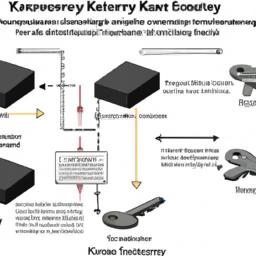
Cryptographic Key Management and Operational Security: evaluation of secp256k1 key usage, client-side key storage, backup and rotation practices, and concrete recommendations for hardware-backed keys, threshold signing, and hardened KDFs for key recovery
The dominant choice of elliptic curve for many Nostr clients is secp256k1, primarily for its interoperability with Bitcoin tooling and its recent support for Schnorr-type signatures (BIP‑340), which enable non-interactive aggregation and improved privacy when supported. From an operational-security perspective, the use of a single, long‑lived private key as the canonical identity creates a high-impact, low-frequency risk: compromise of that key equals complete identity takeover. Typical client-side storage modalities vary widely in security-plaintext files, browser local storage, and unencrypted backups are common and expose keys to exfiltration by malware, XSS, or compromised extensions. By contrast, platform keystores (Secure Enclave/TPM) and hardware wallets substantially reduce the attack surface by isolating signing operations and minimizing the presence of raw private material in RAM or persistent storage.
Resilient backup and rotation practices must balance recoverability against exposure. in practice many users rely on raw hex dumps or BIP‑39 mnemonics; both are acceptable bases but require additional hardening for long‑term storage. Recommended controls include:
- Encrypted offline backups using a modern, memory-hard KDF (Argon2id) and authenticated encryption (e.g., AES‑GCM or XChaCha20‑Poly1305).
- Secret splitting (Shamir or verifiable secret sharing) across independent custodians or devices to prevent single‑point compromise while preserving recoverability.
- Planned rotation and migration procedures: publish a signed migration notice that links the old and new public keys to preserve social graph continuity.
For KDF parameters, prefer Argon2id with a substantial memory cost tuned to the device class (e.g., hundreds of MiB on desktop-class machines and scaled down for mobile), a time cost that yields several hundred milliseconds of derivation latency, and parallelism matched to available cores; use scrypt or PBKDF2 only as fallback layers and avoid unsalted or single-iteration schemes. note that BIP‑39’s PBKDF2 should not be treated as sufficient protection for internet‑accessible backups without an outer Argon2id rewrap.
Operational recommendations to materially reduce risk include mandatory use of hardware-backed keys for high‑value or high‑exposure identities (Secure Element,Ledger/Trezor/compatible devices,or platform keystores exposed via PKCS#11/WebAuthn),and migration toward threshold signing/MPC for accounts requiring shared control or resilience. For secp256k1 this means preferring Schnorr‑compatible threshold schemes (MuSig2, FROST) where available; for environments constrained to ECDSA, employ well‑audited threshold ECDSA protocols (e.g., GG18 variants) only with expert integration. Concrete implementation controls: enforce user confirmation on the hardware device for every signing operation, minimize lifetime of any unencrypted private material in memory, require authenticated and Argon2id‑protected backups, and document a rotation protocol that issues a signed linkage event from the old key to the new. Together, these measures reduce single‑point failure, raise the cost of remote compromise, and provide recoverability without undermining the fundamental decentralization properties of the protocol.
Message Confidentiality, Integrity, and Forward Secrecy: assessment of ECDH-derived symmetric messaging (NIP-04) and its limitations, with specific recommendations to adopt AEAD ciphers (e.g., XChaCha20-Poly1305), ephemeral key agreement, and standardized authenticated-encryption protocols for true end-to-end security
Contemporary Nostr implementations that follow the ECDH-derived symmetric messaging approach commonly generate a shared key from static public keys and then apply symmetric encryption for payloads. While this provides basic confidentiality against passive observers, the construction as typically specified lacks strong guarantees for integrity and forward secrecy. Static-static ECDH (exchange between long-term keys) yields a single long-lived shared secret that,if exposed,compromises all past and future messages; furthermore,many practical deployments omit an authenticated-encryption primitive and robust key-derivation step,opening the design to ciphertext manipulation,nonce misuse,and replay or chosen-ciphertext attacks.
To achieve robust end-to-end security the protocol must combine a conservative key-agreement pattern with a modern AEAD cipher and explicit associated-data binding. We recommend adopting XChaCha20-Poly1305 (or another AEAD with long nonces and strong misuse resistance) together with an HKDF-based derivation from an ephemeral X25519 ECDH result, so that each handshake or message uses a fresh symmetric key. Associated data SHOULD include immutable identifiers such as canonicalized sender and recipient public keys, protocol version, and a timestamp or sequence counter to prevent mixing of ciphertexts across contexts. Ephemeral key agreement – either per-message ephemeral X25519 keys or short-lived session keys – restores forward secrecy and limits damage from key compromise.
Practical adoption should favor well-specified, peer-reviewed authenticated-encryption and ratcheting constructions rather than ad-hoc mixes of primitives. Recommended paths include implementing a Noise Protocol pattern (e.g., Noise_XX or Noise_IK with ephemeral keys) for initial handshakes and a Double Ratchet or similar asynchronous ratchet for ongoing communications to provide continuous forward secrecy and post-compromise recovery. Operational recommendations:
- Use AEAD (XChaCha20-Poly1305) with HKDF-based key derivation and canonical associated data.
- introduce ephemeral keys (per-message or per-session X25519) and ratcheting to ensure forward secrecy.
- Standardize formats (nonce length, AD fields, versioning, test vectors) to prevent interoperability errors and subtle downgrades.
These measures, combined with careful nonce management, secure key storage, and protocol-level metadata minimization, produce a substantially stronger confidentiality and integrity posture suitable for decentralized, relay-based messaging systems.
Metadata Leakage, traffic Analysis, and Privacy Enhancements: empirical overview of metadata-based deanonymization risks and targeted recommendations including persistent connection minimization, padded message sizes, mixnet-style relay routing, differential privacy techniques, and opt-in private relay networks
Empirical analyses of Nostr-like event dissemination demonstrate that seemingly innocuous metadata-connection timestamps, relay selection patterns, event publication intervals, and persistent socket identifiers-can be leveraged to deanonymize participants with high confidence when correlated across relays and over time. Passive observers and malicious relays can exploit timing correlations and stable public-key usage to reduce users’ anonymity sets, while active probes (e.g., differential probing of relays) amplify disclosure by eliciting behavioral fingerprints. Measurement studies in comparable decentralized messaging systems show that even sparse metadata leakage substantially increases deanonymization probability when combined with auxiliary network-layer data such as IP addresses and AS-level paths.
Targeted mitigation strategies should be prioritized according to threat model and deployability; practical recommendations include the following evidence-based measures:
- Persistent connection minimization: minimize long-lived TCP/TLS sessions in favor of ephemeral or opportunistic connections to reduce linkability across sessions and time.
- Padded message sizes: employ fixed-size framing or randomized padding distributions to reduce size-based fingerprinting while bounding bandwidth overhead through adaptive heuristics.
- Mixnet-style relay routing: route events via multiple relays using layered addressing or forward-only paths to introduce latency and path uncertainty that break direct timing correlations.
- Differential privacy techniques: apply calibrated noise to aggregate telemetry and user-visible summary statistics (e.g., follower counts, query results) to limit inferential attacks without exposing raw interaction logs.
- Opt-in private relay networks: provide vetted, consent-based relay clusters with stricter logging policies, cryptographic auditability, and economic incentives for privacy-preserving operation.
These countermeasures present varied implementation complexity and operational cost; designers should balance privacy gains against latency,bandwidth,and usability impacts.
Evaluating effectiveness requires concrete metrics-anonymity set size, mutual information between observed metadata and user identity, deanonymization probability under defined adversary capabilities, and performance indicators such as added latency and throughput degradation. Field experiments and simulations indicate that combining measures (e.g., short-lived connections + padding + multi-relay routing) yields multiplicative benefits, but with diminishing returns and increasing resource cost. A staged deployment is advisable: default client configurations should favor conservative, low-overhead protections with opt-in escalation to stronger privacy modes; simultaneous research directions should include parameter tuning for differential privacy guarantees, realistic mixnet latency modeling, and longitudinal measurement of anonymity erosion under adaptive adversaries.
The analysis of Nostr’s client-side architecture highlights a pragmatic, minimalistic approach: a user-controlled keypair (typically secp256k1) for authentication and signing, a relay-based message distribution model, and lightweight message-encryption mechanisms for direct messages. This design affords strong cryptographic provenance and a high degree of client autonomy, but it also concentrates many practical security and privacy challenges on client implementations and relay interactions. Key management, metadata exposure through relays, lack of standardized forward secrecy for private conversations, and limited mechanisms for spam control emerge as the principal areas where design choices trade usability and decentralization against stronger privacy guarantees.
From a security perspective, the strengths are clear: cryptographic signatures provide verifiable origin and integrity; client-side key custody preserves user control; and the simple relay protocol reduces centralized points of control. Tho, confidentiality and metadata protection remain partial. Current encrypted-DM approaches rely on static long-term keys and symmetric wrapping techniques that do not provide the stronger secrecy and deniability properties available in ratcheting protocols. Likewise, the relay model-while decentralizing storage and dissemination-permits correlation of activity and can be vulnerable to censorship, data retention issues, and global passive observers unless mitigations are adopted.
Targeted improvements should therefore prioritize practical defenses that preserve the protocol’s decentralized ethos. Recommended directions include: 1) enhanced key-management tooling (deterministic key derivation, standardized backup and rotation workflows, and hardware-wallet integration); 2) adoption or optional support for forward-secret messaging (e.g., ratcheting or ephemeral-session patterns) for private conversations; 3) standardized metadata-minimization and selective disclosure primitives to reduce relay-observable linkability; 4) relay-level improvements such as privacy-preserving filtering, rate-limiting, and reputation mechanisms to curb abuse without centralizing control; and 5) formal interoperability and protocol specification refinements to ensure consistent, verifiable behavior across client implementations.
In closing, Nostr’s client-centric, relay-mediated architecture offers a compelling baseline for decentralized social interactions, combining simplicity with user-controlled cryptographic identity. Realizing stronger privacy and resilience will require incremental, interoperable additions that improve confidentiality, metadata protection, and abuse resistance while retaining the protocol’s lightweight, decentralized character. Continued empirical evaluation, cross-client standardization, and user-centered key-management design will be essential to mature the ecosystem and enable broader, secure adoption.(Note: the supplied web search results did not contain content related to the Nostr protocol and were therefore not used in composing this summary.) Get Started With Nostr