

nostr Client Architecture: Decentralized Relay Topologies,Event Propagation Semantics,and Recommended Design Patterns for Scalability and Resilience
Client implementations should treat relays as independent,best-effort storage and forwarding nodes within a decentralized topology. Common deployment patterns observed in practice include a hub‑and‑spoke arrangement (many clients connected to a small set of high‑availability relays), a federated mesh (clients and relays connected in a partially connected graph with peer selection heuristics), and hybrid mixes that separate read‑optimized index relays from write‑optimized archival relays. Clients must therefore implement connection management that supports multiple concurrent WebSocket/TLS sessions, subscription multiplexing, and graceful failover: maintaining prioritized relay lists, performing periodic health checks, and selectively closing or retrying connections to limit resource consumption while preserving reachability to a diverse set of relays.
Event propagation in this ecosystem is intentionally simple and semantically weak: delivery is best‑effort with eventual consistency guarantees only when multiple relays independently persist and expose teh same event. The canonical principles are idempotence (events are uniquely identified by cryptographic IDs and replays must be deduplicated), authenticity (clients always verify signatures and reject malformed or unsigned objects), and filter‑driven subscription semantics (relays return events that match client filters without global ordering guarantees). Practical client logic must therefore: verify signature and event ID on receipt, apply timestamp tolerance and deterministic tie‑breaking (e.g., prefer higher created_at then lexicographic event id), and handle tombstones/deletes as application‑level semantics rather than relying on relay enforcement; additionally, anti‑entropy strategies (periodic re‑queries, differential syncs) help converge state where strict consistency is not available.
To scale and remain resilient under adversarial conditions, clients should adopt defensive and resource‑efficient design patterns. Recommended practices include:
- Connection pooling and prioritization: maintain a small set of long‑lived, high‑quality relay connections plus opportunistic short‑lived connections to diversify visibility.
- Backpressure and batching: coalesce outgoing events and subscription updates, apply rate limits, and use exponential backoff and circuit breakers to avoid thrashing relays.
- Local indexing and caching: keep a client‑side cache with strict TTLs and bloom filters for quick duplicate detection and offline reads; reconcile via incremental syncs.
- Read/write separation and sharding: direct writes to a subset of trusted relays while querying a broader mesh for reads, and use sharding strategies (by keyspace or time window) when interacting with index relays.
- Observability and health metrics: emit per‑relay latency,error,and propagation success metrics to inform relay selection and automated failover policies.
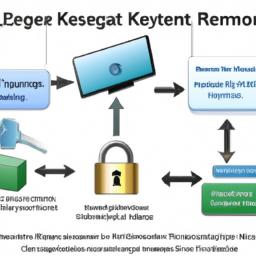
Cryptographic Key Management and Authentication: Best Practices for Key Generation,Secure storage,Rotation,Recovery,and Minimizing Key-Compromise Impact
Key material should be produced and managed with cryptographic rigor: generate private keys using a proven elliptic-curve algorithm compatible with the ecosystem (e.g., secp256k1) and a high-quality entropy source, perform generation in an offline or hardware-isolated surroundings when possible, and prefer deterministic seed-based workflows (mnemonic + derivation path) to enable structured recovery. Store private keys only in hardened environments-hardware wallets, secure elements, or encrypted keystores protected by strong passphrases-and avoid plaintext export, ephemeral clipboard use, or storage in cloud-synchronized files. Practical controls include air-gapped key generation, use of vendor-verified firmware, regular integrity checks of key-management libraries, and retention of an immutable audit trail for any key export or signing operation. Recommended storage options:
- Hardware Security Modules / hardware wallets (preferred for long-term identity keys)
- secure Enclave / TPM-backed OS keychains (for device-bound keys)
- Encrypted vaults with multi-factor access (for software-based keys and backups)
Rotation and recovery strategies must balance usability with security: perform rotation on a scheduled cadence in high-risk deployments and immediately after any suspected exposure. Use hierarchical deterministic (HD) schemes or pre-generated delegation objects when possible so that ephemeral operational keys can be replaced without exposing the long‑term master seed. For recovery, maintain encrypted mnemonic backups protected by either Shamir Secret Sharing or geographically separated custodianship, and document a tested recovery procedure that minimizes single‑point failures. Best-practice rotation/recovery steps include:
- Provision a new key pair and retain it in cold storage before decommissioning the old key
- if the old private key is uncompromised, sign and publish a migration statement linking old and new public keys to preserve social/provenance continuity
- If compromise is suspected, rely on pre-authorized recovery artifacts (e.g., offline-signed delegation/revocation tokens) rather than the compromised key to re-establish identity
to minimize impact from a compromised key adopt a principle of compartmentalization and least priviledge: use distinct keys for core identity, integrations, and session-level operations; constrain key usage and delegate non-critical functions to replaceable keys. Maintain active monitoring for anomalous signing behavior and provide an incident playbook that includes immediate key revocation notifications, rotation of dependent keys, and re-issuance of trust statements. Concrete mitigation actions after suspected compromise:
- Revoke or rotate affected keys and publish migration/revocation evidence from an uncompromised credential
- Invalidate sessions and credentials that relied on the compromised key and rekey with fresh secrets
- Audit client software and firmware, rotate backups, and consider legal/operational escalation if keys enabled financial controls
Adherence to these controls, combined with regular key-management audits and use of audited cryptographic primitives, materially reduces the probability and impact of key compromise in decentralized messaging clients.
Privacy and Metadata Leakage Analysis: Linkability, Relay-Based Correlation, Deanonymization Risks, and practical Countermeasures Including Ephemeral Identities and Traffic Obfuscation
Metadata emitted by clients and relays produces rich, linkable signals even when event payloads are cryptographically signed but not encrypted. Persistent public keys, event timestamps, relay subscription patterns and the topology of relay fan‑out combine to form a fingerprint that enables longitudinal linking of interactions. At the application layer,immutability of event IDs and deterministic signing reveal reuse of keys across contexts; at the transport layer,persistent TCP/TLS sessions and observable connection lifetimes reveal co‑occurrence and temporal relationships. These channels create structural and temporal metadata that adversaries can correlate to build probabilistic identity graphs, undermining pseudonymity despite the absence of explicit identity assertions in event content.
Deanonymization risk increases with adversary scale and control. A single malicious relay operator can log IP addresses, map keys to connection endpoints, and selectively withhold or modify events; a coalition of relays or a network‑level observer can perform cross‑relay correlation and timing analysis; a Sybil set of relays can bias relay selection to induce linkable behavior. Common attack vectors include:
- Timing and intersection attacks - correlating timestamps across relays to narrow origin times and infer sender identity.
- Network‑level correlation - passive observation of IP/TCP fingerprints or active measurement to associate keys with originating addresses.
- Storage and scraping – long‑term retention of event graphs and metadata by relays enabling retrospective deanonymization when external datasets are available.
These vectors are amplified by client behaviors such as always‑on connections, deterministic relay selection, and reuse of public keys across social, financial and transactional contexts, which provide intersections for cross‑dataset deanonymization.
Practical countermeasures mitigate but do not eliminate these risks; trade‑offs between usability, latency and resistance to censorship must be explicit. Recommended mitigations include ephemeral identities and per‑conversation keys (rotate signing keys and use short‑lived delegated keys to limit longitudinal linkability), transport obfuscation (route relay traffic over Tor, VPNs or mixnets and use padding/batched submission to defeat timing analytics), and relay selection diversity (publish through multiple, independent relays or a privacy‑preserving proxy to break single‑relay trust). Additional operational controls-client side random delays, cover traffic generation, encrypted event payloads with access control, and minimized local logging-further reduce metadata surface area. Implementers should document the residual risks and provide configurable privacy presets so users can choose appropriate points on the latency-privacy-availability spectrum.
Threat Models,Vulnerabilities,and Operational Mitigations: Relay Trust Assumptions,Client Hardening,Metadata Minimization Policies,and Recommendations to Enhance Censorship Resistance
Threat modeling must explicitly separate actor capabilities and the protocol’s trust assumptions: Nostr’s design assumes relays are *untrusted* for content correctness but implicitly trusted for availability and query privacy. Adversaries range from individual relay operators conducting selective censorship and traffic analysis, to coordinated relay coalitions and a global passive adversary capable of network-level correlation. Cryptographic signatures provide non-repudiation and authenticity of events but do not provide confidentiality or unlinkability; consequently, subscription patterns, relay connection metadata, and published event indices constitute primary channels for deanonymization and content suppression. Effective threat analyses therefore require modelling both active (content deletion, injection, targeted bans) and passive (metadata collection, timing correlation, long-term profiling) capabilities across operator, network, and client-compromise vectors.
mitigations must be operational and client-centric to reduce attack surface without assuming relay-level honesty. Recommended hardening measures include prudent key management, strict input validation, and conservative default network behaviour. Practical controls include:
- Key isolation-separating long-term identity keys from ephemeral publishing keys and supporting hardware-backed signing where available;
- End-to-end encryption-using client-side encryption for sensitive direct messages and attachments so relays only store ciphertext;
- Transport obfuscation-native support for Tor/obfuscated SOCKS proxies and opportunistic TLS to reduce network-level correlation;
- Multi-relay publication and subscription strategies to avoid single-point censorship, combined with client-side verification of persisted events;
- Strict rate-limiting, event filtering, and schema validation to reduce the impact of spam and replay attacks.
Operationally, clients should implement atomic publish-retry semantics across relays, pragmatic backoff on connection failures, and local logging policies that minimize stored metadata while retaining auditability for abuse reporting.
To materially improve privacy and censorship resistance,protocol and deployment-level policies must minimize exposed metadata and diversify availability guarantees. Policy primitives should include privacy-by-default configuration (minimal subscription queries, no auto-follow/retrieval), mandatory support for ephemeral event keys or delegated identifiers for sensitive contexts, and batching/padding mechanisms to obscure fine-grained timing signals. Recommended evolutions include: incentive-aligned multi-stake relay ecosystems (reducing ability of single operators to censor), client-side selective disclosure (publish ciphertext with selective access tokens), and obvious relay attestations or append-only logs that enable external auditors to detect selective deletion. Together, these measures – coupled with relay reputation services, decentralized indexing or DHT complements, and well-documented operational playbooks for key compromise and relay takedown – create layered defenses that substantially raise the cost of censorship and deanonymization without undermining the protocol’s low-friction publishing model.
Conclusion
This analysis has shown that Nostr’s minimalist, relay-centric design yields crucial gains in simplicity, decentralised content distribution, and censorship resistance relative to centrally hosted social systems, but it does not provide strong privacy by default. The protocol’s reliance on long-lived public keys, cleartext events, and untrusted relays creates predictable threat vectors: metadata collection and correlation by relays or network observers, linkage of identities across contexts, deanonymisation via IP-level details, and targeted censorship through relay-level filtering or account suspension. Cryptographic key management in Nostr-based on asymmetric keypairs for signing and optional symmetric encryption for direct messages-offers robust integrity and authentication, but it is insufficient on its own to prevent metadata leakage or to achieve strong anonymity.
Practical mitigations are available and largely implementable at the client and relay layers without violating the protocol’s lightweight beliefs. Recommended measures include:
– Defaulting to network-level privacy: encourage and document use of Tor/I2P or well-designed proxying for clients, and support SOCKS/HTTP proxying in reference implementations.
– Encrypting sensitive payloads end-to-end: adopt and standardise stronger NIPs for private content (improving on existing message-encryption NIPs), with clear key-rotation and forward-secrecy guidance.
- Minimising linkability: encourage use of ephemeral author keys or unlinkable posting patterns where appropriate, implement per-relay ephemeral subscriptions, and limit persistent identity leakage in metadata fields.
– Obfuscating access patterns: use relay multiplexing, randomized relay selection, and padding/cover traffic to make event retrieval patterns less distinguishable.
– Hardening relays and incentives: provide best-practice operational guidance for relay operators on metadata minimisation, logging policies, and transparent governance; explore economic mechanisms for relay federation and reputation to reduce single-point-of-failure censorship.
– Protocol extensions for privacy-preserving queries: investigate bloom-filter or private-information-retrieval (PIR)-style approaches, bloom-based subscription hints, or lightweight cryptographic protocols that limit relay visibility into user interests without excessive cost.
For researchers and protocol designers, priority areas for future work include formalising threat models specific to real-world deployments of Nostr, quantifying privacy leakage in empirical measurements, and evaluating trade-offs between anonymity, latency, and resource consumption for candidate mitigations. Usability and deployability studies are also essential: privacy-preserving mitigations must be accessible to typical users and not only to technically advanced participants.
In sum, Nostr’s architecture is a promising substrate for censorship-resistant communication, but meaningful privacy and anonymity require complementary client behaviors, relay practices, and targeted protocol extensions. A pragmatic path forward combines immediate operational recommendations (proxies, encryption defaults, relay policies) with measured research into scalable, privacy-preserving primitives that respect Nostr’s design goals of simplicity and low barrier to entry.Continued collaboration among implementers, relay operators, and the research community will be necessary to realize a more private and resilient ecosystem. Get Started With Nostr