

Architectural Design and Relay Topologies in Nostr Clients: Decentralization Patterns, Failure Modes, and Resilience Recommendations
The Nostr client ecosystem is characterized by a lightweight publisher/subscriber architecture in which clients act as originators and consumers of cryptographically-signed events while self-reliant relays provide ephemeral storage and routing over WebSocket-like transports. This architecture intentionally minimizes relay semantics: relays do not participate in consensus, do not validate submission-level relationships, and primarily perform indexing and subscription filtering. As a result, decentralization emerges from client-side strategies (e.g., connecting to multiple relays, selective publishing) rather than from an integrated, protocol-level federation; the practical topologies observed are therefore client-driven meshes and hub-like patterns where popular relays accrue disproportionate traffic and state.Such a model yields high deployability and low barrier to entry but amplifies certain systemic risks tied to relay concentration and metadata aggregation.
operational and adversarial failure modes derive directly from the relay-centric storage and dissemination model. Key modes include:
- Relay unavailability: downtime or network partitioning resulting in delayed delivery or permanent loss of non-replicated events.
- Censorship and selective withholding: operator-enforced suppression of events or accounts which produces inconsistent views across clients.
- Correlation and metadata leakage: single-relay usage or repeated predictable connections allow operator or network observers to link events to client endpoints and infer social graphs.
- State divergence and equivocation: without cross-relay agreement, conflicting event sets (e.g., deletes, replaces) may persist across relays, creating integrity ambiguity.
- Key compromise and impersonation: exposure of private keys enables forgery of signed events that relays will dutifully index.
Mitigation and resilience strategies should be implemented primarily at the client layer to preserve the protocol’s lightweight relay model. Recommended measures include: connectivity diversification (simultaneous writes to multiple, jurisdictionally and administratively distinct relays), redundant local persistence (durable local event stores and replay queues to recover from relay loss), and signature-first validation (clients always verify ECDSA signatures and reject malformed events prior to display or re-broadcast). Privacy-hardening measures-using transport anonymization (Tor/privoxy), rotating relay subsets, and minimizing metadata in follow/unfollow patterns-reduce correlation risk. For higher integrity, clients should periodically reconcile event histories across relays, archive cryptographic proofs (hash chains or compact Merkle-like manifests), and support authenticated key-rotation and revocation events so that compromised keys can be marked and downstream clients can prefer alternate verifiers.Collectively thes practices increase resilience without changing the minimal responsibilities imposed on relays, preserving the protocol’s design goals while materially improving privacy and robustness.
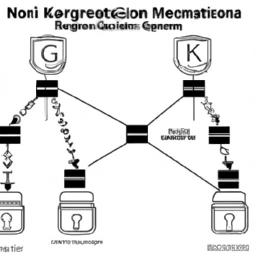
Cryptographic key Management for Nostr: Key Generation,Derivation,Rotation,Backup Policies,and Mitigations against Key Compromise
Secure key lifecycle begins with robust,standards-based generation and deterministic derivation. Implementations should generate private material using a cryptographically secure random number generator and use the secp256k1 curve with Schnorr-style signatures (the de facto choice in Nostr ecosystems) or an equally audited option. For portability and recoverability, derive operational keys from a single high-entropy seed (mnemonic or raw seed) using a hardened hierarchical derivation scheme; this enables per-application and per-device keys without exposing the master secret. Deterministic derivation also permits predictable rotation and revocation semantics: a compromised operational key can be retired and replaced by deriving a fresh child key, while the offline master seed remains protected. Throughout, implementers should treat the master seed as the highest-sensitivity artifact and minimize its online exposure.
Operational policies for rotation and backups must balance security, usability, and recovery assurance. Rotation should be defined at two levels: frequent rotation of derived, online keys (short-lived posting/encryption keys) and rare, controlled rotation of the offline master seed. Backups of seed material should be encrypted with a strong KDF (e.g., Argon2id or scrypt with conservative parameters) and stored across multiple tamper-resistant locations. recommended practices include:
- Encrypted mnemonic files protected by a long, unique passphrase and stored offline;
- Shamir Secret Sharing to distribute recovery fragments among trustees or devices;
- Periodic test restores to verify backup integrity and recovery procedures;
- Separation of keys so identity, posting and encryption keys are backed up independently according to their threat model.
These measures reduce single points of failure and ensure that recovery processes are timely but do not meaningfully increase exposure risk.
Mitigations against key compromise must combine cryptographic controls, operational procedures, and rapid response mechanisms. Prefer hardware-backed key storage (HSMs, secure elements, hardware wallets) and air-gapped signing for the master seed; delegate daily activity to short-lived derived keys that can be revoked without exposing the seed. Effective containment and remediation strategies include:
- Pre-authorized revocation tokens or pre-signed statements stored offline to allow immediate revocation if an online key is taken;
- Key-use separation (distinct keys for identity, content signing, and encryption) to limit lateral damage;
- Monitoring and anomaly detection on relays and client endpoints to detect suspicious event patterns;
- Threshold/multi-signature schemes or two-key models where feasible to require multiple approvals for high-value operations.
Together these technical and procedural mitigations materially reduce the window of exposure from a compromised key and improve the platform’s overall censorship resistance and resilience.
Message Encryption and Metadata Minimization: End-to-End Encryption Schemes, Relay-Level Protections, and Practical Implementation Guidance for Privacy
End-to-end confidentiality should be grounded in authenticated key agreement and an AEAD cipher suite that provides both confidentiality and integrity. Practical deployments typically combine a long‑term identity key for authentication with per‑session ephemeral keypairs to achieve forward secrecy; the identity key authenticates the exchange while ephemeral keys (rotated frequently) protect past messages if a device is later compromised. While existing Nostr implementations ofen leverage secp256k1 ECDH patterns for compatibility with on‑chain identities, cryptographic best practice recommends interoperable primitives such as X25519 for key agreement and ChaCha20‑Poly1305 or AES‑GCM for AEAD; a well‑specified HKDF-based key‑derivation step should produce distinct keys for encryption and associated data. Any message format must include an authenticated header with a minimal set of semantics (sender/recipient identifiers or their hashes, an epoch marker for key rotation) to prevent trivial malleability and to allow safe rekeying without exposing unnecessary metadata in cleartext.
Protecting privacy at the relay layer requires principled minimization of what relays can learn and store. relays should treat content as opaque blobs whenever possible, supporting store‑and‑forward semantics for encrypted payloads without indexing plaintext fields; additionally, relays can provide opt‑in features such as encrypted search tokens or client‑side searchable indexes instead of server‑side fulltext indexing. Metadata minimization techniques include hashing or salting identifiers before submission, truncating or quantizing timestamps to coarse epochs, and avoiding recording persistent IP ↔ identity mappings; these measures reduce correlation risk but create trade‑offs with abuse mitigation and moderation. Network‑level protections (e.g., onionified multi‑relay routing, ephemeral TCP/TLS endpoints, and limited‑lifetime upload tokens) further reduce the ability of any single relay to perform long‑term linkage, at the price of increased latency and operational complexity.
For implementers seeking pragmatic privacy improvements there are several concrete steps to follow:
- Use authenticated E2E with identity authentication + ephemeral session keys and an AEAD primitive; rotate session keys per conversation or periodically.
- Derive separate keys for payload encryption, attachment encryption, and metadata authentication via HKDF to avoid key reuse vulnerabilities.
- minimize exposed metadata by sending only hashed identifiers, coarse timestamps, and by moving search/indexing functionality to the client.
- Encrypt large objects client‑side with per‑object keys and store only encrypted references on relays; provide client UX for secure key backup and recovery.
- Harden relays operationally: avoid long‑term logging of ips and identifiers, enforce short retention windows for unencrypted metadata, and offer blinded/peered relay modes for high‑privacy users.
Collectively these measures preserve usability while materially reducing the inference surface available to passive observers; implementers must document the privacy/usability trade‑offs clearly so that client operators can make informed configuration choices.
Security Trade-offs and Protocol-Level Enhancements: Threat Models, Usability Constraints, Forward/Backward Secrecy, and Policy Recommendations
Security analysis must begin with explicit adversary models and the attendant trade-offs between censorship resistance, availability, and privacy. Under a malicious-relay model, relays can drop, censor, or modify events while still serving honest clients; under a global passive adversary (GPA) model, observers correlate connections and timestamps to deanonymize authors. Practical deployments sit between these extremes, and each model drives different mitigations. such as, adding redundancy (posting to multiple relays) improves availability but increases metadata replication and correlation risk; conversely, restricting postings to a single trusted relay reduces exposure but creates a single point of censorship. Typical attacker capabilities and mitigations include:
- Replay and correlation: post to multiple, geographically diverse relays and add randomized publication timing;
- Sybil and spam: cryptographic accountability combined with cost mechanisms (proof-of-work or stake) and per-relay rate-limiting;
- Malicious relay behaviour: client-side verification of event signatures and merkleized proofs of relay retention where feasible.
These trade-offs must be explicit in threat models used by both implementers and evaluators.
Key management and usability constraints heavily influence security outcomes. The requirement for long-lived, human-manageable keys favors simple deterministic key derivation and single-key UX, but single-key permanence undermines both forward and backward secrecy in an append-only feed: a compromised key permits retroactive forging and future impersonation. End-to-end encryption for direct messages can achieve message confidentiality, yet without ratcheting it cannot provide forward secrecy; implementing full X3DH/Double Ratchet-style protocols improves message secrecy but introduces complexity in contact revelation and state synchronization.Usability recommendations include: ergonomic secure backups (hardware wallet integration,passphrase-protected encrypted exports),clear key-rotation flows,and automated key-epoching for high-sensitivity identities-each of which trades user friction for stronger security guarantees. Designers should prioritize recoverability and transparent UX for rotation to avoid users circumventing safety mechanisms that appear onerous.
Policy and protocol-level enhancements should minimize metadata exposure while preserving decentralization and low-friction participation. Recommended measures include:
- Metadata minimization: relay APIs that avoid logging origin IPs, support proxied publication, and return minimal queryable indexes;
- Event lifecycle controls: optional signed expiration timestamps and compact revocation notices to limit long-term exposure of sensitive posts;
- Cryptographic ratcheting: an opt-in ephemeral-key mode for threads and DMs that provides forward secrecy and limited backward secrecy for future events;
- Relay accountability: standardized proofs-of-availability and compact audit logs clients can periodically request to detect selective censorship;
- Policy defaults: sensible default settings (e.g., automatic multi-relay publication, ephemeral keys for private channels, disabled long-term IP logging) combined with clear indicators when users deviate from safer modes.
Operationalizing these recommendations requires careful RFC-style specification, interoperable client libraries, and measured UX experiments so that defenses do not become opt-outs that reduce overall security.
Conclusion
The Nostr protocol presents a minimalistic, relay-oriented architecture that deliberately shifts complexity to clients: relays store and forward signed events while clients are responsible for identity, key management, and privacy-preserving behavior. At the cryptographic layer, Nostr’s current ecosystem is anchored in secp256k1 keypairs for authentication and event signing and uses several NIPs (notably NIP-04 for encrypted direct messages and NIP-19 for bech32 key encodings) to provide interoperable primitives. This simplicity produces clear benefits-low barrier to implementation, strong cryptographic authentication of events, and flexible client-side policy-but it also produces predictable security and privacy trade-offs.
From a security perspective, the reliance on a single long‑term private key per identity places considerable burden on users and client implementations: secure key storage, careful rotation, multi-device synchronization, and robust recovery mechanisms are all necessary but not yet standardized across the ecosystem. From a privacy perspective,the relay model leaks structural metadata (publish times,who publishes to which relays,follow graphs,and search indices) and current message-encryption practices lack integrated forward secrecy and global standardization. Relays remain untrusted storage points: while they cannot forge signed events, they can censor, log, or correlate user activity, and collusion among relays or network-level adversaries can substantially degrade privacy.
Mitigations and pragmatic enhancements fall into two complementary domains. First, hardening client cryptographic practices-hardware-backed key stores, explicit key rotation policies, threshold or social-recovery schemes, and support for multiple independent keys per identity-reduces single‑point-of-failure risks. Second, improving privacy mechanics requires both protocol-level extensions and ecosystem practices: standardized, authenticated end-to-end encryption with forward secrecy (e.g., ephemeral key agreement or ratcheting), batching and padding to mitigate timing and size correlation, optional relay-mix or onion routing, and privacy-respecting discovery and indexing methods. Interoperability standards (formal NIPs) for encryption, key lifecycle, and multi-device synchronization will be critical for wide adoption of stronger privacy features without fragmenting the client ecosystem.
while many of the architectural choices that make Nostr lightweight and extensible also create privacy and operational challenges, these trade-offs are addressable through focused standardization and incremental client innovation. Future work should prioritize formal threat modeling of relay-based metadata leakage, rigorous specification of forward-secure messaging for direct communications, and modular mechanisms for resilient key management and account recovery. doing so will help preserve Nostr’s decentralized ethos while materially improving the privacy, usability, and resilience of real-world clients. Get Started With Nostr