
Exploring the Foundations of Nostr: A Framework for Decentralized Programming
Nostr’s architecture is fundamentally centered around the principles of decentralization,enhancing programming paradigms by allowing developers to write applications that are inherently resistant to censorship and control. at its core, Nostr employs a simple yet powerful design composed of public and private keys, which facilitate user authentication and content submission. This cryptographic backbone not only secures data but also empowers users with complete ownership of their posts, an aspect largely absent in customary centralized platforms. Consequently, developers can create applications that operate on a peer-to-peer network, reducing dependence on centralized servers and ultimately fostering a more inclusive habitat for facts sharing.
One of the unique capabilities of Nostr is its support for event-driven programming models. In a traditional context, a server processes requests in a linear fashion; though, Nostr allows developers to build applications that respond dynamically to changes in user activity and content status. Utilizing publish-subscribe mechanisms, developers can create applications that update in real-time, providing users with immediate feedback and engagement. This transition from a request-response model to an event-driven architecture reflects a significant departure from conventional programming paradigms and aligns closely with the needs of decentralized applications, where responsiveness and adaptability are crucial.
Moreover, Nostr encourages a robust ecosystem by promoting interoperability among various applications. Through the use of standardized data formats and protocols, developers can design solutions that seamlessly interact with one another, facilitating a network of applications that share functionalities while remaining autonomous. This approach not only enhances user accessibility but also invites innovation, as new applications can build upon existing ones without the constraints of proprietary standards. Nostr’s modular design exemplifies a forward-thinking shift towards decentralized programming, where the emphasis is placed on user-centric solutions and collaborative development, marking a transformation in how digital applications can be conceived and executed in the modern landscape.
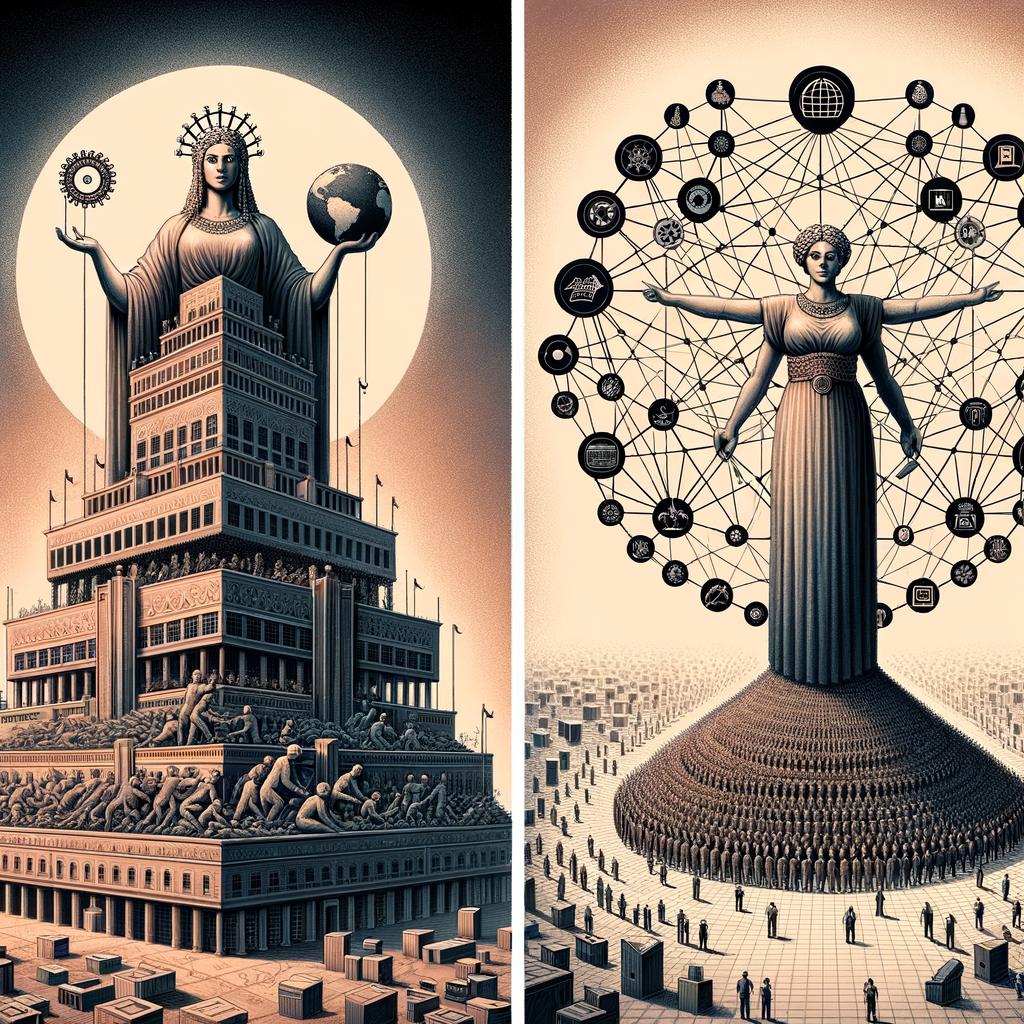
Comparative Analysis: Nostr Versus Traditional Centralized Systems
The contrast between Nostr’s decentralized framework and traditional centralized systems is striking, particularly in terms of data ownership and user autonomy. In centralized platforms, data is typically controlled and owned by the service provider, leading to potential misuse, unauthorized access, or deletion. In contrast, Nostr empowers users by allowing them to maintain ownership of their data through cryptographic keys. This attribute not only ensures that individuals can freely express themselves without fear of arbitrary censorship, but also fosters a more equitable digital economy where users can participate based on their discretion and agency.
Moreover, censorship resistance is a foundational principle where Nostr distinctly outperforms traditional systems. Centralized platforms often exercise significant control over content by enforcing community guidelines or policies that can inadvertently curtail free speech. This central authority can censor or ban users, ultimately undermining their freedom of expression. Nostr’s decentralized model, however, allows for messages and interactions to be propagated across a network without a single point of control. Users are able to communicate without mediators, effectively decentralizing the power dynamics that are often prevalent in conventional social media frameworks.
Lastly, the resilience of Nostr against failures or attacks can be seen as an inherent advantage over traditional centralized models.Centralized systems are usually vulnerable to a single point of failure; when the server goes down or experiences an attack, the entire platform can become inaccessible. Nostr’s architecture, on the other hand, distributes data and functionalities across numerous nodes, enhancing its durability against disruptions.This decentralized approach not only protects against technical failures but also fosters a more robust ecosystem for developers to create resilient applications that align with the evolving needs of users in an increasingly digital world.
Enhancing User Autonomy: Implications and Opportunities within a Decentralized Paradigm
In the context of Nostr’s decentralized architecture, user autonomy is significantly enhanced by allowing individuals to maintain direct control over their data and social interactions. This paradigm shift empowers users to engage with their audiences without intermediaries, fostering a sense of ownership and obligation for their digital presence. With the implementation of cryptographic mechanisms, users can ensure the integrity and authenticity of their contributions, thus bolstering trust in peer-to-peer communications. This autonomy not only leads to richer user experiences but also mitigates the risks commonly associated with data centralization, such as misuse or exploitation by third parties.
Furthermore, the programmability of decentralized networks like Nostr opens up myriad opportunities for developers to create applications that inherently respect user privacy and emphasize consent.The absence of centralized control mechanisms allows for the creation of innovative solutions tailored to users’ needs. For instance, developers can leverage smart contracts and automated processes that operate without the need for intermediaries, thus reducing transaction costs and enhancing efficiency.These developments can lead to various applications such as decentralized finance (DeFi),secure communication tools,and digital identity systems,all contributing to a more robust ecosystem that aligns with the principles of user autonomy.
the implications of this decentralized approach extend beyond individual user experiences and tap into broader societal paradigms. The increased autonomy afforded by platforms like Nostr challenges existing power dynamics, particularly those imposed by large corporations and state entities on communication channels. By fostering a community-driven model, there is potential for a more democratic and participatory environment, where users collaboratively shape the rules and norms governing online interactions. Consequently,the landscape may evolve toward greater inclusivity and resilience,fundamentally altering the ways in which digital societies are structured and function.
Implementing Nostr in Practice: Strategies for Developers and Organizations
Implementing Nostr necessitates a strategic approach that empowers developers and organizations to effectively utilize its decentralized framework. First and foremost,designing with user autonomy in mind is crucial. Applications should prioritize user control over data by enabling local storage solutions and offering intuitive interfaces for managing cryptographic keys. This shift from centralized storage models to decentralized architectures not only enhances privacy but also encourages users to engage more fully, knowing they have ownership and control over their digital identities.
secondly, leveraging existing decentralized technologies can facilitate the integration of Nostr into current systems.developers are encouraged to explore interoperability with blockchain technologies and other decentralized protocols. This approach not only extends functionality but also enriches the user experience by allowing seamless interactions across platforms. Such integrations might include automated tools for verifying cryptographic signatures, which can further enhance trust and security within the network. Fostering collaborations with existing decentralized projects can yield valuable insights and shared resources, thereby accelerating the development process.
it is essential to establish a culture of community engagement around Nostr-based applications. By encouraging feedback loops and open communication channels, developers can create responsive systems that evolve based on user input.Initiating community-driven development processes, such as hackathons, forums, or user testing groups, can aid in identifying challenges and opportunities within the implementation of Nostr.Building a strong community not only strengthens resilience against potential threats but also fosters innovation, as diverse perspectives can lead to the emergence of novel solutions and applications that harness the full potential of this decentralized paradigm.
Nostr represents a significant departure from traditional programming paradigms by championing decentralized communication and fostering peer-to-peer interactions. Its minimalist architecture not only empowers users with greater autonomy but also serves as a robust countermeasure to the vulnerabilities associated with centralized platforms. As digital interactions continue to evolve, Nostr’s approach offers a compelling framework for resilience and democratization, underscoring the potential for a more equitable digital landscape. Future research and development in this domain will likely yield further insights into the implications of decentralized technologies and their capacity to reshape the trajectory of programming and online interactions. As the discourse surrounding these innovations persists,it remains critical to assess their impact and explore the implications for both developers and users within an increasingly interconnected world. Get Started With Nostr