
Understanding Nostr’s Minimalist Architecture and Its Implications for Decentralization
Nostr’s architecture is characterized by its elegant simplicity, focusing on core functionalities that facilitate decentralized dialog without unnecessary complications. The system operates on a decentralized network of users, allowing for direct interactions and data exchanges that are not mediated by central servers. This minimalist design choice minimizes dependency on external infrastructure, which is crucial for maintaining user privacy and data ownership. The absence of intermediaries reduces points of failure, thus enhancing resilience against censorship or unauthorized data manipulation.
the implications of such a design are profound, particularly in the realms of accessibility and user empowerment. By enabling seamless peer-to-peer communication, Nostr democratizes access to details and interaction across various user bases, irrespective of geographic or socio-economic barriers. This promotes an inclusive surroundings where users can freely express themselves and engage with diverse communities, fostering a sense of shared ownership in the digital landscape. Furthermore, the straightforward nature of the architecture facilitates easier onboarding for new developers and users, encouraging broader participation in the ecosystem.
From a technical standpoint, the minimalist architecture encourages innovation as developers can build on the basic framework without convoluted protocols or complex APIs. This flexibility allows for the rapid iteration of ideas and the emergence of various applications tailored to specific needs within the decentralized context. As a result, a diverse range of tools and services can flourish, reinforcing the ecosystem’s adaptability to meet the evolving demands of users. Nostr’s architectural choices not only underline its commitment to decentralization but also catalyze a shift toward a more user-centric, resilient digital future.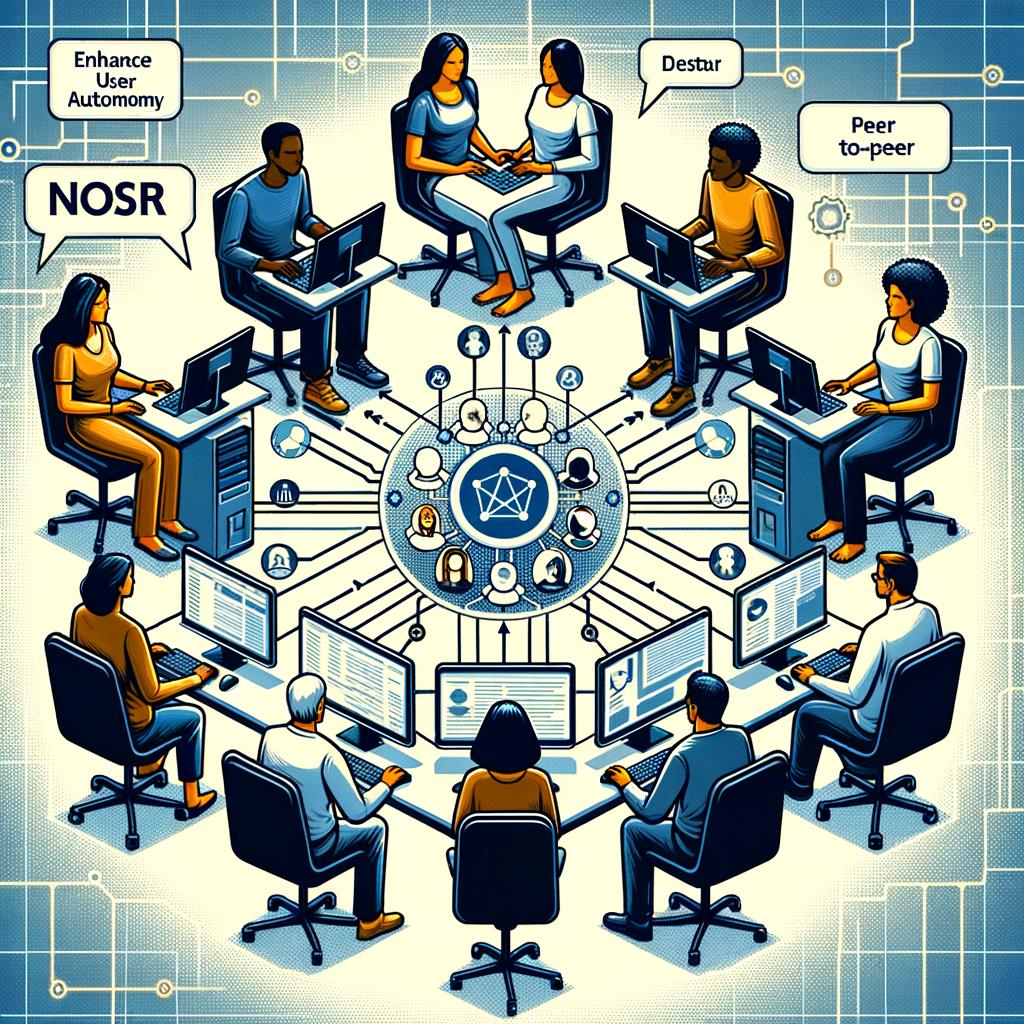
Enhancing User Autonomy Through Peer-to-Peer Interactions in Nostr
The architecture of Nostr fundamentally shifts the paradigm of user interaction within digital ecosystems. By leveraging a peer-to-peer model, users are no longer dependent on centralized servers or intermediaries, which often govern traditional communication platforms. This foundational change allows individuals to connect directly with one another, enhancing user autonomy. Users can choose how they wont to engage, share, or collaborate with others, creating a more personalized experience that is tailored to their specific needs and preferences.
Moreover, the minimalistic design of Nostr eliminates unnecessary complexities that can frequently enough hamper user experience and creativity. By providing only the essential tools for communication, it empowers users to take control of their digital presence. This freedom fosters an environment where innovation can thrive, as users are encouraged to explore and implement their ideas without the constraints typically imposed by larger, centralized services. Decentralization thus becomes a catalyst for creative expression, allowing users to experiment and collaborate in ways that were previously limited by traditional frameworks.
Additionally,the resilient nature of Nostr’s decentralized communication model fortifies user autonomy against external threats,such as censorship and data breaches. With no central authority to control or monitor interactions, users are more secure in their communications, fostering trust and encouraging participation. This resilience encourages diverse voices to emerge in digital dialogues, making it possible for communities to grow organically without overarching corporate influences. In essence, Nostr transforms programming and communication into a more inclusive, user-driven domain, where the users themselves shape the digital landscape.
Resilience and Democratization: The Societal Impact of nostr on Digital Communication
the implementation of Nostr stands to considerably impact societal structures by enhancing resilience in digital communication. Unlike traditional centralized systems, which are vulnerable to single points of failure, Nostr’s peer-to-peer architecture ensures that information can flow freely and robustly across a network. In a world increasingly reliant on digital infrastructure, the ability to maintain communication channels even in the face of censorship or network disruptions empowers individuals and communities. This resilience means that voices that might otherwise be silenced can find alternative methods of expression, fostering a more inclusive dialogue among diverse populations.
Furthermore, democratization is a core value embedded within Nostr’s framework. The decentralized nature of its communication model allows users to take ownership of their digital identities and interactions, mitigating the monopolistic tendencies frequently enough observed in platforms governed by a select few. By promoting open participation and collaborative creation, Nostr dismantles barriers that typically restrict access to digital platforms. This shift not only facilitates equal access to information but also encourages a culture of collective responsibility where users contribute to the maintenance and evolution of the communication ecosystem.
Moreover, the societal implications of nostr’s emphasis on user autonomy extend to the ways in which communities organize and mobilize around shared interests and challenges. With enhanced control over their digital engagements, individuals can engage in activism, information sharing, and community building without fearing repercussions from centralized authorities. The potential for grassroots movements to flourish through resilient and democratized platforms exemplifies Nostr’s revolutionary potential in shaping the future of digital communication, allowing societies to craft a more equitable and participatory digital landscape.
recommendations for Developers: Leveraging Nostr’s Framework to Future-Proof Applications
As developers explore the potential of Nostr’s framework, adhering to its principles of decentralization and security will be paramount. Emphasizing key-signed messages allows for a unique approach to data authenticity. By integrating this feature into applications, developers can ensure that each message retains its integrity while minimizing the risk of tampering or misinformation. Utilizing libraries and tools that support key management will also facilitate smoother implementations, allowing for more robust applications that prioritize user trust.
Another essential aspect to consider is the interoperability that Nostr offers. The minimalist design is deliberately focused on simplicity, enabling different applications to communicate without relying on centralized servers. Developers should leverage this to create tools and platforms that not only serve their primary audience but also interact seamlessly with others in the ecosystem. By fostering this ecosystem of interlinked applications, developers can enhance user experience and community engagement, further establishing their projects as essential components within the Nostr framework.
planning for scalability is crucial when leveraging Nostr’s decentralized architecture. The absence of centralized control means that developers must be proactive in anticipating growth and variability in user demand. Implementing efficient data storage solutions, optimizing message flow, and considering dynamic resource allocation strategies will prepare applications for expansion.By investing in a scalable framework from the outset, developers can future-proof their applications, ensuring long-term viability in a rapidly changing digital landscape.
Nostr represents a significant advancement in the realm of decentralized programming, harnessing the power of key-signed messages to facilitate secure and censorship-resistant communication. By eschewing traditional intermediaries and embracing a fully decentralized architecture, Nostr not only enhances the autonomy of developers but also promotes user agency in the digital landscape. As we continue to navigate the implications of centralized control over communication platforms, Nostr’s approach offers a compelling alternative that prioritizes privacy, security, and interoperability. This paradigm shift not only promises to transform the way applications are developed and deployed but also heralds a new era in which users can enjoy a truly decentralized digital experience. The ongoing evolution of Nostr warrants close observation, as its impact may have far-reaching consequences for the future of Internet communication and programming paradigms. Get Started With Nostr