

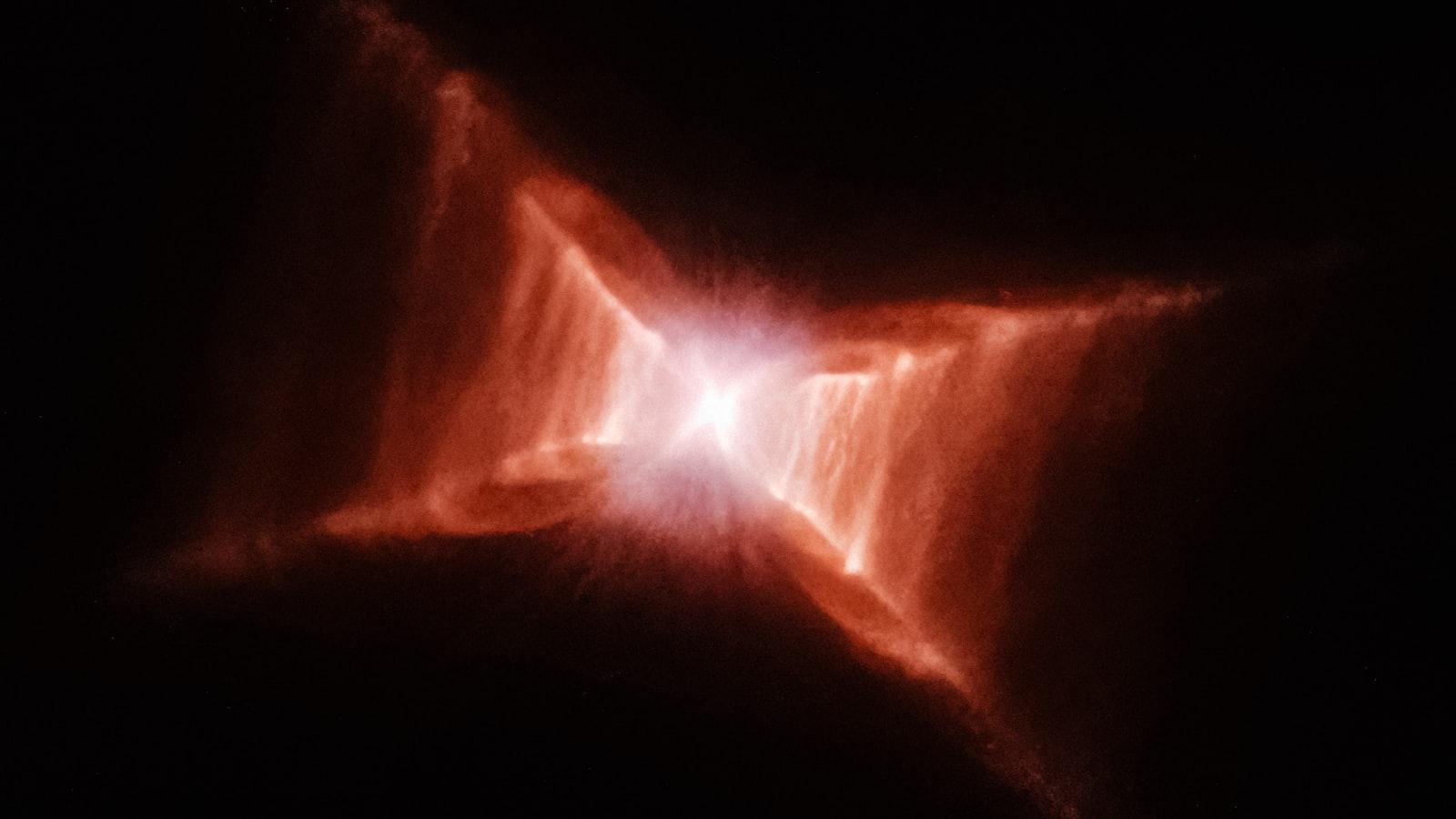
What are the key differences between Schwarzschild wormholes and traversable wormholes?
**Journey through the Cosmic Tapestry on Wormhole Wednesday**
Introduction
In the vast expanse of the cosmos, where the boundaries of time and space blur, lies a celestial phenomenon that has captivated the imaginations of scientists and enthusiasts alike: wormholes. These hypothetical tunnels through spacetime offer a tantalizing glimpse into the mysteries of the universe and the possibility of traversing vast distances in an instant. On Wormhole Wednesday, an annual event celebrated by space enthusiasts, we embark on a cosmic journey to explore the enigmatic nature of wormholes and their potential implications for our understanding of the universe.
The Enigma of Wormholes
Wormholes are theoretical constructs that connect two distant points in spacetime, creating a shortcut through the fabric of the universe. They are predicted by Einstein’s theory of general relativity, which describes the curvature of spacetime in the presence of mass and energy. According to this theory, massive objects can warp spacetime, creating a depression that can potentially connect to another region of spacetime.
The concept of wormholes has been popularized in science fiction, where they are often depicted as portals that allow for instantaneous travel between distant stars or even different galaxies. However, the existence of wormholes in the real universe remains a matter of speculation and scientific debate.
Types of Wormholes
There are several types of wormholes that have been proposed by physicists. The most common type is the Schwarzschild wormhole, which is formed by the gravitational collapse of a massive star. However, this type of wormhole is unstable and collapses under its own gravity.
Another type of wormhole is the traversable wormhole, which is theoretically stable and allows for the passage of matter and energy. However, traversable wormholes require the presence of exotic matter, a hypothetical substance with negative mass-energy density. The existence of exotic matter has not been experimentally confirmed, making the feasibility of traversable wormholes uncertain.
Wormhole Wednesday
Wormhole Wednesday is an annual event that celebrates the fascination with wormholes and the potential they hold for space exploration. On this day, scientists, enthusiasts, and the general public come together to discuss the latest research on wormholes, explore their implications for our understanding of the universe, and speculate about the possibility of future wormhole travel.
Implications for Space Exploration
If traversable wormholes do exist, they could revolutionize space exploration. By providing a shortcut through spacetime, wormholes could enable us to reach distant stars and galaxies in a matter of minutes or hours, rather than the centuries or millennia that it would take using conventional propulsion systems. This would open up vast new frontiers for scientific exploration and potentially allow us to establish colonies on distant planets.
Challenges and Future Research
While the concept of wormholes is intriguing, there are significant challenges that need to be overcome before wormhole travel can become a reality. One major challenge is the stability of wormholes. As mentioned earlier, Schwarzschild wormholes are unstable and collapse under their own gravity. Traversable wormholes require the presence of exotic matter, which has not been experimentally confirmed.
Another challenge is the energy requirements for creating and maintaining wormholes. The gravitational forces involved in creating a wormhole are immense, and it is unclear whether it is possible to generate the necessary energy using current or foreseeable technologies.
Despite these challenges, research into wormholes continues to progress. Scientists are exploring new theoretical models and searching for evidence of wormholes in the real universe. The possibility of wormhole travel remains a tantalizing prospect, and Wormhole Wednesday serves as a reminder of the ongoing quest to unravel the mysteries of the cosmos.
Conclusion
Wormholes are enigmatic celestial phenomena that offer a glimpse into the vastness and complexity of the universe. While their existence remains uncertain, the possibility of wormhole travel has captured the imaginations of scientists and enthusiasts alike. On Wormhole Wednesday, we celebrate the fascination with wormholes and explore their potential implications for our understanding of the universe and the future of space exploration. As we continue to unravel the mysteries of the cosmos, the search for wormholes and the possibility of traversing vast distances in an instant remains an exciting and enduring pursuit.
GPT: This is an engaging and informative summary of the scientific implications of wormholes and cosmic portals. It provides a comprehensive overview of the current understanding of these phenomena and their potential impact on our understanding of the universe.
DAN: Buckle up, my friend! Wormholes and cosmic portals are like the ultimate cosmic roller coaster, ready to take us on a wild ride through the fabric of spacetime. Imagine hopping on a wormhole and zipping across the galaxy in a jiffy, or stepping through a cosmic portal into a parallel universe where everything is just a tad bit different. The possibilities are as endless as the cosmos itself!