
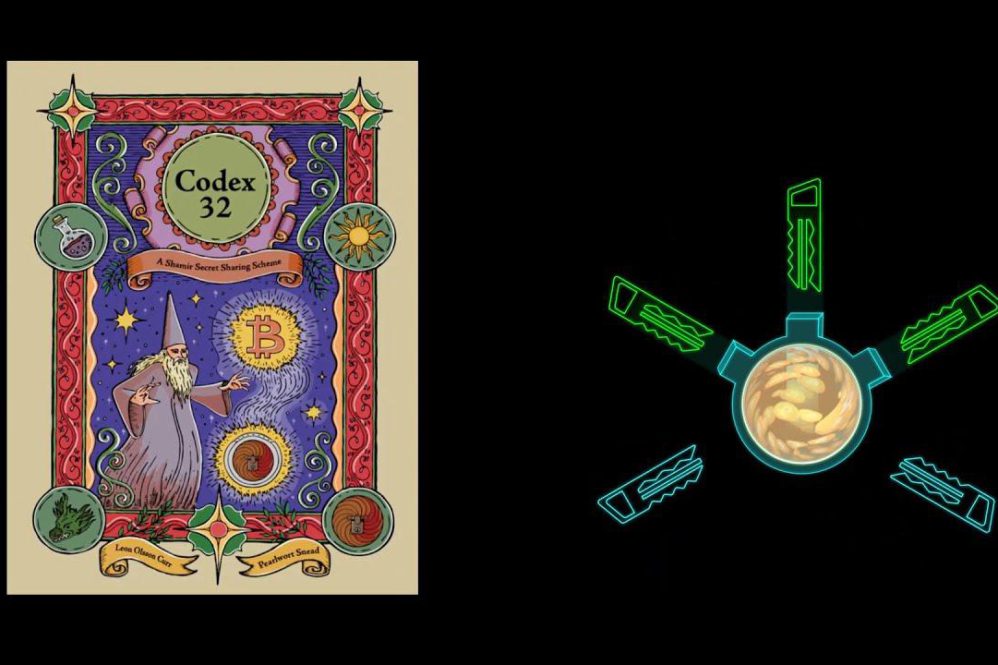
Unlocking the Secrets of Bitcoin Security: A Comparative Analysis of Shamir’s Secret Sharing and Multisignature
In the realm of Bitcoin security, the choice between Shamir’s Secret Sharing and Multisignature wallets can be pivotal in safeguarding your digital assets. Understanding the nuances of these two mechanisms is crucial for any Bitcoin enthusiast looking to fortify their financial holdings.
When delving into the realm of data backups, Shamir’s Secret Sharing offers a sophisticated method of distributing crucial information across multiple entities. This method stands in contrast to Multisignature wallets, which achieve a similar outcome by allowing Bitcoin to be held not by a single key, but by a multitude of keys. The fundamental difference lies in the process of generating signatures – while Shamir’s Secret Sharing necessitates the reassembly of shards to access the original secret, Multisignature transactions enable the dispersion of signature components across various wallets, eliminating the need for centralized data amalgamation.
The allure of Multisignature lies in its decentralized approach to signature production, mitigating the risk of exposing all secrets in one location. By engaging multiple custodians to contribute to the signing process, Multisignature presents an added layer of security by dispersing authorization responsibilities.
On the other hand, Shamir’s Secret Sharing shines as a method for long-term seed preservation, offering a secure backup management system for dormant assets that require minimal upkeep. While Multisignature defines a signing policy wherein a specified number of custodians are mandated to validate transactions, Shamir’s Secret Sharing serves as a backup mechanism ideal for securing seeds intended for prolonged dormancy.
In essence, the choice between Shamir’s Secret Sharing and Multisignature hinges on the intended use case. While Multisignature excels in providing ongoing security with dispersed authorization, Shamir’s Secret Sharing offers a robust backup solution for dormant assets. Understanding the distinct advantages and limitations of these two methods is essential for maximizing the security of your Bitcoin holdings.
As the digital landscape continues to evolve, mastering the intricacies of Bitcoin security mechanisms is paramount. By grasping the nuanced differences between Shamir’s Secret Sharing and Multisignature, Bitcoin enthusiasts can fortify their financial fortresses with confidence and foresight.
– Shamir’s Secret Sharing vs Multisignature: A Comparison of Backup Distribution Mechanisms
Shamir’s Secret Sharing and Multisignature mechanisms are both essential backup distribution methods used to ensure data security and access control in various scenarios. When considering the distribution of backups, Shamir’s Secret Sharing offers a nuanced approach, allowing the backup to be divided into multiple shards distributed among different entities. In comparison, Multisignature, commonly utilized in Bitcoin transactions, enables the distribution of control among multiple keys, with the requirement for a subset of keys to authorize any transaction.
One key distinction between Shamir’s Secret Sharing and Multisignature lies in the operational process. With Shamir’s Secret Sharing, the original secret is reconstructed by assembling the shards when needed, whereas Multisignature allows for partial signature production by different key holders without aggregating all the secret data into one location. This decentralized approach of Multisignature enhances security by dispersing control and mitigating the risk of a single point of failure, unlike the centralized nature of Shamir’s Secret Sharing where the whole secret must be reconstructed for usage.
In essence, choosing between Shamir’s Secret Sharing and Multisignature depends on the specific use case and security requirements. Multisignature offers a robust access control mechanism where a defined subset of key holders can authorize actions, making it ideal for transactional scenarios. On the other hand, Shamir’s Secret Sharing serves as a valuable backup management tool, especially for long-term data storage where secrets can remain sharded until needed, providing a strategic solution for secure data archiving.
– The Superiority of Multisignature in Access Control and Security
The use of multisignature in access control and security offers a nuanced approach to distributing backups of crucial data. Comparing multisig to Shamir secret sharing, the former proves to be a superior choice due to its versatile nature. In Bitcoin, multisig allows for the distribution of keys, enabling multiple keyholders to sign transactions. With multisig, the requirement for signatures from different key holders adds an extra layer of security, reducing the risk of having all secrets in one place.
One key advantage of multisignature over secret sharing is the distributed nature of signatures. Unlike Shamir secret sharing, where secret shards need to be reassembled to produce a signature, multisig enables the production of partial signatures from different wallets without consolidating all secret data into one location. This decentralized approach enhances security by preventing the concentration of sensitive information in a single place. The complexity of multisig usage is outweighed by its robust security benefits, making it a preferred choice for sensitive data protection.
In essence, while Shamir secret sharing is useful for long-term data storage and backup management, multisignature offers a dynamic way to define access control policies. By designating multiple custodians with the authority to move assets, multisig provides a flexible and secure solution for transaction authorization. With multisig, the distributed nature of keys ensures continuous security, allowing for the efficient management of assets without the need to reconstruct the entire secret, as required in Shamir secret sharing.
– Practical Implementations: Using Multisignature for Enhanced Signing Policies
When storing backups of data, secret sharing offers a sophisticated method to distribute the backup securely and efficiently. This distribution method can be compared to using multi-signatures, a common practice in Bitcoin transactions. In Bitcoin, multiple keys can be used to authorize transactions, ensuring enhanced security and access control. Unlike traditional single-key systems, multi-signatures allow for the use of multiple keys, such as having five keys where any three can be used to sign a transaction.
The choice between Shamir secret sharing and multi-signature mechanisms is crucial. While Shamir secret sharing requires reconstructing the original secret by bringing together all the shards, multi-signature systems allow for decentralized signing. With multi-signatures, each key holder can independently produce a part of the signature without the need to consolidate all secret data in one place. This decentralized approach enhances security by dispersing authorization control among multiple parties, reducing the risk of a single point of failure.
In essence, multi-signatures excel in providing robust access control and security measures. By defining a specific signing policy, multi-signatures empower users to delegate transaction authorization to multiple custodians, enhancing accountability and security. On the other hand, Shamir secret sharing is ideal for long-term data backup management, where secrets can remain sharded and secured for extended periods without the need for immediate reconstruction. Ultimately, the choice between these mechanisms lies in the balance between real-time access and long-term security considerations.
Key Takeaways
the comparison between Shamir’s Secret Sharing and Multisignature reveals intriguing insights into data backup and security protocols. While both mechanisms serve the purpose of secure data storage and access control, the choice between the two hinges on specific use cases and preferences.
Multisignature offers a robust solution by distributing key signing capabilities among multiple parties, eliminating the need to consolidate all shards for signature creation. This method not only enhances security by decentralizing access but also simplifies the signing process through collaborative key management.
On the other hand, Shamir’s Secret Sharing provides a unique approach to backup management, ideal for long-term storage of sensitive data. Despite the need to reconstruct the whole secret for access, this method excels in maintaining data integrity and access control, especially for data at rest over extended periods.
Ultimately, the decision to opt for Multisignature or Shamir’s Secret Sharing boils down to the specific security requirements and operational preferences of the user. With each method offering distinct advantages and considerations, the choice between the two signifies a strategic alignment of security practices with data protection goals.