

The Fundamentals of onion Routing: How It Works
At the core of onion routing is the concept of multiple layers of encryption. When a user initiates a request to access a website, their data is encapsulated in several layers of encryption, much like the layers of an onion. Each layer is decrypted by a different node within the network, which serves to mask the original source of the data. This means that no single node knows both the origin and destination of the data, effectively shielding user identities from potential trackers.
The process begins when the user’s device connects to the first node, often referred to as the entry node. the entry node decrypts the outermost layer of encryption, revealing the next node’s address which the message must travel to. As the data passes through a series of intermediate nodes, each node progressively decrypts one layer, revealing the subsequent destination until it reaches the exit node. At this point, the data is sent to the final destination, appearing as if it originated from the exit node itself, ensuring the user’s anonymity throughout the transmission.
Moreover, this routing system incorporates a variety of protocols that enhance security and privacy. These protocols include circuit switching and traffic padding, which help in obfuscating user patterns and making it more difficult to monitor activity. In addition, onion routing does not rely on a centralized server, which further reduces the risk of censorship and surveillance.This decentralized approach is basic to maintaining a robust framework for privacy in the increasingly interconnected online world.
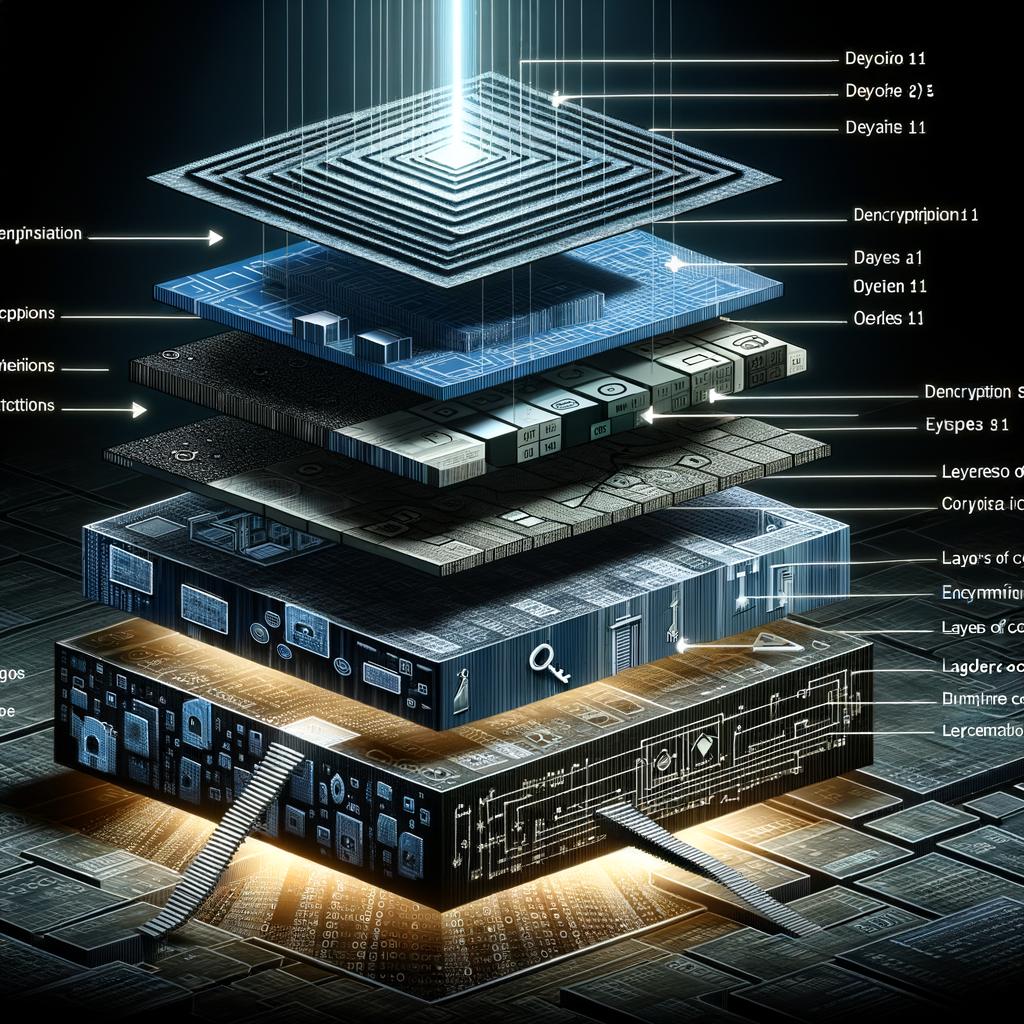
The Layers of privacy: Breaking Down the Encryption Process
The encryption process consists of multiple layers, each designed to safeguard information from unauthorized access. at its core, encryption transforms readable data into a coded format through algorithms. These algorithms rely on keys—strings of data that are central to the process of both encrypting and decrypting information. The strength of encryption is heavily influenced by the complexity of these algorithms and the length of the keys used. Shorter keys may be susceptible to brute-force attacks, where potential intruders systematically attempt every possible key until they succeed in access.
Another critical layer involves the use of symmetric and asymmetric encryption. in symmetric encryption, the same key is used for both encryption and decryption, facilitating a relatively quicker process but posing risks if the key falls into the wrong hands. On the other hand, asymmetric encryption employs a pair of keys: a public key for encryption and a private key for decryption. This dual approach not only enhances security but also allows individuals to share their public key freely while maintaining control over their private key, thereby bolstering overall data protection.
Additionally, the implementation of end-to-end encryption serves as a crucial shield for communications and sensitive data transfer. This method ensures that only the communicating users can read the messages, with no intermediaries having access to the encrypted content.however,despite its advantages,achieving full end-to-end encryption requires robust protocols and user compliance with security practices,as any lapse can compromise data integrity.Users must be aware of these complexities to navigate the digital landscape safely and effectively, ensuring that their privacy remains intact amidst advancing technology.
Navigating the Dark Net: The Role of Onion Routing in Anonymous Browsing
Onion routing provides users with a unique method for accessing the Dark Net, an area of the internet that operates beyond the reach of customary search engines. As users delve into this often-misunderstood part of the web, the implementation of onion routing becomes essential for maintaining privacy and anonymity. By encrypting internet traffic in layers, each node in the routing path only knows the preceding and following nodes, ensuring that no single entity can trace the entire journey of the data. This layered encryption is what sets onion routing apart, effectively shielding users from prying eyes.
The Tor network, built on onion routing principles, serves as a gateway to the Dark Net. Users can access websites with the .onion suffix, which can only be reached through Tor, thus not appearing on conventional browsers. In this encrypted space,individuals are afforded a greater sense of security,whether they are discussing sensitive topics,seeking out whistleblower platforms,or engaging in activities that may be deemed unsafe in their regions. However, it is crucial to understand the implications of this anonymity; while many utilize it for benign purposes, others may exploit it for illegal activities.
As the risks associated with online activity increase, onion routing has emerged as an indispensable tool for those seeking to preserve their digital footprint. While navigating the Dark Net, users must remain conscious of evolving threats and the potential for exploitation. Educational resources and community guides can further help individuals familiarize themselves with safe practices and protect their identity while browsing this complex network. Ultimately, understanding the role of onion routing empowers users to take control of their online privacy and navigate the Dark net with confidence.
onion routing stands as a pivotal advancement in the quest for online privacy. By layering encryption and routing data through a series of volunteer-operated nodes, users can considerably enhance their anonymity in an increasingly surveilled digital world. As concerns about data privacy and personal security continue to escalate, understanding the mechanics and implications of onion routing becomes more critical than ever.Whether you are a casual internet user or a privacy advocate, the knowledge of how this technology operates equips you with the tools to navigate the web more securely. As we explore further into the complexities of digital privacy, it is essential to remain informed about advancements like onion routing that empower users to reclaim control over their online identities. For those looking to delve deeper into protecting their digital footprints, embracing such technologies could be a transformative step towards a more private and secure online experience.