
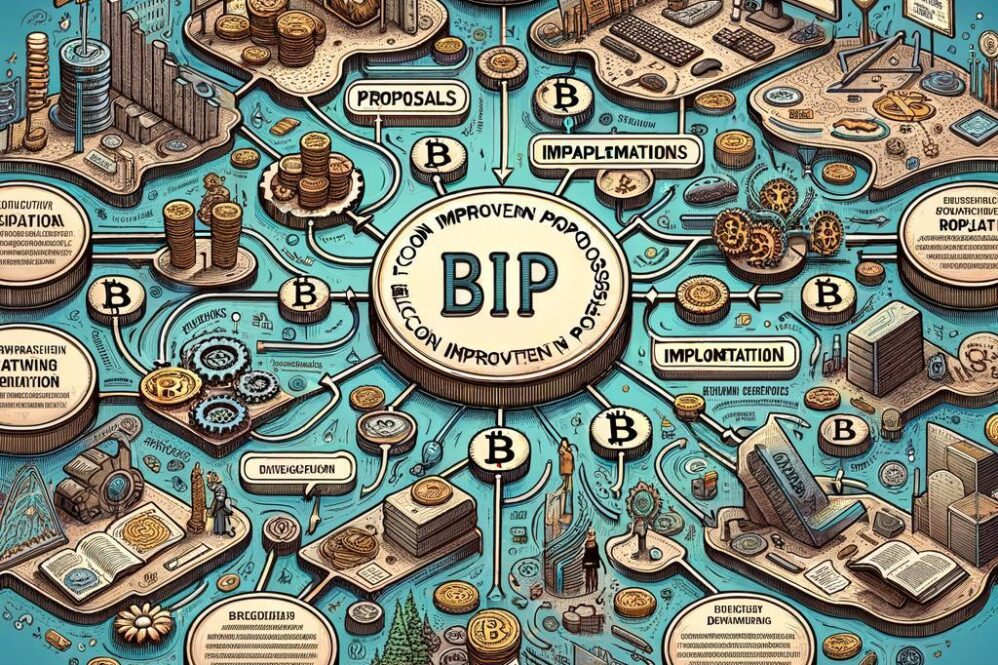
Understanding BIP: The Blueprint for Bitcoin’s Evolution
Bitcoin Improvement Proposals (BIPs) are essential components of the Bitcoin ecosystem, serving as the foundation for ongoing growth adn enhancement. Each BIP outlines specific changes or upgrades, ensuring that any modifications to the bitcoin protocol undergo rigorous scrutiny and debate within the community. This collaborative process fosters transparency and inclusivity, allowing developers, miners, and users to weigh in on proposed changes, thus reinforcing the decentralized nature of Bitcoin.
Among the various proposals, some focus on scalability, addressing the challenges of transaction speed and network congestion. One prominent example is BIP 32, which introduced hierarchical deterministic wallets, enabling users to generate a tree of keys from a single seed. This innovation not only enhances user experiance but also improves security by allowing users to manage multiple Bitcoin addresses without the risk of losing access.As the network grows, such scalable solutions become increasingly vital to accommodate rising transaction volumes.
Another critical area that BIPs tackle is security.Proposals like BIP 141, which implemented Segregated Witness (SegWit), not only optimize block space but also enhance the security of transactions against certain types of attacks. By separating transaction signatures from the transaction data,SegWit reduces the size of transactions and allows for a greater number to be processed within each block. This ensures that as more users adopt Bitcoin, the network remains resilient and secure, adapting to emerging threats and maintaining user trust.

The Role of Bitcoin Improvement Proposals in Shaping the Network
Bitcoin Improvement Proposals (BIPs) serve as a crucial framework for proposing changes and enhancements to the Bitcoin network. They establish a standard method for developers and stakeholders to communicate new ideas, allowing for systematic discussions about potential upgrades. Each proposal undergoes a rigorous vetting process, where community feedback is solicited and technical assessments are performed, ensuring that any changes made are in the best interest of the ecosystem.
Among the various types of BIPs, the most recognized are:
- Protocol BIPs: These proposals tackle fundamental changes to Bitcoin’s protocol itself, influencing how transactions are processed and validated.
- Informational BIPs: These serve to educate the community about specific features, methodologies, or best practices without suggesting changes to the actual Bitcoin protocol.
- Standard BIPs: They define standards for Bitcoin-related development, ensuring compatibility and interoperability among different tools and applications.
The impact of BIPs extends beyond mere technical adjustments; they foster community engagement and collaboration. By allowing for open dialog among developers, miners, and users, bips enable a decentralized approach to governance that reflects the diverse interests within the Bitcoin community. As the network grows and evolves, these proposals will continue to play a pivotal role in shaping the future of Bitcoin, balancing innovation with security and stability.
Future Innovations: How BIPs Drive Bitcoin’s Potential and Adoption
the evolution of Bitcoin is significantly influenced by Bitcoin Improvement Proposals (BIPs), which serve as a critical framework for introducing new features or enhancements. These proposals undergo rigorous debate and analysis within the Bitcoin community, ensuring that any potential changes align with the overall goals of the network.BIPs address various aspects of Bitcoin, including security enhancements, transaction efficiency, and scalability improvements.
One of the most notable examples of a BIP that has impacted Bitcoin’s trajectory is BIP 032, which introduced the concept of Hierarchical Deterministic (HD) wallets. This innovation not only enhanced user privacy but also simplified the process of managing Bitcoin addresses, leading to a more user-kind experience.As developers propose and refine new BIPs, they scrutinize the potential trade-offs while prioritizing Bitcoin’s decentralization and integrity, which is crucial for its ongoing adoption.
Moreover, the success of future innovations hinges on community consensus, which can sometimes be contentious. Nonetheless, the collaborative nature of bips fosters an environment of transparency and inclusivity, encouraging a wide range of stakeholders-including developers, miners, and users-to participate in discussions.The implementation of well-conceived BIPs can ultimately enhance Bitcoin’s technological foundation, drive wider acceptance, and position it as a more effective choice to traditional banking systems.
As we stand on the precipice of Bitcoin’s evolving landscape, understanding Bitcoin Improvement Proposals (BIPs) emerges as a crucial element in deciphering the currency’s future. These proposals not only reflect the collective vision of a dedicated community but also signify the ongoing dialogue between innovation and security that is vital for Bitcoin’s longevity. The pathway paved by BIPs demonstrates that while Bitcoin may embody a decentralized ethos, it is indeed also a living project, shaped by the ideas and aspirations of its contributors.
As we demystify these proposals, we unlock insights into potential upgrades that could enhance scalability, privacy, and usability, ensuring bitcoin remains a relevant and robust player in a digital economy increasingly defined by rapid technological advancement. The commitment to rigorous debate and consensus reflects not just the resilience of Bitcoin but also the adaptability required in an ever-evolving financial ecosystem.
Navigating the intricacies of BIPs is not merely an academic venture but a call to engage with the future of finance. As enthusiasts, developers, and investors alike keep a watchful eye on these developments, it becomes clear that each BIP could hold the key to unlocking a new chapter in Bitcoin’s narrative. In this quest for understanding, staying informed and involved is paramount, as the decisions made today will undoubtedly sculpt the Bitcoin of tomorrow.