

Nostrs Revolutionary Software Paradigm: A Decentralized Alternative to Web2 Giants
At the heart of Nostr’s revolutionary software paradigm lies a profound rejection of Web2’s centralized dominance. By dismantling the walled gardens erected by tech giants, Nostr empowers users with unprecedented control over their data and online interactions. No longer subject to the whims and algorithms of monolithic platforms, individuals can connect and communicate freely, fostering a more open, equitable, and censorship-resistant digital landscape.
Moreover, Nostr’s decentralized architecture fosters a level of adaptability and robustness unmatched by traditional software models. Freed from the constraints of rigid, monolithic designs, Nostr applications can seamlessly evolve and adapt to changing user needs and technological advancements. This inherent flexibility ensures that Nostr remains relevant and responsive in a rapidly evolving digital ecosystem.
Nostr’s emphasis on substance over form extends beyond its technical architecture. The protocol’s minimalist design ethos prioritizes functionality and usability, eschewing flashy aesthetics and unnecessary embellishments. This unwavering focus on core principles allows developers to create software that is not only effective but also accessible and user-friendly. By stripping away superficial distractions, Nostr empowers users to interact with technology in a more meaningful and intuitive manner.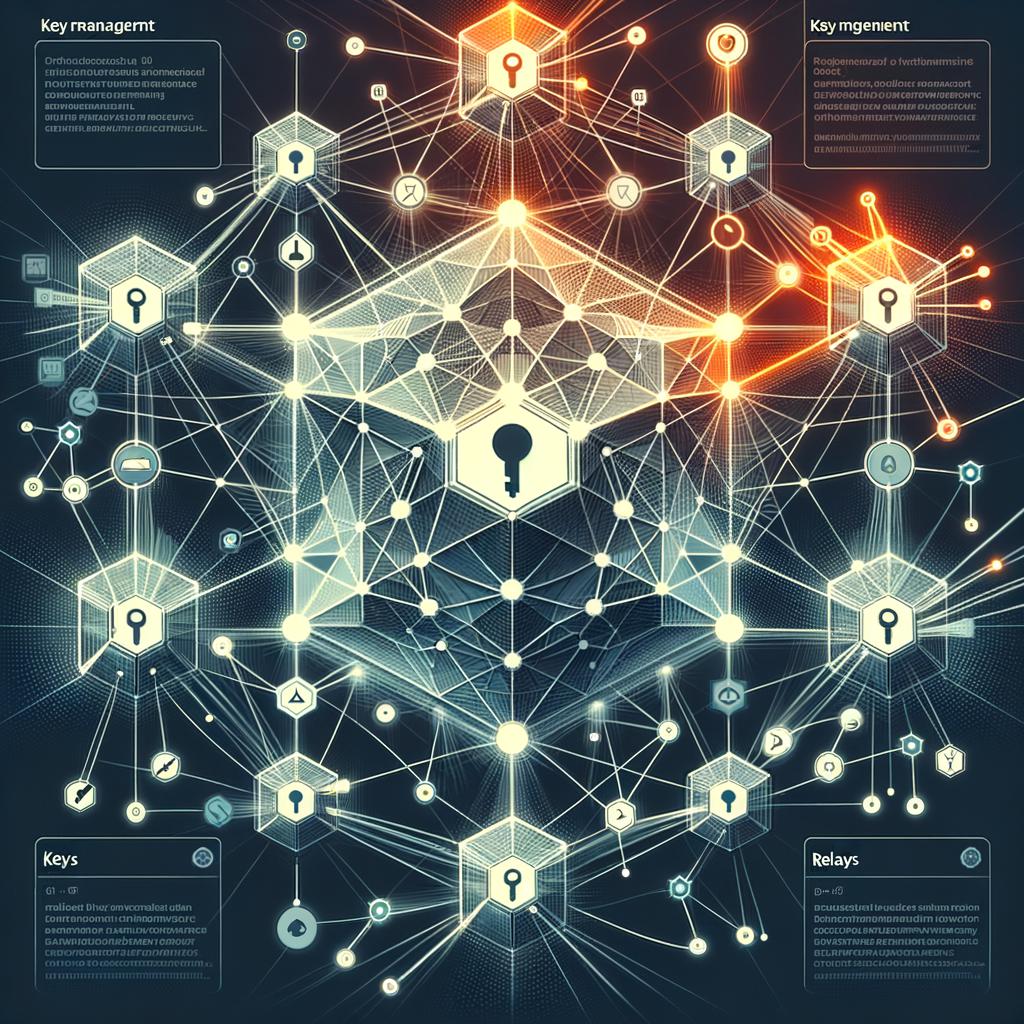
The Power of Relays and Key Management in Nostrs Decentralized Architecture
The Power of Relays and Key Management in Nostr’s Decentralized Architecture
Relays: The Backbone of Nostr’s Decentralized Network
Nostr employs a distributed network of independent relays instead of relying on a central server. These relays receive and transmit Nostr “events,” which encapsulate messages, posts, and other data. The use of multiple relays ensures that no single entity can censor or control the network. This decentralized approach grants users greater resilience and censorship resistance.
Asymmetric Key Management
Nostr utilizes asymmetric key management to protect user privacy and data security. Each Nostr user generates a private key and a public key. The private key is used to encrypt messages and sign posts, ensuring that only the sender can access their content. The public key is used to verify signatures and receive messages, allowing other users to communicate securely. This key management system empowers users with sole ownership and control over their personal data, minimizing the risk of intermediaries intercepting or abusing user information.
Autonomy and User-Centric Design
By leveraging a decentralized architecture and asymmetric key management, Nostr empowers users with unprecedented autonomy and control over their online presence. Users are not bound to any specific platform or entity, and they retain full ownership of their data and identity. This user-centric design promotes the flourishing of truly independent voices and content creators, fostering a more diverse and equitable digital landscape.
Impact of Nostr on Social Media, Privacy, and Censorship Resistance
- Liberation from Centralized Control: Nostr’s distributed architecture eliminates reliance on a central authority, dismantling the gatekeeping practices that have historically plagued social media platforms. Individuals regain control over their data, safeguarding their privacy and empowering them to express themselves freely without fear of censorship.
- Enhanced Privacy and Data Autonomy: The end-to-end encryption and decentralized nature of Nostr ensures the confidentiality and integrity of user communications. Personal data remains under the user’s exclusive control, minimizing the risks associated with data breaches and privacy violations.
- Resilient Against Censorship: Nostr’s censorship-resistant design makes it virtually impossible for any entity to silence or suppress content. By leveraging the robustness of the blockchain, Nostr empowers users to share and access information without fear of retaliation or suppression.
Integration and Adaptation of Nostr into Existing Social Media Landscape
The decentralized architecture of Nostr poses challenges for its integration into the existing centralized social media landscape. The absence of a central authority necessitates the development of novel approaches to account management, content discovery, and community governance.
One promising strategy for integration involves the creation of bridging applications that connect Nostr to popular platforms like Twitter and Facebook. These bridges allow users to access their Nostr accounts within the familiar interfaces of established social media platforms, enabling seamless interaction between centralized and decentralized networks.
Moreover, the open nature of the Nostr protocol fosters the development of specialized applications tailored to specific use cases. For instance, decentralized chat applications, news aggregators, and even editorial platforms may emerge, catering to the diverse needs of users and content creators. These niche applications can leverage Nostr’s censorship resistance and end-to-end encryption to enhance privacy and empower marginalized voices within the existing social media ecosystem.
Conclusion
Nostr, with its innovative decentralized design paradigm, presents a transformative vision for the future of online communication. By prioritizing user ownership, autonomy, and privacy, Nostr lays the groundwork for a more equitable and community-oriented digital landscape. Its open-source and permissionless architecture fosters a vibrant ecosystem of innovation and collaboration. The widespread adoption of decentralized protocols such as Nostr has the potential to revolutionize the software industry, empowering users and giving them greater control over their digital experiences. As Nostr continues to evolve and gain traction, it is poised to shape the future of online interaction, offering a more open, secure, and user-centric internet.