

In recent years, the acronym BRICS has become very popular within geopolitical and economic circles. Originating from a grouping of the world’s leading emerging economies — Brazil, Russia, India, China, and South Africa — the term has become a prominent symbol of economic and financial collaboration between emerging markets. But what is the relation between BRICS and Ripple (XRPL), one of the most popular blockchain-based payment protocols? This article seeks to explore and understand the link between the two.
I. Introduction to BRICS and Ripple (XRPL)
BRICS: What It is and How It Works?
BRICS is an acronym for the five major emerging economies, Brazil, Russia, India, China, and South Africa. It was created in 2009 to help in development of these five countries to make them major economic forces. It encompasses their individual strengths and focuses on their shared opportunities, such as forming infrastructure development, promoting of regional trade, and seeking innovative solutions to financial and economic challenges. The collaboration works with the global economy to stimulate growth of the grouping’s economies, while also continuing to strengthen South-South cooperation.
Ripple (XRPL): Cryptocurrency for Low-Costing Transactions
Ripple (XRP) is a digital cryptocurrency launched in 2012 which allows global financial transactions to occur with low fees, faster settlement times, and increased security. The network is unique because there is no need to wait for miners to confirm transactions. Transactions occur within RazorLedger, an open source decentralised-server where consensus is reached on the validity of a transaction. It is known for its efficiency, as it is capable of handling over 1500 transactions per second and is reliable for cross-border payments.
Giving Rise to the BRICS Rising: Combining Ripple and BRICS
This combination of Ripple and BRICS provides an opportunity for efficient and rapid payments and settlements while utilizing the BRICS platform. It opens up new paths for collaboration to promote globalisation, and fight poverty. Each individual country in the BRICS rising program will have its own specific objectives, meaning that the platform will be able to cater to different countries’ needs and support the economic growth of their respective countries.
Advantages of Ripple and BRICS Collaboration
The combination of Ripple and BRICS will result in various advantages for the countries and participants:
- It will facilitate faster, more cost-effective payments between nations.
- Transaction costs will be more affordable.
- Transactions will be secured and reliable.
- The platform will benefit members in the cross-border trading sector.
Potential Challenges for Implementing Ripple and BRICS Collaboration
The implementation of this collaboration may present various challenges, such as the need to adjust existing static banking strategies, as well as the lack of interest from some governments or central banks in adapting new technology. In addition, the need to invest in technology infrastructure to support Ripple and BRICS could prove to be the largest hurdle for countries involved. There is also the risk of potential fraud or data misuse, which is a huge challenge for any network’s security.
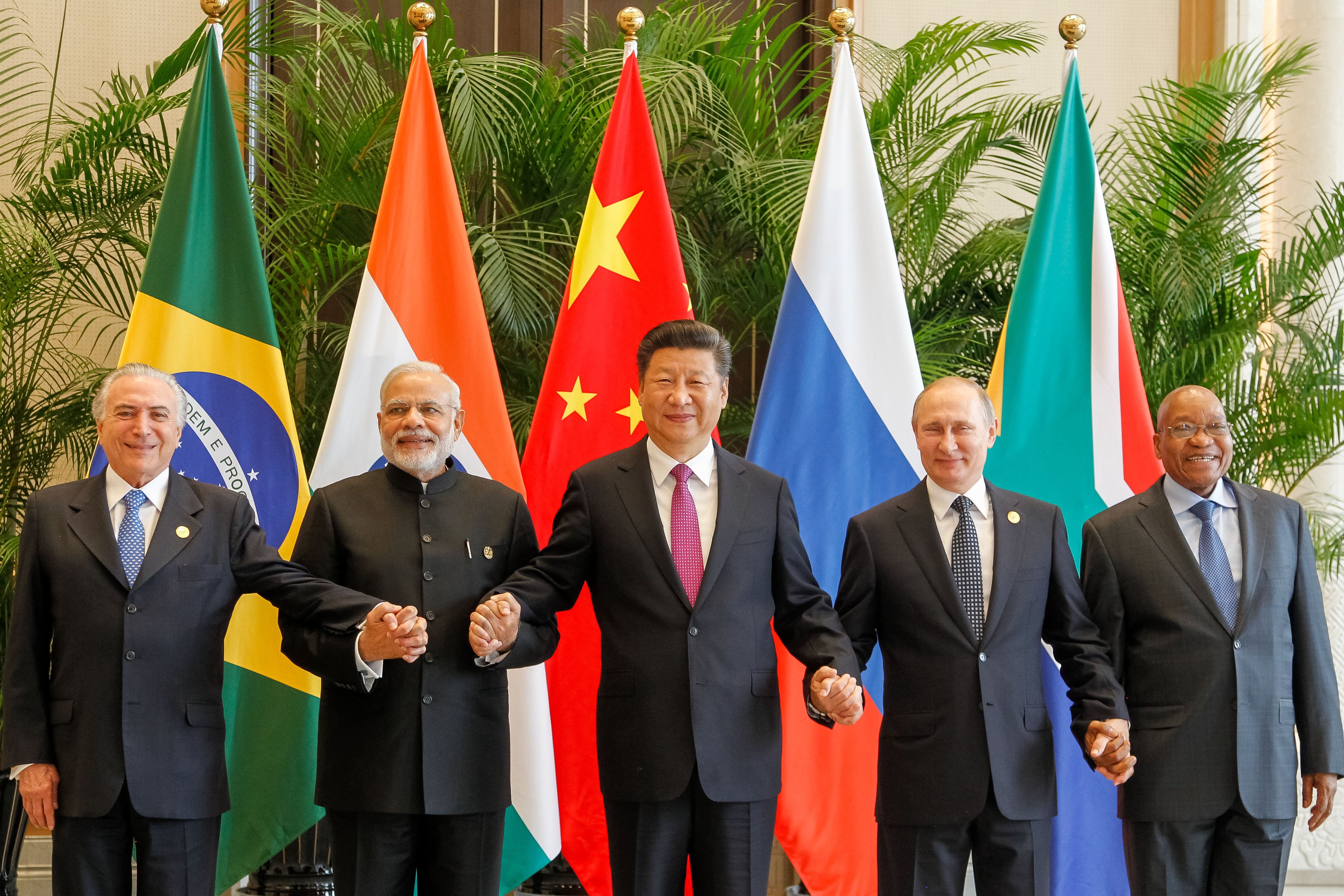
II. Examining the Relationship Between BRICS and Ripple (XRPL)
The relationship between the BRICS countries and Ripple (XRPL) is a topic of great interest to many people. As the world’s largest developing countries, they have an important role to play in the ongoing evolution of the blockchain and cryptocurrency markets. The potential implications of their collaborations and decisions can have ripple effects throughout the global financial system.
The research conducted by experts have revealed that Ripple is clearly a leader in making global transactions easier. It is one of the most popular blockchain protocols available in the market and the BRICS countries have been actively exploring the possibilities of some form of collaboration. In 2019, the Central Bank of Brazil announced that it has begun testing a blockchain-based payment system for inter-country transactions.
One of the areas that the BRICS countries and Ripple (XRPL) collaboration could bring about significant progress is in the remittance services. With Ripple’s technology, they have the potential to reduce the costs of remittance such as transaction fees, exchange rate markups, and delays due to manual processing.
The development of Ripple’s remittance service, xRapid, has already been adopted by some of the world’s largest financial institutions, such as MoneyGram, Ria and Western Union. If the BRICS countries were to join forces with Ripple, they could leverage the technology to improve their payment systems and provide a more convenient, efficient, and cost-effective solution.
Furthermore, the use of Ripple’s XRP-based technology also has the potential to reduce the opacity in international payments. By tracking payments through a distributed ledger system, banks and financial institutions could reduce the likelihood of fraud, money laundering, and other illegal activities.
III. Exploring the Benefits of the BRICS-Ripple (XRPL) Connection
More than Rates and Transactions
The partnership between the BRICS Hub and Ripple (XRPL) is about more than just rates and transactions. It is an endeavor that thrives on expanding opportunities and connecting markets. The focus is on creating a unified digital infrastructure that is powered by a distributed ledger system capable of managing various types of digital and financial assets.
Endless Possibilities
Ripple (XRPL) has the potential to become the bridge between brokers, banks, and other financial markets owned by and operated within the countries of the BRICS Hub. This opens up endless possibilities for the internationalization of currencies, remittances, recoveries, and other services such as retail payments, as well as for the creation of new services such as insurance.
Cost Reduction
BRICS Hub and Ripple (XRPL) have created a powerful combination for reducing costs associated with cross-border payments and compliance objectives. The transaction fees significantly cheaper than ot)her methods, depending on the chosen path. Moreover, the blockchain space is well-suited to satisfy increasingly strict know-your-customer requirements as well as provide traceability between various transactions.
Scalability with Security
Ripple (XRPL) and the BRICS Hub also provide users with various security features such as distributed ledger access, cryptographically-secure message interchange and protocol-level privacy protection. All these measures ensure that the ledger is continually healthy, safe and up-to-date.
Interoperability of Global Systems
The connection between Ripple (XRPL) and BRICS Hub offer unparalleled interoperability between global systems, allowing various stakeholders to connect with the same infrastructure. This means that businesses, regardless of their size, locations or capital, can transact and engage with each other in an economical, secure and reliable manner.
IV. Conclusion: Maximising the BRICS-Ripple (XRPL) Partnership
BRICS-Ripple (XRPL) Partnership is a Game Changer
The coming together of two very different organizations with their varied capabilities – BRICS and the Ripple (XRPL) blockchain payments platform – is a huge advantage for both. Ripple can take advantage of BRICS’s lucrative economic agreements, while the BRICS countries have access to the security, speed, and scalability of Ripple’s payment solutions. This partnership is a major step forward for both sides.
Potential Benefits and Challenges
The BRICS-Ripple (XRPL) Partnership has the potential to offer numerous advantages for each side. For one, BRICS will gain access to Ripple’s leading edge blockchain platform, helping them navigate the complexities of cross-border payments quickly and securely. With Ripple, BRICS member countries can also gain instant settlement and co-existence among disparate ledgers. Ripple, in turn, stands to benefit from access to BRICS’s preferential economic trade arrangements.
However, with such an arrangement come certain challenges. Firstly, trust and acceptance of the Ripple’s technology by the BRICS countries is essential for the partnership to succeed. This is especially challenging in view of the different regulatory and compliance frameworks present in the BRICS countries. In addition, Ripple must demonstrate its ability to meet the various security and operational standards of the BRICS countries. Finally, Ripple must ensure the scalability of its platform to handle the increased volume of transactions.
Maximising the BRICS-Ripple (XRPL) Partnership
In order to make the most of the BRICS-Ripple (XRPL) Partnership, both sides must employ certain strategies:
- BRICS countries must work together to ensure seamless implementation of the Ripple platform across all BRICS countries.
- Ripple must remain dedicated to maintaining the highest standards of security and scalability.
- Both parties must ensure that all data and transfers remain compliant with existing and future regulations.
- BRICS must work with Ripple to develop innovative approaches to their payments systems.
- Ripple must work diligently with the BRICS countries to guarantee trust and acceptance of its technology.
With the right strategies in place, the BRICS-Ripple (XRPL) Partnership can offer tremendous benefits to both sides. This type of collaboration has the potential to revolutionize global payments, and the coming together of these two organizations is sure to be a major step in that direction.
The potential of the relationship between BRICS and Ripple (XRPL) could bring radical changes to the payments system in developing countries. It could potentially bring a faster, safer and easier way to transact financial payments in both the developed and emerging economies. The future of both countries and the people they serve lies in this partnership that could help drive the global payments system into the future.