

As people increasingly rely on digital payments for convenience and safety, many have been developing new ways for customers to pay more efficiently. Bitcoin, a type of cryptocurrency, has been gaining popularity since its creation in 2009 and now a former Facebook executive has suggested that it will usher the world into a new era of payments. In a recent interview, the executive said that Bitcoin could lead the world out of the “fax era of payments” that we’re currently living in.
- I. Ex-Facebook Executive Predicts Bitcoin Will Help End Payment Fax Era
- II. Bitcoin: The Future of Global Payment Processing
- III. Benefits of Transitioning to Digital Payment System
- IV. How Bitcoin Could Transform Financial Infrastructure Worldwide
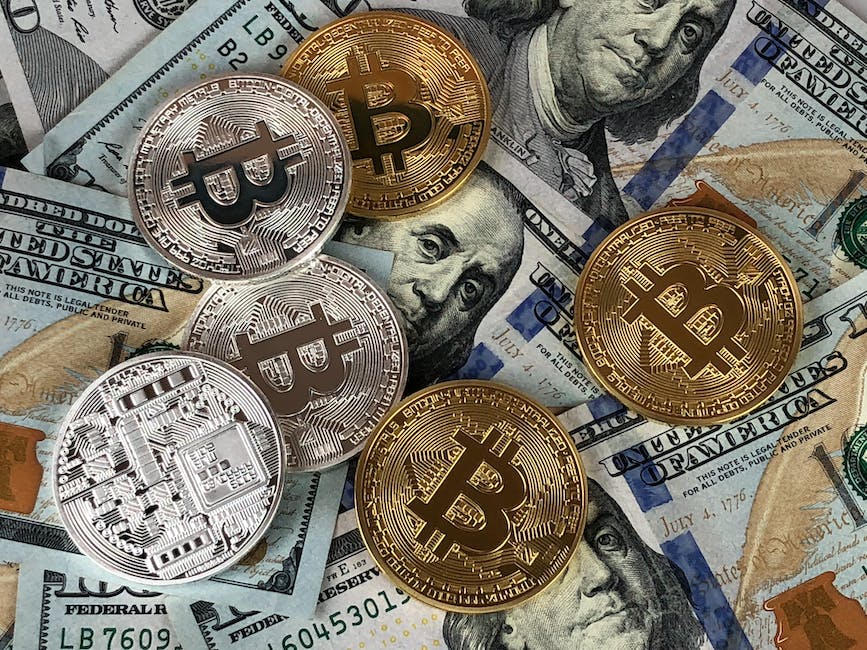
I. Ex-Facebook Executive Predicts Bitcoin Will Help End Payment Fax Era
A former Facebook executive, Ben Davenport, predicted that Bitcoin will help to obliterate the archaic practice of payment faxing. Davenport, a prominent early investor in cryptocurrency projects, said that Bitcoin makes it easy to send money to people in a fraction of a second and regardless of geographic distance. He believes this process is a more secure and user-oriented alternative to payment faxing.
Advantages of Bitcoin
One of the benefits of using Bitcoin instead of payment faxing is the enhanced security. Bitcoin transactions are enabled by digital wallet addresses; each deals with a specific amount of cryptocurrency. As the entire transaction occurs in digital form, it can be encoded so no information is accessible to outsiders. This makes it more difficult for hackers to access the transaction and prevents any financial information from being exposed, unlike faxing.
Additionally, Bitcoin transactions are extremely cost-effective. Transaction costs are low for entities using Bitcoin and the currency is not subject to third-party affiliations or hidden fees. Bitcoin also eliminates the need for intermediaries such as banks or brokers, allowing for a more straightforward,quick, cost-efficient, and secure payment process.
Conclusion
Bitcoin is an emerging means of securely executing payments and Ben Davenport’s prediction gives validity to the potential success of the cryptocurrency as a payment solution. Bitcoin’s digital advantages, such as encryption and cost-effectiveness, make it an increasingly viable candidate for replacing the antiquated payment fax system all together.
II. Bitcoin: The Future of Global Payment Processing
In recent years Bitcoin has revolutionised the payment processing industry, enabling faster and more secure payments at a fraction of the traditional cost. As a result, it has been adopted by businesses around the world that need an efficient and cost-effective way to process payments.
The technology behind Bitcoin is known as blockchain, and it essentially provides a secure digital ledger that can be used to quickly and securely record a transaction. This allows transactions to be tracked and verified, reducing the risk for both buyers and sellers. Additionally, transactions are processed in a shorter amount of time, without the need to wait for potentially lengthy settlement periods.
Finally, Bitcoin payments are entirely anonymous, removing any need to provide sensitive financial information. This makes them ideal for those who wish to remain anonymous while engaging in online transactions. The anonymity aspect also increases the security of payments, as the risk of identity theft or fraud is drastically reduced.
- Faster: Unlike traditional methods, Bitcoin transactions are processed quickly.
- Secure: The blockchain ledger allows transactions to be securely tracked and verified.
- Cheaper: Bitcoin transactions are significantly cheaper than traditional methods.
- Anonymous: Payments are anonymous, maintaining users’ privacy.
III. Benefits of Transitioning to Digital Payment System
The use of digital payment systems offers significant commercial advantages. Here are some of the main benefits of transitioning to digital payment systems.
Increased Efficiency
In recent years, companies have come to rely more heavily on digital payment systems as a means of optimizing efficiency. Digital payments require limited manual processing, eliminating time-consuming check deposit and reconciliation procedures. Moreover, instant access to digital payment data allows for improved cash flow management.
Reduction in document costs
The manual processing of payments is both time-consuming and costly. By transitioning to digital payments, companies can expect to reduce the number of documents associated with payments. This not only improves the speed of payment processing but also reduces the overhead associated with printing and filing.
Improved security
Digital payment systems offer enhanced levels of security. The use of encryption technology and two-factor authentication further ensure that sensitive payment data is kept secure and confidential. Furthermore, the use of digital wallets eliminates the risk of investment fraud through fraudulent credit card charges.
- Digital payments reduce manual processing costs
- Organizations can improve data security
- Digital payments offer improved cash flow management
IV. How Bitcoin Could Transform Financial Infrastructure Worldwide
The Bitcoin revolution has opened the gates to a new, decentralized economic model. By bypassing centralized institutions such as banks and governments, Bitcoin could potentially transform financial infrastructure worldwide. Here are some ways that Bitcoin has already had a disruptive effect on global finance:
- Bitcoin allows users to send and receive money across the globe, without hefty fees or long waiting times. In comparison to traditional banking methods, Bitcoin is much faster and often cheaper, meaning users can save money and time.
- It has aided the unbanked in areas across the world, allowing people that are excluded from banking services to access financial accounts. This ensures a larger portion of the world’s population has access to an increasingly important service.
- It has enabled customers to invest in different currencies, which can promote global economic diversity and open up markets for small businesses and middle-class citizens. This has the potential to reduce the CO2 footprint of distant transactions.
Bitcoin has no central authority, so it is harder to manipulate, track and freeze transactions. This can lead to a more trustful system that is less likely to be vulnerable to fraud – a huge benefit for consumers, merchants and banks alike. On the other hand, due to its high level of privacy, some governments may be wary of Bitcoin, as it can lead to illegal transactions.
Overall, Bitcoin can help level the playing field by providing a more efficient and accessible financial infrastructure. But ultimately, it is up to individuals to decide whether Bitcoin’s advantages outweigh its risks.
It remains to be seen whether blockchain technology and its applications will lead us to a future of seamless payments, but former Facebook executive David Marcus’ opinion is certainly one to be taken into consideration. His view of Bitcoin leading the world out of the Fax Era of Payments is one that could be a harbinger of things to come if the technology can be embraced and adopted.