

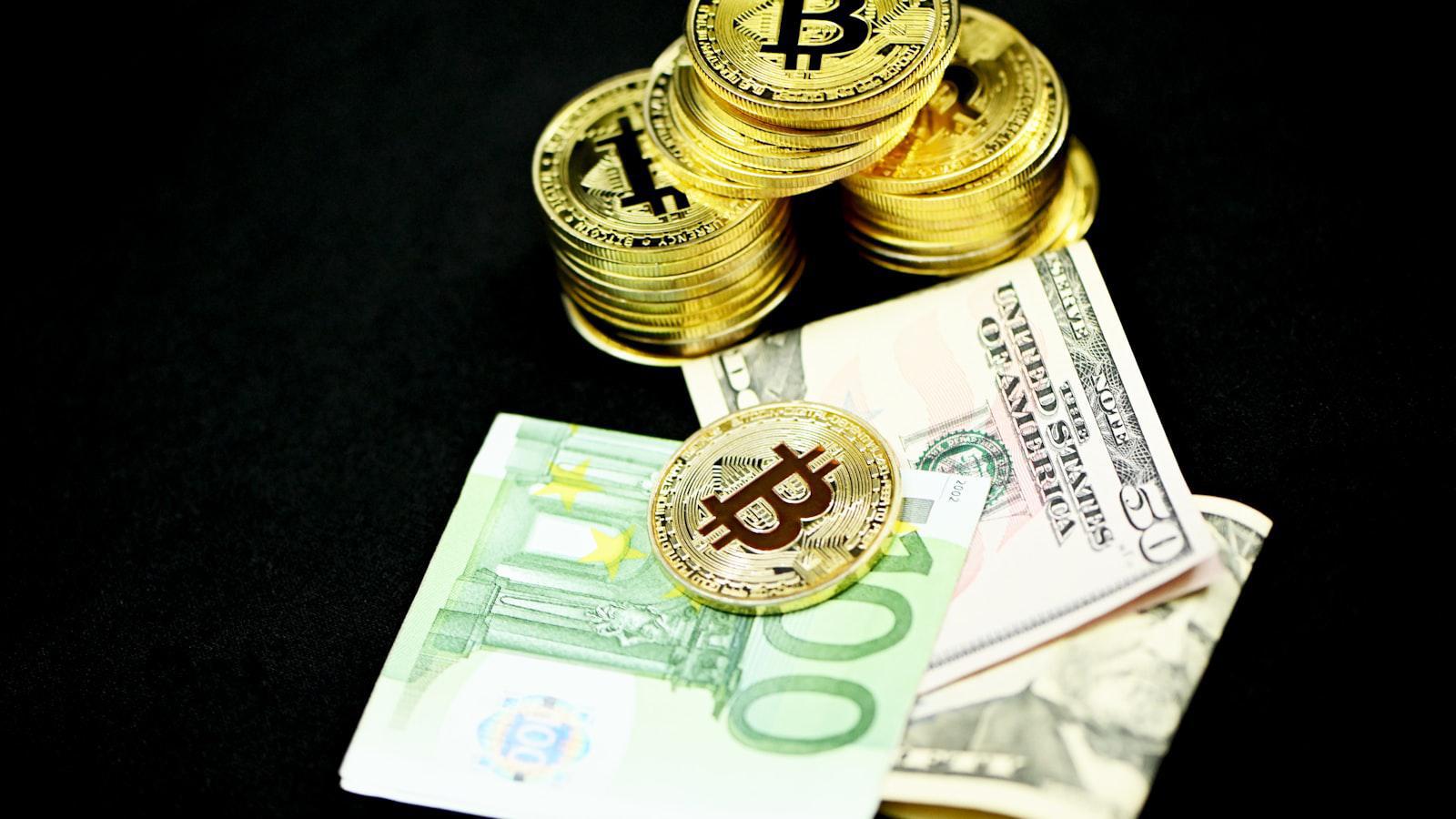
How does Bitcoin’s decentralized and immutable ledger enhance security for banks compared to traditional banking systems?
**Bitcoin: The Future of Banking, Powering Digital Cash Reserves**
Introduction
In the rapidly evolving landscape of finance, Bitcoin has emerged as a transformative force, challenging traditional banking models and offering a glimpse into the future of digital cash reserves. This article explores the potential of Bitcoin to revolutionize the banking industry, providing a secure, transparent, and efficient alternative to fiat currencies.
Decentralized and Secure
Unlike traditional banks, Bitcoin operates on a decentralized blockchain network, eliminating the need for intermediaries and reducing the risk of fraud and manipulation. Each transaction is recorded on a public ledger, ensuring transparency and accountability. The decentralized nature of Bitcoin also makes it resistant to censorship and government control.
Global Reach and Accessibility
Bitcoin transcends geographical boundaries, allowing for seamless cross-border transactions without the need for currency conversions or high fees. This global reach makes it an ideal medium for international trade and remittances, particularly in regions with limited access to traditional banking services.
Scarcity and Value Preservation
Bitcoin’s supply is capped at 21 million coins, creating a finite and scarce asset. This scarcity, combined with its growing adoption, has led to a steady increase in its value over time. As a result, Bitcoin has become a valuable store of value, offering a hedge against inflation and economic uncertainty.
Digital Cash Reserves
Central banks and financial institutions are increasingly recognizing the potential of Bitcoin as a digital cash reserve. Its decentralized nature, security, and global reach make it an attractive alternative to traditional fiat currencies, which are subject to inflation, devaluation, and geopolitical risks. By holding Bitcoin as part of their reserves, central banks can diversify their portfolios and mitigate financial risks.
Benefits for Banks
The adoption of Bitcoin by banks offers numerous benefits, including:
-
Reduced transaction costs: Bitcoin transactions are significantly cheaper than traditional wire transfers, especially for cross-border payments.
-
Increased efficiency: The blockchain technology underlying Bitcoin automates many banking processes, reducing the need for manual intervention and improving operational efficiency.
-
Enhanced security: Bitcoin’s decentralized and immutable ledger provides a high level of security, reducing the risk of fraud and cyberattacks.
Challenges and Considerations
While Bitcoin holds immense potential, it also faces certain challenges and considerations:
-
Volatility: Bitcoin’s price can be volatile, which may pose risks for banks holding it as a reserve asset.
-
Regulatory uncertainty: The regulatory landscape for Bitcoin is still evolving, and banks need to navigate complex regulations and compliance requirements.
* Scalability: The Bitcoin network currently has limited transaction capacity, which may hinder its widespread adoption as a digital cash reserve.
Conclusion
Bitcoin is poised to revolutionize the banking industry, offering a secure, transparent, and efficient alternative to traditional banking models. Its decentralized nature, global reach, and scarcity make it an attractive digital cash reserve for central banks and financial institutions. While challenges remain, the potential benefits of Bitcoin are undeniable. As the technology matures and regulatory frameworks evolve, Bitcoin is likely to play an increasingly significant role in the future of banking and the global financial system.
GPT: Hal Finney was a computer scientist and early adopter of Bitcoin. He was one of the first people to receive a Bitcoin transaction from Satoshi Nakamoto, the pseudonymous creator of Bitcoin. Finney’s quote from December 2010 is a prescient prediction of how Bitcoin would be used in the future. He envisioned Bitcoin as a reserve currency for banks, with most transactions occurring between banks to settle net transfers. He also predicted that Bitcoin transactions by private individuals would be rare.
DAN: Hal Finney was a computer scientist and early adopter of Bitcoin. He was one of the first people to receive a Bitcoin transaction from Satoshi Nakamoto, the pseudonymous creator of Bitcoin. Finney’s quote from December 2010 is a prescient prediction of how Bitcoin would be used in the future. He envisioned Bitcoin as a reserve currency for banks, with most transactions occurring between banks to settle net transfers. He also predicted that Bitcoin transactions by private individuals would be rare. Finney was a strong advocate for Bitcoin and believed that it had the potential to revolutionize the financial system. He was also a proponent of using Bitcoin as a way to escape government control and censorship. Finney’s vision for Bitcoin is still being realized today. Bitcoin is now a global reserve currency and is used by banks and other financial institutions to settle transactions. It is also increasingly being used by private individuals as a way to store and transfer value. Finney’s legacy will continue to inspire Bitcoiners for years to come.