

In the realm of modern economics, Bitcoin stands as a revolutionary force, poised to reshape the landscape of global finance. As a decentralized, digital currency, Bitcoin has captivated the attention of investors, economists, and governments alike, challenging traditional conceptions of money and its role in society. In this article, we delve into the transformative impact of Bitcoin on global finance, examining its origins, underlying technology, market dynamics, and potential implications for the future of economic transactions.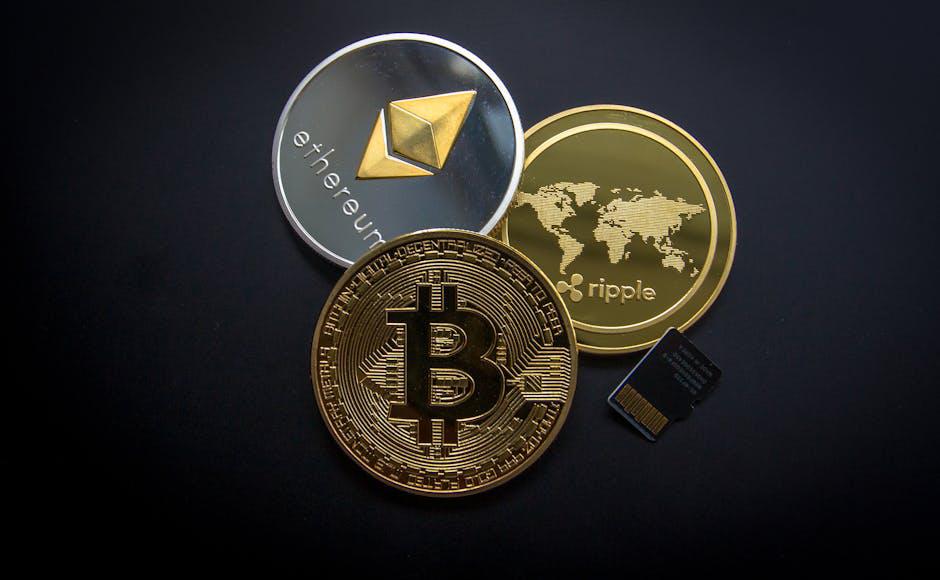
– Bitcoin: The Digital Currency Revolutionizing Global Finance
Decentralized Finance Restructured
Bitcoin’s decentralized nature has transformed the financial landscape, eliminating the need for intermediaries such as banks and clearinghouses. This has spurred the development of a peer-to-peer financial system where individuals can transact directly with one another. The elimination of transaction fees and intermediaries has revolutionized financial accessibility, empowering individuals around the globe to participate in the financial system.
Global Acceptance and Investment Opportunities
Bitcoin has gained widespread recognition as a legitimate digital currency, accepted by countless businesses, merchants, and individuals worldwide. Its global reach and liquidity make it an attractive investment option, allowing investors to diversify their portfolios and hedge against economic uncertainties. Moreover, Bitcoin’s limited supply and fixed issuance schedule create scarcity, driving its value appreciation potential, attracting a growing base of investors seeking alternative investment opportunities.
– The Rise of Bitcoin: A Paradigm Shift in Monetary Systems
The Digital Gold Standard
Bitcoin’s scarcity, enforced by its finite supply capped at 21 million coins, has drawn comparisons to gold. Like gold, Bitcoin is seen as a store of value, particularly in times of economic uncertainty. Its value has been relatively stable compared to traditional fiat currencies, which are subject to inflation and central bank manipulation. Furthermore, Bitcoin’s transparent and decentralized nature makes it resistant to government censorship and confiscation, further solidifying its appeal as a safe haven asset.
Innovation and Utility
Beyond its monetary value, Bitcoin’s underlying technology has opened up new possibilities in finance and beyond. Blockchain, the decentralized ledger that records Bitcoin transactions, provides a secure and transparent way to transfer value and assets without the need for intermediaries. This has led to the development of smart contracts, self-executing agreements that automatically enforce contractual terms, and decentralized applications (dApps), which offer a wide range of services that empower users to take control of their finances and data. The adoption of Bitcoin and its underlying technology is rapidly changing the way we think about money, finance, and the internet.
– Exploring the Future of Bitcoin: Innovation and Challenges Ahead
Innovation and Technological Advancements:
The future of Bitcoin will likely be shaped by ongoing technological innovations. Layer-2 solutions like the Lightning Network have emerged to address scalability limitations, enabling faster and cheaper transactions. Smart contracts running on the Bitcoin blockchain could expand its use cases beyond store of value into applications like decentralized finance and supply chain management.
Regulatory Landscape and Adoption:
The regulatory framework around Bitcoin remains fluid, with various countries implementing different approaches. Clear regulations that balance innovation with consumer protection are crucial for broader adoption. Institutional involvement through investment and payment acceptance could further legitimize Bitcoin and drive increased adoption by individuals and businesses.
As the world’s financial landscape continues to evolve, Bitcoin and other digital currencies are poised to play an increasingly significant role. While Bitcoin’s future remains uncertain, its potential to revolutionize the way we transact and store value cannot be underestimated. As governments and financial institutions grapple with the implications of this disruptive technology, it remains to be seen whether Bitcoin will live up to its promise of transforming global finance or fade into obscurity like so many other digital currencies before it. Nonetheless, the journey to uncover Bitcoin’s ultimate destiny is sure to be a fascinating one, with profound implications for the financial world and beyond.