

Technology behind the blockchain industry is evolving rapidly, and with it, a bevy of new and diverse applications. It is no surprise that projects such as Backed Now are utilizing this technology to better understand the power of the blockchain. Backed Now has recently announced that it is now natively issuing tokens on BNB Smart Chain—an Ethereum-based blockchain platform—enabling new integrations and scalability that may result in immense opportunities. This article will explore the implications of this move and will gauge the market’s response to it.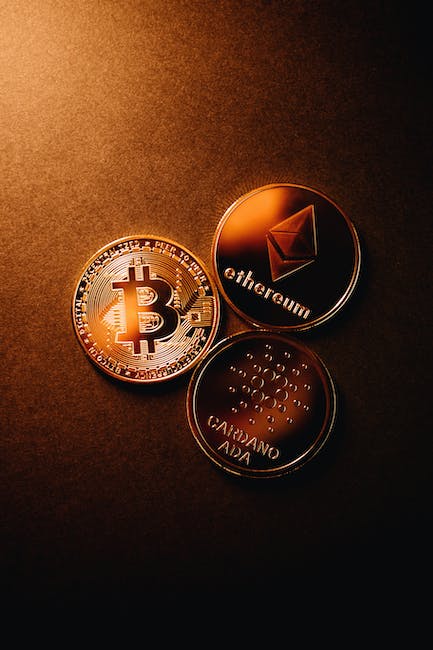
1. Binance Now Natively Issues Tokens on BNB Smart Chain
Binance, one of the most prominent crypto exchanges, is continuing its mission of making tokens more accessible to anyone, anywhere. As part of this mission, Binance is now offering support for tokens issued on BNB Smart Chain, enabling faster and more efficient operation of tokens for businesses and organizations looking to roll out their products faster.
The Binance Smart Chain offers a wide range of features that make it ideal for token creation. It offers low transaction costs, high throughput, and scalability, allowing businesses to launch their own token-based products in a short amount of time. It also supports advanced features such as smart contracts and decentralized applications, enabling businesses to build powerful and secure products.
The ability to natively issue tokens on the Binance Smart Chain allows businesses to easily access a large user base from across the globe. Businesses are no longer limited to a single platform, and can now offer their tokens to customers and users worldwide. This opens up new avenues of growth for businesses, and can potentially create new streams of revenue.
The introduction of BNB Smart Chain token issuance on Binance will be a welcome addition for businesses and organizations seeking to leverage the advantages of tokenization. It will provide greater access to the global market, as well as a platform for businesses to create secure and reliable products that are accessible to anyone, anywhere.
2. Unlocking New Integrations and Scalability
Robust enterprise-level systems require the right tools for integration and scalability. With the necessary components, your company can unlock the potential of its operations and services, ensuring its long-term sustainability. If you are looking to get the most out of your business, you should focus on the following:
- Identify Potential Integrations – This step involves research and exploration of available frameworks and tools and identifying the ones that could be most beneficial for your company’s goals. Consider industry standards, implementation complexities, and maintenance requirements.
- Develop an Implementation Strategy – Create a plan to put each integration into action. Determine a timeline, consider potential challenges, and be sure to include feedback loops that make sure initiatives are running to plan.
- Assess Scalability – Not every new integration is capable of scaling. Take time to test out any new tools and integrations on a basic level and ensure their capability of meeting your long-term needs.
- Measure and Refine – Constantly monitor how new tools are working for you and modify or develop workarounds when needed. Additionally, make sure to reassess scalability and compatibility for these new tools and processes as time goes on.
By putting the time into building the right integrations and solutions, your business can operate at its peak efficiency and leave you with the confidence that you can handle whatever challenges may come your way. With the help of integration and scalability, the sky is the limit for your success.
3. Exploring the Impact of Tokenization on Digital Assets
Tokenization is a process that creates a digital asset, or token, which can be traded or used to represent a physical asset. Tokenization is becoming increasingly popular in the digital world, pushing the boundaries of the traditional financial sector to include a wider variety of digital asset classes. In this article, we’ll explore how tokenization is influencing the digital asset industry, and how it may create new opportunities for investors.
Creating a New Asset Class
Through tokenization, physical assets can be digitized and traded as easily as a stock or bond. This creates a new asset class, one that is easier to access, and carries a lower minimum investment and trading cost. Investors and corporations have already begun to explore tokenization to increase liquidity and create a wider range of asset classes. Tokenization also helps to democratize investing, making more assets available to the average investor.
Better Security for Investors
- Tokenization ensures greater security for investors due to its digital infrastructure
- This infrastructure safeguards the assets against theft, manipulation of asset records, and tampering
- Tokenization also makes transactions more transparent and records more accessible for investors
In addition to the security benefits, tokenization is widely regarded as a more efficient and cost-effective way of managing assets. Transactions are much faster, more transparent, and require less paperwork than traditional methods. Tokenization also enables investors to access a wider range of assets than ever before.
Introducing a New Frontier
Ultimately, tokenization provides investors with an exciting avenue of exploration in the digital asset industry. With the processes, protocols, and tools already existing for tokenized assets, the industry is now more accessible and streamlined than ever before. As tokenization continues to advance, it will introduce more innovative ways to facilitate trading, transfer ownership, and access funds.
4. Increased Efficiency & Security of Token Transactions
The security and efficiency of token transactions are key considerations for investors and enterprises. Token-based transactions are built on innovative technology, however, they come with associated risks.
Risks of Delays and Reversals – Token transactions are entirely digital and, unlike physical cash, there is a risk of a transaction being delayed or reversed. The digital infrastructure in a token network should be designed to minimize such risks. To protect investors from delays and reversals, a secure and reliable consensus protocol is essential.
Authentication Necessary – To ensure secure and efficient transaction processing, authentication is necessary. The authentication system will need to be robust and the network scalable, with protocols in place to verify identity and provide data privacy.
Smart Contracts Facilitate Transactions – Smart contracts are digital programmatic protocols that are used to facilitate, verify and enforce the terms of a transaction. These contracts provide a way to mutually agree on the terms of a transaction and automate the execution of those terms. Smart contracts can ensure that each transaction is recorded and enforced, without the need for a trusted third-party.
- Protocols and authentication needed to secure token transactions.
- Smart contracts to automate transaction execution and guarantee performance of parties.
- Secure and reliable consensus protocols needed to minimize risk of delays or reversals.
- Scalable network to allow authentication and data privacy.
Its clear that BNB Smart Chain has enabled Backed Now to issue tokens natively, creating new opportunities for integrations and scalability. This will create immense potential for the platform in the future, aiding in its growth and development. It remains to be seen how businesses and projects use BNB Smart Chain for their own benefit, paving the way for a new wave of innovation.
For an organization coming into the cryptocurrency space it is paramount that they take advantage of the technology. Backed Now’s new integration is further proof that native tokens are a necessity, and provides a much needed, more efficient path to a rapidly evolving industry.