

Deepfakes, the artificial intelligence-based technology that can create digital representations of people, have become disturbingly advanced. According to latest reports, an upgrade in the technology has made AI deepfakes even more realistic – and raises the risk of them being used maliciously. Experts have observed that the ease and speed with which faces can now be replaced poses major ethical and legal quandaries. In this article, we explore the implications of the upgraded AI deepfakes and what can be done to prevent their misuse.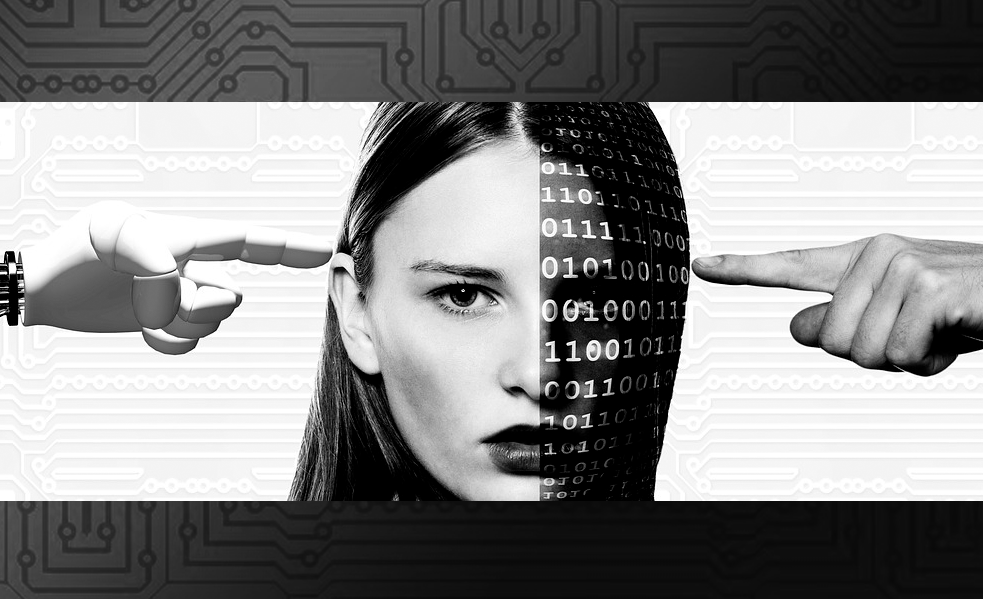
1. Artificial Intelligence Deepfakes Get Major Upgrade
Deepfakes – the technology of manipulating videos to replace faces in the videos – have got a major new upgrade. It can now be used to manipulate audio and image as well.
What Does the New Version Do? The new deepfake technology can now manipulate audio to change a voice in a recording. It can also be used to change a person’s body in an image, such as making someone taller or changing their body shape.
Who Benefits from the Upgrade? It has the potential to do a wide variety of things. Artists and filmmakers can use this to help create realistic characters and scenes. It can also be used by advertisers to create realistic images of their products.
What are the Risks? Deepfakes created with this new upgrade could be used for malicious purposes, such as creating forgeries of audio or images. They could also be used to spread misinformation or spread malicious rumors.
So, while deepfakes can be used positively, the new upgrade comes with some risks that should be considered.
2. The Potential Impact of Improved Deepfake Technology
Data Manipulation and Fake Information
Deepfake technology has started to be more and more used across the internet and has also begun to be used in the media and politics. This type of technology has the potential to lead to a huge amount of data manipulation and spread of false information, with massive implications for the public and security issues.
Negative Social and Political Influence
One of the main concerns is that with increased deepfake technology it will be easier for malicious actors to spread fake information or manipulate data, which could have a significant negative social and political impact. The threat of false information being spread by deepfakes is particularly concerning as it could be used to manipulate public opinion or create confusion and mistrust.
Misleading Videos
Deepfakes can also be used to create misleading videos, which can be used to discredit individuals or spread false information about events that did not even take place. This could potentially be used to manipulate public opinion or create confusion about important issues.
Advanced AI Technology
The increased use of deepfakes will also necessitate the development of new and advanced AI technologies to be able to detect and combat deepfakes. This includes the need for new ways to detect deepfake videos, but also ways to protect the public from being exposed to false or malicious information.
3. AI Deepfakes Become Increasingly Convincing
Advances in artificial intelligence are making it easier than ever for anyone to generate deepfakes. Dramatically improved algorithms allow for increasingly realistic counterfeit images and videos to be produced, raising both ethical and security issues.
- Background. Deepfakes are created by analysing the source material. Algorithms are used to analyze the source material and then use existing databases to create a deepfake. The technology has become available to ordinary people, so anyone can create a deepfake. This makes it increasingly difficult to differentiate between real and fake images and videos.
- Progress. Recent advances in AI have made it possible to create unprecedented levels of deepfake realism. High-resolution photo manipulation and AI-generated imagery are becoming increasingly convincing, to the point where it is difficult to tell the difference between the original and the fake without any context clues or close examination. This is due to AI’s ability to analyze the source material and generate a deepfake that looks indistinguishable from the real thing.
- Implications. There are ethical and security implications of this technology. It can be used to manipulate public opinion or commit fraud and could potentially have a destabilizing effect on society. The technology is also being used to produce offensive or defamatory content, which could have a damaging effect on individuals and brands.
- Conclusion. AI Deepfakes are becoming more and more realistic, making it increasingly difficult to differentiate the real from the fake. This technology is creating a range of ethical and security issues which must be addressed in order to protect people and organizations from being taken advantage of.
4. Questions Arise Around Regulatory Interference
As the debate surrounding the role of regulatory interference intensifies, a multitude of questions have been raised. These range from the practical implications of governmental regulation to the fundamental question of whether regulation ultimately leads to economic prosperity or stagnation.
One of the main questions is whether governmental intervention crowds out private innovation. Proponents of free-market economics argue that government interference hinders the creative thinking needed to drive creative solutions, leading to missed opportunities and reduced overall productivity. Conversely, those who favor a more centralized approach argue that without government guidance, the market can’t reach its full potential.
Another pertinent question is whether regulation hampers dynamism in the global economy. Critics point to instances of regulatory overreach as an impediment to investment and risk taking, while other observers seek out evidence of successful regulation.
Finally, there is a debate over the capability of any one government to effectively regulate an increasingly complex ecosystem. Some experts argue that institutional capacity is too limited, while others argue that smart, targeted regulations can still produce effective outcomes.
- Do governmental interventions crowd out private innovation?
- Does regulation inhibit economic dynamism?
- Can any one government effectively regulate a complex global economy?
5. Expert Commentary on AI Deepfakes & Upgrade
As artificial intelligence (AI) deepfakes become increasingly realistic, experts consider the implications and possible upgrades for this technology.
Proponents of AI Deepfakes
Many experts view AI deepfakes as an opportunity for experimentation with visual storytelling. AI could be used to create realistic images for marketing campaigns or even to provide movie-like visuals for a social media post. With AI, animators can also test different classic stories and see how viewers respond to them before making a film or TV adaptation.
Opponents of AI Deepfakes
On the flip side, many argue that AI-generated visuals can be used to mislead and manipulate, especially during elections and other important decisions. They feel the deepfake technology may be too powerful, leading to technology companies and government entities competing to develop the most advanced, and potentially the most deceptive, AI deepfakes.
Upgrading AI Deepfakes
Suggested upgrades to AI deepfakes focus on accuracy. Algorithms could be used to detect and prevent any artifice in the visuals, limiting their deployability to extreme levels of accuracy. People also suggest the use of watermarks in all deepfakes or the integration of a warning text on the deepfakes to denote their artificial nature. Ultimately, experts are looking for ways to prevent malicious actors from taking advantage of AI deepfakes.
The development of AI deepfakes is one of the most talked about topics in the tech community today. With the latest upgrade, this technology is becoming even more accessible and powerful. As these tools and technologies continue to evolve, it is likely that we will see even more incredible applications for AI deepfakes in the future.