

The last ten years of modern history have ushered in a new era of disruption and technological advancement. No other innovation has captured the imagination of the global world quite like Bitcoin. In just a decade, Bitcoin has revolutionized the way we transact, operate businesses, and interact with money. Through its use of blockchain technology, Bitcoin has made an indelible mark on the way we think about money, marking the beginning of a new era of digital currency. This article examines the impact of Bitcoin’s first decade of disruption on business and beyond.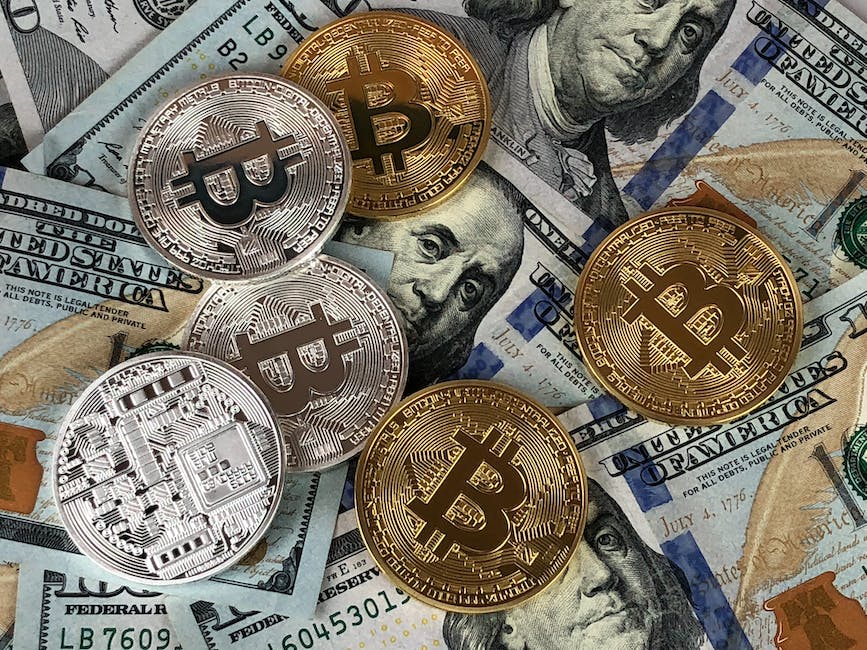
I. Introduction to Bitcoin: A Brief History
Bitcoin is the world’s first digital decentralized currency. Developed in 2009 by a mysterious figure known only as Satoshi Nakamoto, Bitcoin has become the first virtual currency to gain mainstream adoption around the world. Today, Bitcoin is accepted in many online services, and is becoming a more common form of payment for goods and services.
Since its launch, Bitcoin has advanced from an unknown concept to becoming a viable alternative to traditional currencies. It has become the choice of many investors, developers, and users looking for a secure, decentralized form of payment. Bitcoin is a secure and transparent payment system free from government control and compromises that come with traditional payment services.
- It is immune to central control, double spending, and inflation.
- It gives users full control over their transactions.
- It is irreversible-once a transaction is made, it cannot be undone.
- It has the lowest transaction fees of any payment system.
II. How Bitcoin Has Disrupted Business
Since its conception in 2009, Bitcoin has been rapidly adopted by the business and financial sectors around the world. In a few short years, Bitcoin has disrupted the way businesses operate, from the way they accept payments to how they manage day-to-day transactions.
One of the biggest advantages for businesses that use Bitcoin is that it eliminates the need for going through traditional banking institutions for payment processing. By using a blockchain-backed digital currency, businesses can complete transactions without the need for middlemen or third-party payment processors. Additionally, with Bitcoin, businesses can complete transactions quickly and securely, with the added bonus of having lower transaction fees than those typically associated with traditional payment methods.
- Faster transaction times: Bitcoin’s blockchain technology enables payments to be confirmed in minutes, providing businesses with fast, secure transactions.
- Lower transaction fees: Transactions completed using Bitcoin incur much lower fees than those associated with traditional payment methods.
- Completely secure: The use of blockchain technology means that data is securely stored and transactions are incorruptible.
The advantages of Bitcoin are numerous and its potential applications are only just beginning to be explored. With its low transaction costs and secure operations, it is clear why Bitcoin has become the go-to cryptocurrency for businesses around the world.
III. The Impact of Bitcoin on Society
The emergence of Bitcoin has had a profound effect on society, both economically and socially. Economically, its introduction on a global scale provides an alternative avenue of investment to those looking for more secure, decentralized options compared to traditional forms of investments. It also speeds up the transfer of funds across the world, eliminating multi-day waiting times and reducing costs associated with complex international transactions.
On the social side, Bitcoin also provides unprecedented opportunities for individuals to store assets without the need for third-party involvement. This increases freedom of choice compared to previously existing banking solutions and gives way to new forms of community interactions. Additionally, Blockchain technology encourages transparency and trust in digital interactions, drastically increasing the security of stored data.
- Economically: Alternative investment opportunities
- Elimination of long transfer wait times
- Reduction of transaction costs
- Socially: Increase of freedom of choice
- More secure, trustful digital interactions
IV. Looking Ahead: The Future of Bitcoin
As the cryptocurrency space continues to expand and mature, Bitcoin’s future remains uncertain. While many have seen it as a disruptive force in the financial world, it continues to lack sufficient mainstream acceptance andprevalence. Despite this, the top crypto asset is well-positioned and gaining traction.
The future of Bitcoin is likely to be a positive one due to increasing awareness and regulation, as well as the implementation of novel technologies. There is the potential to make it more secure, liquid, and accessible. Moreover, its use cases will continue to evolve, as more and more companies recognize its potential as a store of value and use it for payments. Here is what to look forward to:
- Increased Adoption: More businesses will continue to accept Bitcoin as a form of payment, making it more convenient for users to purchase goods and services. This could also bring in new users who may otherwise be unfamiliar with the concept of cryptocurrency.
- Better Scalability Solutions: New innovations, such as the Lightning Network, could provide solutions to Bitcoin’s current scalability issues.
- Stronger Security: There will likely be a push for stronger safety protocols for Bitcoin storage solutions, such as cold storage or hardware wallets, to minimize the risk of theft and hacks.
- Higher Liquidity: With the rise of cryptocurrency exchanges, the liquidity of Bitcoin will continue to increase, making it easier to convert to your local currency and spend.
Overall, the future of Bitcoin looks brighter than ever before. As the cryptocurrency market continues to mature, Bitcoin could become a more viable and accepted form of payment and store of value. We could start to see even more experimentation using the decentralized technology behind Bitcoin, as well as increased government regulations and protections. With the right technological advancements, Bitcoin may one day realize its potential to revolutionize the financial system.
In the past decade, Bitcoin has carved out a disruptive force in the business world and beyond. While its full potential is still yet to be realized, Bitcoin is set on revolutionizing the way we transact and conduct business. As we move into a new era of technological innovation, Bitcoin is sure to remain a driving force of disruption in the years to come.