
In an era where digital currency is becoming increasingly mainstream, understanding the intricacies of Bitcoin private keys and their secure storage is paramount for anyone looking to safeguard their crypto investments. This listicle, “4 Key Insights on Bitcoin Private Keys and Their Storage,” aims to equip readers wiht essential knowledge that goes beyond basic cryptocurrency concepts. you’ll discover four crucial strategies for protecting your private keys, the critical asset that grants access to your Bitcoin holdings. From the importance of robust security practices to various storage methods, this guide ensures that you are well-prepared to defend your digital wealth against theft and loss. Whether you are a novice investor or an experienced crypto enthusiast, these insights will deepen your understanding of secure storage, allowing you to navigate the world of Bitcoin with confidence.
1) Understanding the Role of Private Keys: Private keys are essential to accessing and managing your Bitcoin and other cryptocurrencies. A private key is a cryptographic string that allows you to sign transactions and prove ownership of your digital assets. Without it, you cannot access your funds, making the security and confidentiality of private keys paramount for any crypto investor
Private keys serve as the backbone of Bitcoin and other cryptocurrency transactions, acting as the sole means to access your digital wealth. These cryptographic strings are intricate sequences of characters, often generated by complex algorithms. Each private key corresponds to a public key, which serves as your cryptocurrency address. By signing transactions with your private key, you verify your ownership and authorize the use of the associated funds. Therefore, understanding the impact and importance of your private keys is critical to safeguarding your assets in the digital finance space.
Security and confidentiality regarding private keys cannot be overstated. Since control over a private key equates to control over the associated funds, any compromise could lead to complete loss of access to your cryptocurrency. Cybercriminals often deploy various tactics such as phishing attacks or malware to steal private keys. It is indeed vital for investors to implement robust security measures, such as creating strong passwords, enabling two-factor authentication, and regularly updating software to mitigate vulnerabilities.
Moreover, the storage of private keys is as crucial as the keys themselves. There are several methods to securely store private keys, each with its unique advantages and disadvantages:
- Hardware Wallets: These are physical devices specifically designed for secure key storage, offering high levels of protection from online threats.
- Paper Wallets: A physical printout of your private key stored offline, reducing exposure to hacking but requiring other physical security measures.
- Software Wallets: These applications store keys digitally and can be easily accessed, but are more susceptible to malware and breaches.
With these tools, one can ensure that their cryptocurrency remains inaccessible to anyone but themselves, making the understanding and management of private keys a top priority for every crypto investor.
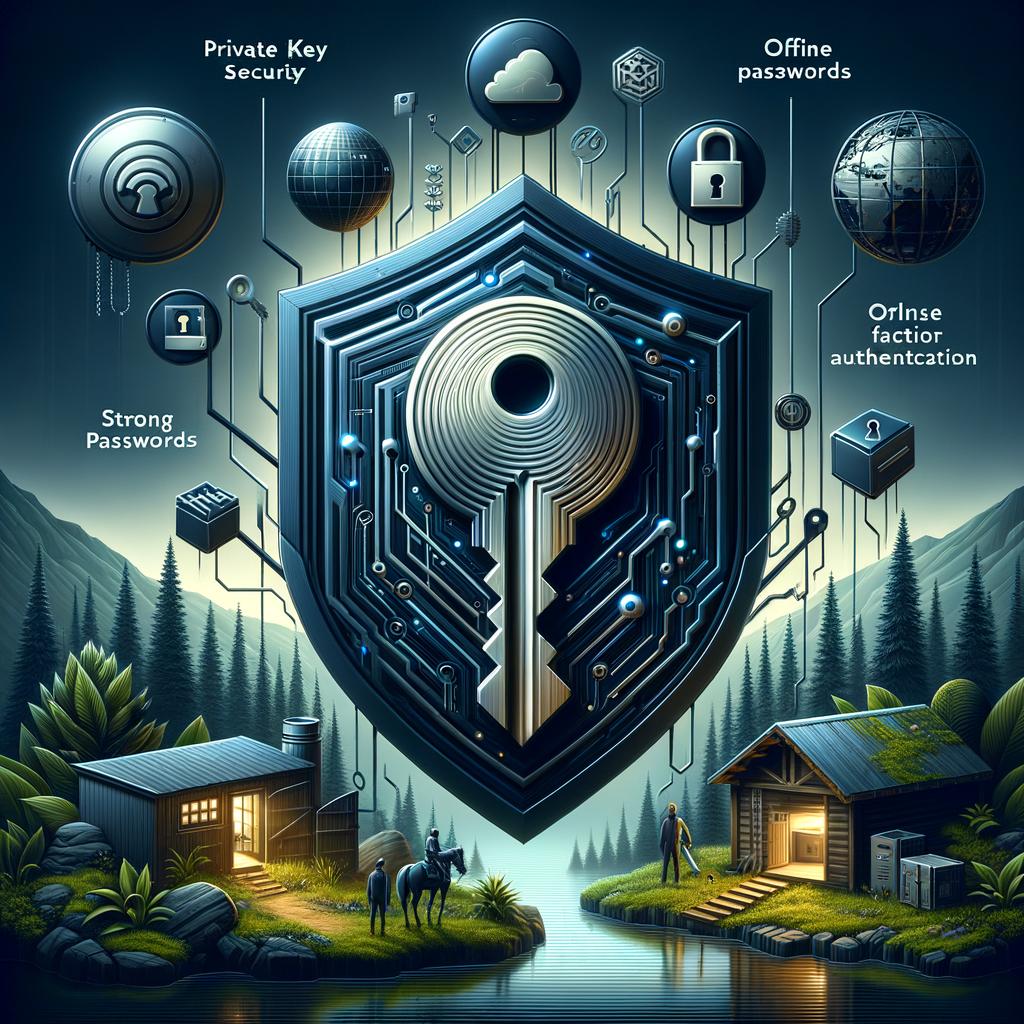
2) Best Practices for Private Key Security: To ensure the safety of your private keys, use hardware wallets or cold storage solutions, which store your keys offline, away from potential cyber threats. Avoid sharing your private keys with anyone and be wary of phishing attacks. It is indeed also advisable to create strong passwords and enable two-factor authentication wherever possible to add an extra layer of protection
To effectively protect your private keys, utilizing hardware wallets or cold storage solutions is paramount. These methods excel at keeping your keys offline, making them far less vulnerable to online threats. Unlike hot wallets, which are connected to the internet and can be exposed to malware or hacking attempts, hardware wallets provide a fortified barrier by ensuring that your private keys never leave the device. This offline storage offers peace of mind, and many hardware wallets also come equipped with additional security features such as PIN codes and biometric verification to further enhance protection.
Moreover, it is indeed crucial to maintain strict confidentiality regarding your private keys. Sharing them with anyone, even friends or family, may expose you to unexpected risks. Always remain vigilant about potential phishing attacks, which can trick you into revealing your sensitive information. beware of unsolicited emails or messages requesting your private keys or personal information. Instead, verify the authenticity of interaction before responding, and never click on links from unkown sources. Consider employing secure communication channels, such as encrypted messaging apps, for any transactions involving sensitive data.
Enhancing your security also involves establishing strong passwords and enabling two-factor authentication (2FA) where available. A robust password shoudl comprise a mix of letters, numbers, and symbols, ideally exceeding 12 characters.To avoid using easily guessed combinations, consider utilizing a password manager to generate and store complex passwords securely. Pairing your password with 2FA, which typically requires a second form of verification (such as a text message or authentication app), adds another layer of security that dramatically reduces the risk of unauthorized access to your Bitcoin assets.
Final Thoughts
As the realm of cryptocurrency continues to evolve, understanding the meaning of Bitcoin private keys and the methods for their secure storage cannot be overstated. These four essential insights serve as a critical reminder that safeguarding your digital assets requires both knowledge and vigilance.By grasping the nuances of key management and utilizing best practices for storage-ranging from hardware wallets to secure backups-you can effectively protect your investments from potential threats. In a time when cyberattacks and fraud are rampant, empowering yourself with this knowledge is not just advisable; it is indeed crucial for anyone looking to navigate the digital currency landscape successfully. Stay informed,stay secure,and ensure your financial future remains in your hands.