
In a surprising escalation of trade tensions, former President Donald Trump announced plans to impose a staggering 104% tariff on Chinese goods unless Beijing withdraws its own recent tariff increases by April 8. This bold move signals a return to the aggressive trade policies of his administration, invoking concerns among market analysts who fear potential economic fallout from a renewed dispute between the United States and its largest trading partner. As global markets respond with caution, investors are left to navigate the implications of such punitive tariffs on supply chains, consumer prices, and overall economic stability. With the deadline looming, the world watches closely to see if trump’s demands will elicit a response from China, reshaping the landscape of international trade once again.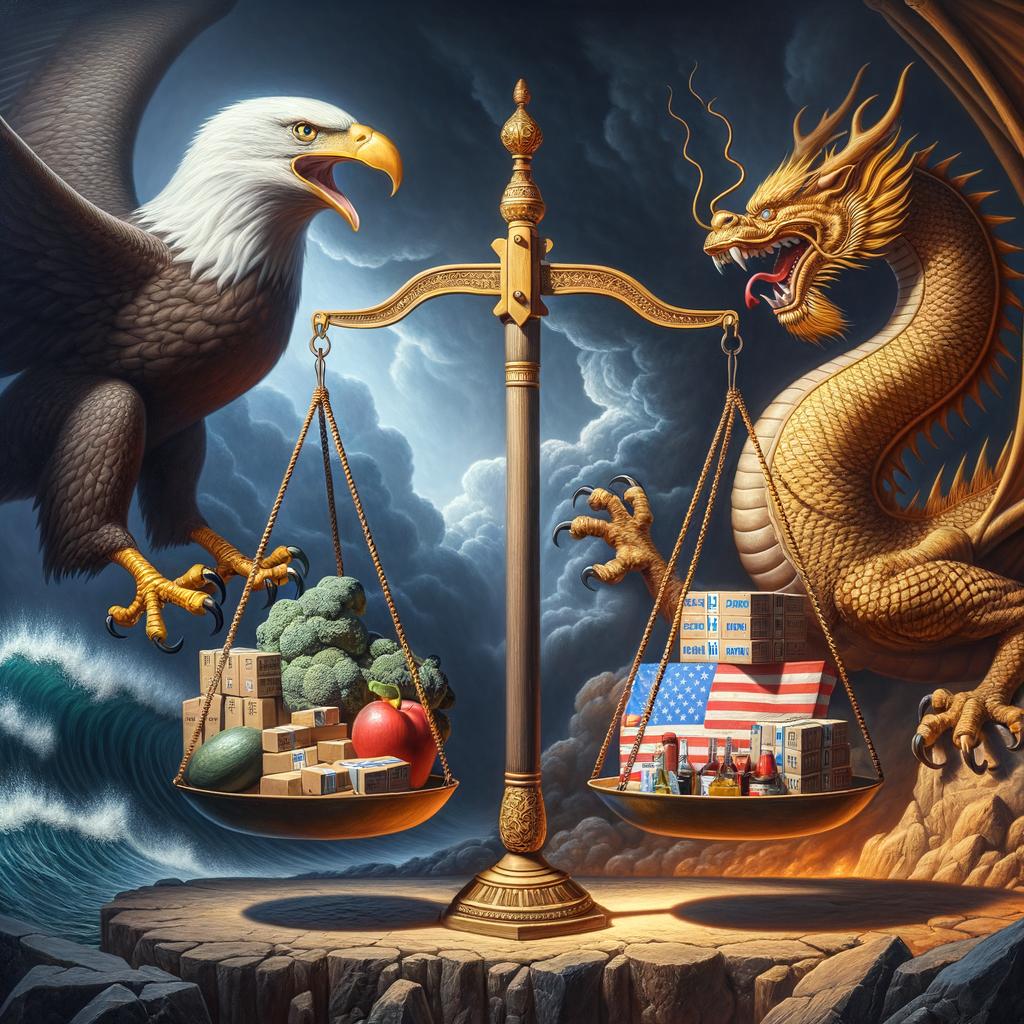
Trump’s Tariff Threat: Implications for U.S.-China Trade Relations
The recent announcement by former President Trump regarding potential tariff hikes has reignited fears surrounding U.S.-China trade relations, which have long been characterized by volatility. Should these tariffs be implemented, they could significantly alter the landscape for companies like Li Auto, which depend heavily on manufacturing and supplies sourced from China. The immediate effects may include increased production costs for American automakers and a potential escalation of trade tensions that could ripple through global markets.
Experts warn that a rise in tariffs could lead to a supply chain disruption, impacting not only U.S. manufacturers relying on Chinese components but also Chinese firms that are increasingly looking to the American market for growth. Such tariffs could result in:
- Higher prices for consumers on imported vehicles and components.
- A potential decrease in consumer demand as economic uncertainty grows.
- Increased pressure on companies to localize supply chains, which may not be feasible in the short term.
The prospect of elevated tariffs could compel Li Auto and similar companies to reassess their market strategies. A shift in operational policies might potentially be necessary to mitigate risks associated with dependency on foreign supply chains. Moreover, should tariffs escalate into a full-blown trade war, the implications for the electric vehicle (EV) market could be profound, jeopardizing not just profits but the broader goals of innovation and sustainability that manny EV manufacturers have championed.
Market Response: Investors Brace for Increased Volatility
as Bitcoin embarks on its new era, market analysts anticipate a important uptick in volatility, prompting investors to adjust their strategies accordingly. The recent fluctuations in price are indicative of a broader trend where digital assets are increasingly susceptible to economic and regulatory developments. Analysts suggest that this heightened volatility stems largely from speculations surrounding upcoming technological advancements, as well as shifts in global monetary policies that could influence investor confidence.
In light of these potential market shifts, a multitude of investors are now recalibrating their portfolios. Diversification has become a key strategy as investors look to mitigate risks associated with bitcoin’s unpredictable price movements. Key actions being observed include:
- Increased allocation towards stablecoins to hedge against downturns.
- Investment in blockchain technology companies that support the infrastructure of cryptocurrencies.
- Monitoring regulatory news closely to adapt trading strategies in real-time.
Moreover, the role of social sentiment cannot be overlooked, as public discourse surrounding Bitcoin can trigger rapid price adjustments. Market sentiment trackers are gaining traction among traders who seek to gauge investor mood and its potential impact on price movements. The rise of social media platforms as key interaction channels for cryptocurrency news underscores the need for investors to stay informed and agile in their responses to market signals.
Impact on Key Industries: Who Stands to Gain and Lose?
The advent of Bitcoin’s new era signals significant changes across various key industries, notably in finance, technology, and retail. Financial institutions are scrambling to adapt to a landscape that now includes decentralized finance (DeFi) platforms, which offer innovative alternatives to traditional banking services. As more consumers embrace cryptocurrencies, banks that fail to integrate these technologies may risk losing customers to agile FinTech companies that prioritize Bitcoin-friendly solutions.
Conversely, the technology sector is witnessing a surge in demand for blockchain solutions, as businesses seek to harness the potential of crypto for enhanced security and openness. Companies specializing in blockchain technology are poised for growth as they develop applications that cater to sectors like supply chain management and digital identity verification. However, companies that remain resistant to adopting blockchain technology may find themselves at a competitive disadvantage, as their operations become outdated in an increasingly digital marketplace.
In the retail industry, there is an increasing trend of acceptance of Bitcoin as a payment method. This shift not only attracts tech-savvy consumers but also positions retailers as forward-thinking and adaptable. Businesses that embrace cryptocurrency payments can benefit from lower transaction fees and the ability to tap into a global market. Conversely, retailers who ignore this trend risk alienating a growing demographic of customers who prefer to transact using digital currencies, perhaps losing market share to competitors that prioritize innovation and connectivity.
Expert Opinions: Navigating the Uncertainty Ahead
As Bitcoin enters a transformative phase,expert opinions have become pivotal in understanding the landscape ahead. Analysts highlight that regulatory changes are among the most significant factors influencing market behavior. Many believe that a clear regulatory framework could enhance institutional adoption, potentially driving prices higher. However, the uncertainty surrounding regulations poses a double-edged sword, which investors must navigate with caution.
Market sentiment analyses also indicate a growing divergence in investor strategies. While some experts are advocating for long-term holding as the optimal approach, others suggest that traders should capitalize on short-term price fluctuations. The volatility inherent in Bitcoin markets can create opportunities for profit, but it requires a vigilant eye and a well-defined strategy. The community’s ability to adapt to these shifting dynamics will be crucial in determining the future of Bitcoin.
Additionally, technological advancements within the Bitcoin network, such as the development of the Lightning Network, are expected to influence the currency’s usability and scalability. experts assert that improvements in transaction efficiency can help Bitcoin gain acceptance as a mainstream payment method. However, they caution that these advancements must be coupled with robust security measures to maintain user confidence.As the market evolves,staying informed about these technological trends will be essential for making educated investment decisions.
As the deadline approaches for China to reconsider its recently imposed tariffs, the global markets remain on edge, reflecting the uncertainty stemming from President Trump’s stern warning. With a potential 50% tariff hanging in the balance alongside the looming 104% impact on various sectors, the implications of such measures could reverberate across both economies and international trade dynamics. Analysts are watching closely to gauge the responses from Beijing and Wall Street alike, as these developments could significantly shape the trajectory of U.S.-China relations. As negotiations continue, stakeholders remain hopeful for a resolution that will avert further escalation, but the path ahead remains fraught with challenges. The coming days will be crucial in determining whether dialog will prevail over confrontation in this ongoing trade saga.