

In the evolving landscape of blockchain technology, the terminology surrounding system upgrades can often seem daunting, particularly when it comes to understanding the distinctions between hard and soft forks. These forks represent critical decision points within decentralized networks, each carrying significant implications for security, governance, and community consensus. As blockchain enthusiasts and developers navigate the complexities of maintaining and evolving their networks, grasping these differences is essential for informed decision-making. In this listicle, we will delve into 10 key differences between hard and soft forks, shedding light on their specific characteristics, mechanisms, and impacts on both users and developers. Readers can expect to emerge with a comprehensive understanding of how these upgrades function, the scenarios in which they are employed, and their potential consequences for the future of blockchain ecosystems. Whether you are a novice seeking clarity or a seasoned participant in the blockchain space looking to refine your knowledge, this analysis will equip you with the insights necessary to navigate the ever-changing terrain of blockchain consensus and governance.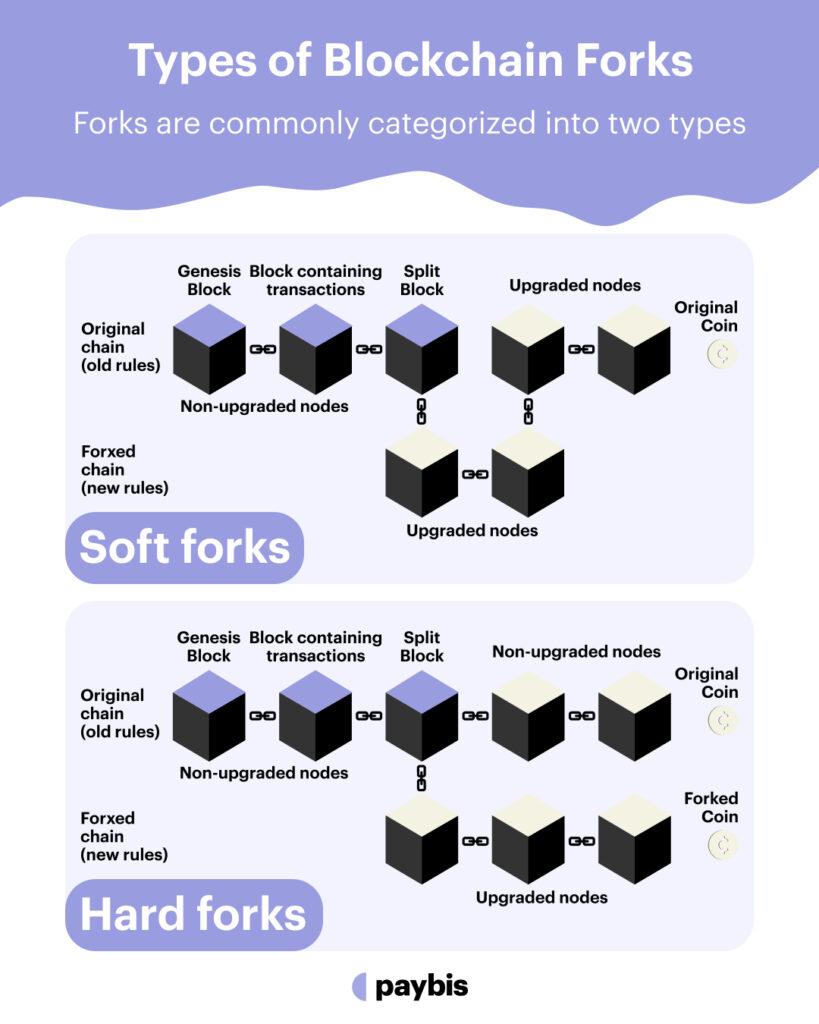
1) Definition Clarity: A hard fork is a significant and incompatible change to the blockchain protocol, while a soft fork is a backward-compatible modification that allows non-updated nodes to still participate in the network
Understanding the key distinctions between hard and soft forks is crucial for grasping the evolution of blockchain technology. A hard fork represents a radical shift in the blockchain’s rules, resulting in an entirely new protocol that is incompatible with the prior version. This means that nodes running on the original blockchain cannot validate blocks created under the new set of rules. The implications here are profound: with a hard fork, the community may find itself divided, often leading to the creation of two separate chains. Popular examples of hard forks include Bitcoin Cash, which emerged from Bitcoin.
In contrast, a soft fork is a more subtle change to the blockchain protocol. It allows for modifications that do not disrupt the existing network, permitting non-updated nodes to remain functional and validate transactions. Essentially, this backward-compatible approach means that not all participants in the network must upgrade their software for the modification to take effect. One of the most well-known instances of a soft fork is the Segregated Witness (SegWit) upgrade, which improved Bitcoin’s transaction handling without splitting the chain.
The nature of these forks directly influences the community’s consensus and adoption. Here’s a quick comparison of their characteristics:
| Feature | Hard Fork | Soft Fork |
|---|---|---|
| Protocol Compatibility | Incompatible | Backward-Compatible |
| Nodes Impact | Non-updated nodes cannot participate | Non-updated nodes can still function |
| Community Division | Potential for division | Generally maintains unity |
the distinction in how each fork operates emphasizes the varying levels of community consensus required. Understanding these differences is essential for anyone interested in the dynamics of blockchain development and the potential implications for stakeholders.
2) Implications for Nodes: In hard forks, nodes that do not upgrade to the new version of the software will be unable to validate or interact with the updated blockchain, whereas in soft forks, outdated nodes can continue functioning within the network
In a hard fork scenario, the divergence between the old and new versions of the software creates a distinct separation within the network. Nodes that fail to upgrade will find themselves cut off, unable to validate transactions or interact with the updated blockchain. This results in two separate chains: the legacy one and the new iteration. Key consequences for outdated nodes include:
- Loss of Functionality: Non-upgraded nodes lose their ability to participate in consensus, essentially becoming obsolete.
- Potential for Stakeholder Confusion: Users may be uncertain about which chain to follow, leading to fractured communities.
- Increased Security Risks: The outdated nodes may become targets for malicious actors who exploit their inability to align with the new rules.
In contrast, soft forks allow for a more flexible approach, as nodes running older versions of the software can still participate within the network. The backward-compatible nature of soft forks means that not all nodes must upgrade at the same time, permitting a smoother transition. The implications for these outdated nodes include:
- Continued Operation: Legacy nodes remain functional, enabling them to validate transactions that adhere to both the old and new rules.
- Network Stability: As most participants can still engage, the risk of major disruptions in the community is significantly reduced.
- Gradual Adoption: Users are given the option to upgrade at their own pace, reducing immediate pressure on the ecosystem.
The contrasting node implications between hard and soft forks underscore the fundamentally different philosophies guiding each approach. In a harsh splitting scenario brought on by a hard fork, nodes must evolve or face obsolescence, creating a stark dichotomy between factions within the blockchain. Conversely, soft forks embody adaptability, allowing for collective evolution without outright exclusion of participants. The contrasting management of nodes can be highlighted in the following table:
| Aspect | Hard Fork | Soft Fork |
|---|---|---|
| Node Functionality | Inoperable for non-upgraded nodes | Functional for all nodes |
| Community Division | High risk of schism | Lower risk of fragmentation |
| Adoption Pressure | Immediate necessity to upgrade | Gradual upgrade path |
3) Network Splitting: Hard forks typically result in network splits, leading to the creation of two separate blockchains, whereas soft forks maintain a single chain, preserving network cohesion
Hard forks can often lead to a division within the community, resulting in the emergence of two distinct blockchains. This split occurs because a hard fork introduces changes that are incompatible with the previous versions of the software. As a result, those who do not upgrade their nodes are left on the original chain, while those who embrace the new protocol transition to the updated version. Such divisions can create significant challenges for users and developers alike, with both chains potentially competing for the same user base and resources.
Soft forks, on the other hand, preserve the unity of the network by maintaining a single blockchain. When a soft fork is implemented, backward compatibility is ensured, meaning that even those who do not upgrade their software can still validate the blocks on the network. This cohesion helps to retain community support and minimizes disruption in the ecosystem. Users can continue operating on the existing chain without any loss of functionality, fostering a sense of stability and collaboration throughout the network.
The implications of these network dynamics extend beyond mere aesthetics. In a hard fork scenario, the following can occur:
| Impact of Hard Forks | Considerations |
|---|---|
| Community Division | Potential split in user loyalty and resources |
| Increased Complexity | Users may face confusion and must decide which chain to support |
| Market Volatility | Potential for drastic price fluctuations in either blockchain |
Conversely, the benefits of a soft fork often include:
| Benefits of Soft Forks | Implications |
|---|---|
| Unified Network | Community remains cohesive, promoting cooperation |
| Stability | Less disruption, improving user experience |
| Quick Adoption | Streamlined implementation, minimizing conflict |
4) Examples of Implementation: Notable hard forks include Bitcoin Cash from Bitcoin in 2017 and Ethereum Classic from Ethereum, while a prominent example of a soft fork is Bitcoin’s Segregated Witness (SegWit)
Two of the most notable examples of hard forks in blockchain history are Bitcoin Cash and Ethereum Classic. Bitcoin Cash emerged in August 2017 when a segment of the Bitcoin community opted to increase the block size limit. This decision stemmed from long-standing debates concerning Bitcoin’s scalability and transaction throughput issues. By opting for a larger block size, Bitcoin Cash aimed to process more transactions per second, thus enhancing its use as a peer-to-peer electronic cash system.
Similarly, Ethereum Classic was born from a critical decision in the Ethereum community following the infamous DAO hack in 2016. In an attempt to reverse the hack by rolling back the blockchain, a significant division resulted. Those who supported the reversal formed Ethereum (ETH), while the purists who opposed this intervention retained the original chain, leading to the birth of Ethereum Classic (ETC). This hard fork exemplifies the ideological divisions that can emerge within blockchain communities, promoting two distinct narratives about governance and immutability within decentralized systems.
In contrast, Bitcoin’s Segregated Witness (SegWit) serves as a prominent example of a soft fork, implemented in 2017. This upgrade aimed primarily to address transaction malleability and increase block capacity without altering block size directly. By segregating transaction signatures from the transaction data, SegWit allowed more transactions to fit within a single block and paved the way for innovations like the Lightning Network. The soft fork has demonstrated that consensus among participants can be reached to enhance network functionality while maintaining backward compatibility, highlighting an essential facet of blockchain advancement.
5) Community Consensus: Hard forks usually require robust community consensus and can spark heated debates, as they represent a fundamental divergence in protocol vision, in contrast to soft forks, which are often much less contentious due to their non-disruptive nature
When a hard fork is proposed within a blockchain network, it often leads to intense discussions among community members. This is primarily because hard forks signify a major shift in the protocol’s underlying rules, which can polarize opinions among developers, miners, and users alike. Such forks visually demonstrate the divergent visions of technology’s future, compelling community stakeholders to weigh in on the potential implications. The stakes are high, as changes may redefine how the blockchain operates and who benefits from it.
In contrast, soft forks usually result in a more harmonious approach to updates. Since soft forks are backward-compatible, they do not require all nodes to upgrade for the blockchain to operate seamlessly. This compatibility reduces the chances of conflict, allowing the community to focus on incremental improvements without substantial risk of division. As a result, debates surrounding soft forks tend to center on technical details rather than philosophical disagreements about the fundamental nature of the blockchain itself.
To illustrate the differences in community reactions, it’s helpful to consider a comparison of prevalent hard and soft forks in recent history. Below is a simplified overview of key factors influencing community consensus:
| Aspect | Hard Forks | Soft Forks |
|---|---|---|
| Community Reaction | Heavily debated, often divisive | Generally supportive, less contentious |
| Consensus Needed | Broad and robust consensus required | Minority can still operate |
| Long-Term Impact | Potentially creates split chains | Enhances original chain without splits |
Concluding Remarks
understanding the distinctions between hard and soft forks is crucial for anyone navigating the complexities of blockchain technology. As this listicle has highlighted, the fundamental differences lie not only in the technical execution but also in the implications for governance, consensus, and future development of the blockchain ecosystem. Hard forks often signal a decisive shift in protocol, potentially leading to the creation of a separate chain, while soft forks allow for backward compatibility and a more gradual evolution. For developers, investors, and users alike, recognizing these differences is essential for making informed decisions in an ever-evolving digital landscape. As the blockchain space continues to grow and diversify, the conversations around forks will undoubtedly play a pivotal role in shaping its future.