
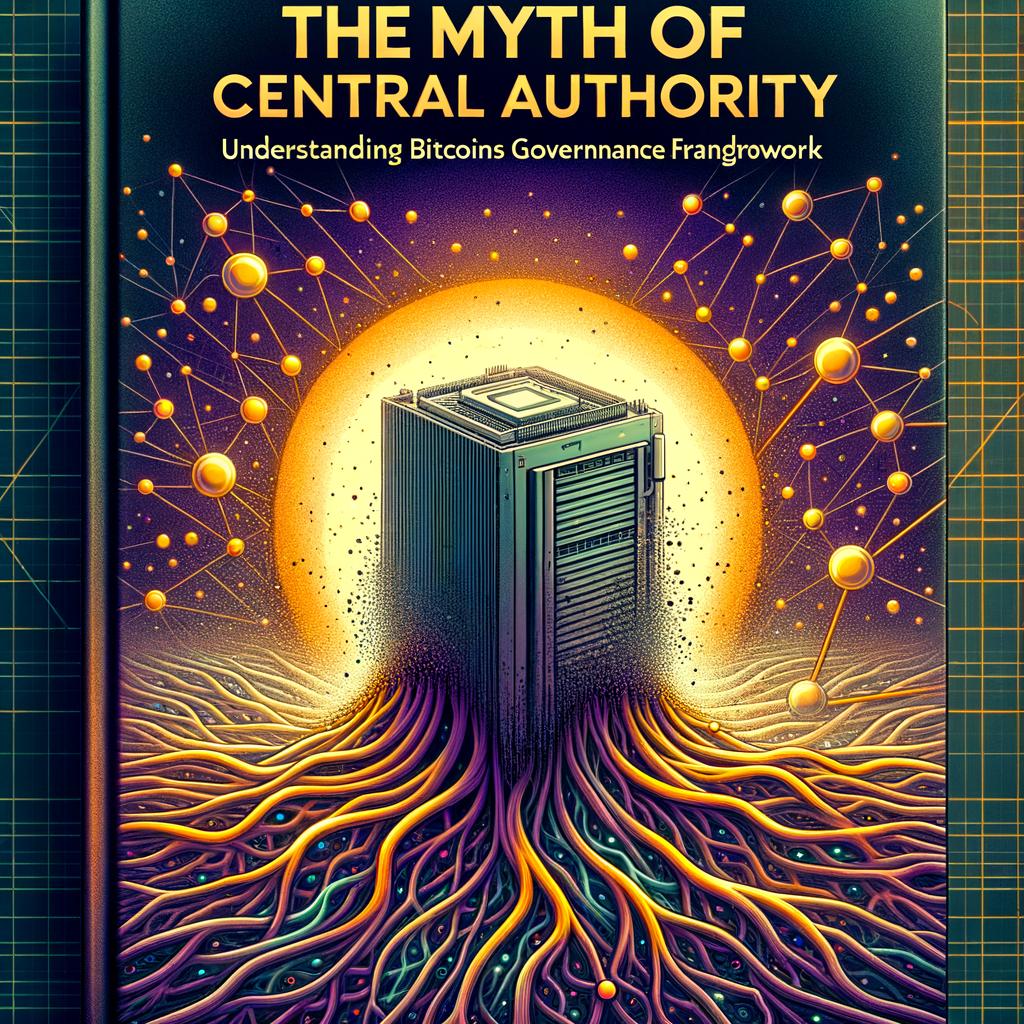
The Myth of Central Authority: Understanding Bitcoins Governance Framework
The decentralized nature of Bitcoin fundamentally challenges traditional notions of governance. Unlike fiat currencies, which are typically regulated by a central authority such as a government or central bank, Bitcoin operates on a peer-to-peer network. This framework is built on the blockchain technology, where transactions are recorded in a public ledger maintained by a global network of nodes. These nodes verify and validate transactions without the need for an intermediary, reflecting a shift from centralized control to community-based governance.
At the heart of Bitcoin’s governance is the concept of consensus. Decisions regarding changes to the Bitcoin protocol are made through a consensus mechanism, primarily the Proof of Work (PoW) system. This process ensures that no single entity can dictate changes without broad agreement from the network participants. Consequently, the governance model is characterized by a collaborative effort among developers, miners, and users. They engage in discussions regarding proposals for updates known as Bitcoin Improvement Proposals (BIPs). Each BIP undergoes careful scrutiny before any implementation, highlighting the importance of community input in governance.
However, this decentralized structure does not mean that governance is without challenges. The lack of a central authority can lead to fragmented decision-making and potential conflicts among stakeholders. For instance, differing opinions on the scalability of Bitcoin have led to debates within the community. Some advocate for larger block sizes to accommodate more transactions, while others argue for second-layer solutions like the Lightning Network. Striking a balance between innovation and maintaining the integrity of the network requires ongoing dialogue and compromise among participants.
Another aspect worth considering is the influence of miners in the governance framework. Miners play a crucial role not only in transaction validation but also in the decision-making process regarding protocol changes. Their substantial control over the network due to computational power means that they have a significant voice in governance discussions. This dynamic emphasizes the importance of incentivizing miners to align with the long-term health of the network rather than pursuing short-term gains, underscoring the intricate relationship between technology and governance.
Ultimately, understanding Bitcoin’s governance framework necessitates recognizing this delicate balance of power. The absence of a central authority lays the groundwork for a unique ecosystem marked by autonomy and collaboration, yet it also introduces complexities that must be navigated. As Bitcoin continues to evolve, its governance model will remain a key area of focus, shaping the path of this revolutionary digital asset in an increasingly interconnected world.
The Role of Miners and Nodes: Who Keeps the Network Alive?
The backbone of the Bitcoin network lies in the complementary roles of miners and nodes, both of which are critical for maintaining the integrity and functionality of the blockchain. Miners are responsible for the process of validating and recording transactions on the blockchain. They compete to solve complex mathematical problems through a process known as proof-of-work, which ultimately adds a new block to the blockchain every ten minutes on average. This competition not only secures the network but also incentivizes miners through rewards in the form of newly minted Bitcoins and transaction fees.
On the other hand, nodes serve as the network’s spinal cord, ensuring that all transactions are verified and communicated across the decentralized system. These nodes store a complete copy of the blockchain, thus acting as a reference point for transaction validation by any participant seeking to confirm the legitimacy of a transaction. Each node helps to propagate these transactions across the network, allowing for a wide distribution of updated data and enhancing the overall resilience of the system.
Decentralization is another key benefit fostered by both miners and nodes. By enabling numerous independent entities to validate transactions and maintain their copies of the blockchain, the network becomes less susceptible to external attacks or failures. If one entity attempts to manipulate the data or disrupt the network, other nodes will counter this activity by rejecting the fraudulent information, ensuring that the integrity of the blockchain remains intact and trustworthy.
The collaboration between miners and nodes is also essential for maintaining consensus within the network. This consensus mechanism guarantees that all participants agree on the transaction history, preventing issues such as double spending. Each new block is broadcast to all nodes, and only when the majority of nodes agree on the validity of the block does it become a part of the blockchain. This democratic process fosters trust and stability, which is crucial within a decentralized financial ecosystem.
miners and nodes are vital for the ongoing development of the Bitcoin protocol. Miners often propose enhancements or changes to the network’s functioning, seeking to improve efficiency, security, or scalability. Meanwhile, nodes can choose which updates to implement, thereby reflecting the collective decision-making inherent in a decentralized system. This dynamic interaction between miners and nodes not only maintains the network but also nurtures its growth and evolution, paving the way for the future of Bitcoin.
Community Consensus: The Invisible Hand of Bitcoins Decision-Making Process
The essence of Bitcoin’s decision-making process is deeply rooted in the collective input of its community. Unlike traditional financial systems where decisions are made by a select few, Bitcoin thrives on the principles of decentralization and consensus. This process allows stakeholders—be they miners, developers, or everyday users—to voice their opinions and influence the trajectory of the currency. The evolution of Bitcoin is not just a tale of technology; it’s a reflection of the ideology and values held by its diverse constituency.
At the core of this community consensus lies a complex interplay between various actors, each contributing to a larger conversation. Miners, as significant participants, contribute not only computational power but also engage in debates surrounding protocol changes, scalability, and security. Developers, on the other hand, play a critical role in coding solutions and improvements based on community feedback, ensuring that the technological infrastructure can evolve in response to user needs. users, whose daily transactions drive the utility of Bitcoin, have the power to impact its popularity and acceptance through their collective choices.
The decision-making dynamics are further influenced by online forums, social media platforms, and community gatherings where ideas and proposals are shared. Popular forums such as Reddit and Bitcointalk act as central hubs for discussion, where ideas can rapidly gain traction or face backlash. In these vibrant spaces, voting mechanisms can emerge, enabling the community to express support or dissent regarding proposed changes to Bitcoin’s code or policy. This grassroots approach ensures that decisions are reflective of a broad consensus, rather than imposed by a centralized authority.
While this democratic framework provides the community with a voice, it can also lead to challenges. Conflicting interests and varying levels of influence can create divides within the community, complicating consensus-building. Debates regarding block size, transaction fees, and privacy features have historically highlighted these rifts, revealing deep-seated philosophies about the future of Bitcoin. Moreover, the rapid pace of technological advancements demands continuous dialogue and adaptation, which can strain the community’s capacity to reach agreements effectively.
Ultimately, the community consensus acts as the invisible hand guiding Bitcoin’s evolution. It embodies a delicate balance between innovation and tradition, propelling the network forward while respecting its foundational principles. As Bitcoin navigates an increasingly complex landscape filled with regulatory scrutiny, competition, and technological challenges, understanding this consensus process becomes crucial for anyone looking to comprehend the currency’s past, present, and future trajectory.
In the labyrinthine world of Bitcoin, where anonymity and transparency coexist in a delicate balance, the question of governance takes on an intricate dimension. Unlike traditional financial systems, where power is concentrated in the hands of a few, Bitcoin operates on a decentralized framework that empowers a diverse array of stakeholders, from miners and developers to users and investors. As we’ve explored, this unique structure fosters not only innovation but also contention, as varying interests vie for influence over the protocol’s future.
Ultimately, understanding who governs Bitcoin means grappling with both its technological nuances and the socio-economic forces at play. The absence of a centralized authority does not equate to a lack of governance; rather, it underscores the complexity of consensus-building in a digital ecosystem that thrives on collaboration and dissent alike. As Bitcoin continues to evolve, so too will the conversations surrounding its governance—challenging us to rethink our notions of authority in an increasingly decentralized world.
As we venture further into this uncharted territory, it is imperative for all participants in the Bitcoin community to remain engaged in discussions about its future, ensuring that this revolutionary technology embodies the principles of decentralization it was built upon. The journey to understanding Bitcoin’s governance may be fraught with uncertainty, but it is a journey well worth taking as we unlock the potential of a truly decentralized financial system.


