
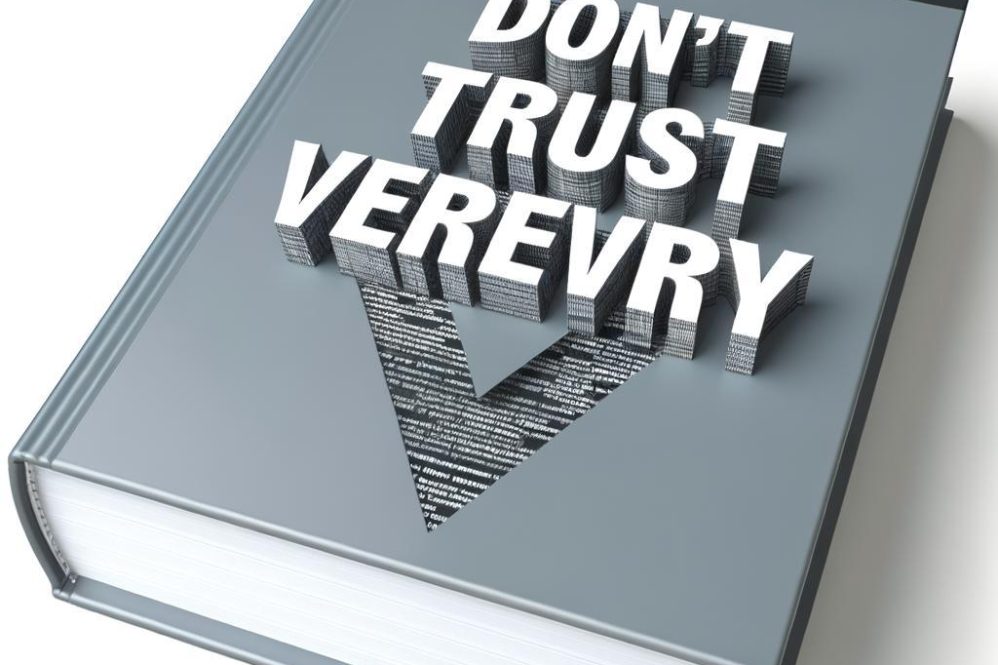
what “Don’t Trust, Verify” Means: Origins and Core Principles
What began as a cautious maxim-popularly rendered in English as “trust, but verify”-was famously used by President Ronald Reagan and traces back to a Russian proverb.In contemporary data ecosystems the phrase has flipped for many practitioners: “Don’t trust, verify” places the burden on individuals to independently confirm claims before accepting or sharing them. This inversion is rooted in the same ethos as scientific skepticism and the cryptographic culture around open-source projects and cryptocurrencies, where trust is replaced by reproducible proof and clear evidence.
At its practical core, the approach rests on a few repeatable actions that professionals across journalism, cybersecurity and academia rely on:
- Check originals: locate primary documents, raw data or original media rather than summaries or screenshots.
- Corroborate: find autonomous sources that support the same facts or timelines.
- Use dedicated tools: employ reverse-image search, metadata readers, and domain-lookups to test authenticity.
- Assess incentives: identify who benefits from a claim and how that might shape the information presented.
These steps translate the maxim into concrete verification habits.
adopting ”Don’t trust, verify” does not mean defaulting to cynicism; it means building routines that reduce error and manipulation. In practice that looks like documenting sources, noting uncertainty, and preferring verifiable evidence over appealing narratives. For communicators and consumers alike, the principle is both a defensive posture against misinformation and a proactive method for strengthening public conversation-turning intuition into verifiable fact.
Why Verification Matters: The Real-World cost of Believing Without Checking
When people accept claims without checking, the consequences quickly move beyond embarrassment. Misleading health claims can cause people to delay treatment or take harmful remedies, financial scams can wipe out savings, and false accusations can destroy careers. In each case the cost is measurable: medical bills, lost income, and reputational damage that can take years to repair. Belief without verification turns a single error into real human harm.
At the societal level, unchecked falsehoods distort public debate and weaken institutions. Disinformation campaigns can skew elections, erode trust in public-health guidance during crises, and slow emergency responses when false reports divert resources. journalists, policymakers and emergency managers all point to the same pattern: when myths spread faster than facts, the ability to make collective decisions collapses and the cleanup becomes expensive and slow.
verification is a practical defense that reduces those costs by turning uncertainty into evidence-based judgment. Simple habits-corroborating claims across independent sources, checking original documents, using reverse-image search and consulting established fact-checking organizations-cut the spread of error.
- Cross-check sources: look for independent confirmation.
- Trace origins: find the primary document, clip or study.
- Use reliable tools: reverse-image search and fact-check sites.
these steps won’t stop every falsehood, but they make the human and civic price of believing without checking far smaller.
How to Verify Quickly: Practical Tools and Step‑by‑Step Checks for Everyday Claims
Start with a three‑second truth check: stop, breathe and ask who benefits if this claim spreads.Quickly scan for obvious red flags – missing byline, no date, sensational language or mismatched screenshots. Use this short checklist to decide if more verification is needed:
- Author and publication: is the author named and credible?
- Date and context: is the item current or recycled out of context?
- Source domain: is the site a known news outlet, an obscure blog, or a spoof?
- Corroboration: can you find the same claim confirmed by at least two independent outlets?
these three‑second checks don’t prove a claim, but they stop you from amplifying obvious misinformation.
Next, use fast, authoritative tools to verify details. Run a reverse‑image search (Google Images, TinEye or Lens) to see where a photo first appeared; check quoted phrases with exact‑match search in quotes; and consult established fact‑checking sites for viral claims. Don’t overlook official support pages and product documentation - many technical or procedural claims are resolved in vendor help articles or community threads (for example, official Google Support pages and product forums frequently enough explain whether a feature or error is genuine). Treat those sources as primary evidence when they exist, and cite them when you debunk a claim.
follow this short step‑by‑step for social posts and headlines: perform a quick image or text reverse search, open the linked article and read past the headline, look for an original source or primary document, and scan reputable outlets for independent confirmation. Fast actions you can take in under five minutes include:
- reverse image or search the exact headline;
- check the domain and “about” page for ownership and mission;
- search fact‑checkers and official help pages for the claim.
If those checks leave doubt, do not share – instead flag the content or ask an expert; avoiding amplification is part of responsible verification.
as the noise of the digital age grows louder, “Don’t trust, verify” is less a slogan than a survival skill. It asks readers to trade reflexive sharing for careful scrutiny - to treat every headline, image and forwarded post as a claim that demands evidence.
practically, verification is straightforward: check the original source and publication date; confirm authorship and organizational credibility; cross‑check claims with independent reporting or primary documents; use reverse image and video tools to spot manipulated media; and consult established fact‑checking sites when in doubt. be alert to emotional cues and logical gaps that push you toward conclusions before you’ve seen the proof.
Adopting verification as a habit strengthens not only individual judgment but public information ecosystems. Slow your sharing, teach the basics to your networks, and support institutions and platforms that prioritize clarity and traceable sources. Over time,small acts of verification reduce the reach of falsehoods and raise the cost of misinformation.
in a fast‑moving media landscape, “Don’t trust, verify” isn’t cynicism – it’s civic duty. Keep asking questions, follow the evidence, and help make accuracy the default.Read the full guide at https://thebitcoinstreetjournal.com/understanding-dont-trust-verify-a-guide-to-fact-checking/ for practical tools and step‑by‑step checks you can use today.