
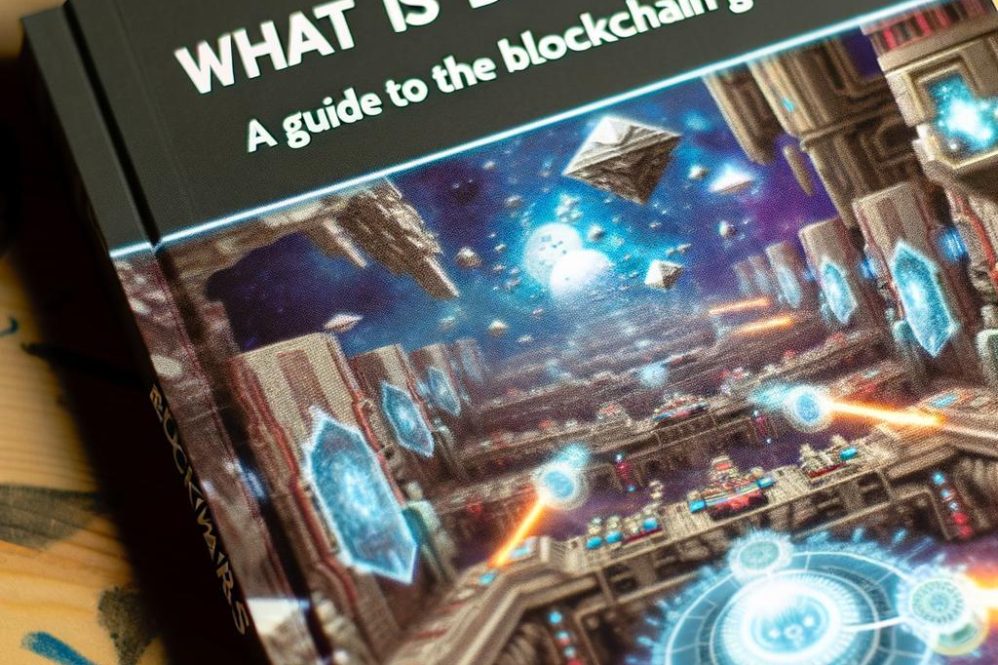
What Is Blockwars? A Clear Overview of the Game and Its Origins
Blockwars is a blockchain-native strategy game that blends conventional territory-and-resource gameplay with on-chain asset ownership and decentralized economies.Players compete for control of virtual regions,build and manage resources,and deploy units whose provenance can be recorded on a public ledger. As key game elements-land, items, and sometimes even characters-are tokenized, players are not merely participants but stakeholders with verifiable, tradable digital property. This model shifts some economic power from centralized publishers to the player base and creates persistent incentives that extend beyond single play sessions.
The game’s origins trace to a convergence of real-time and turn-based strategy design with early experiments in tokenized game items and community-managed projects. Developers and backers positioned Blockwars as a response to closed, publisher-controlled economies, aiming to give players more control over value creation and governance. Core ideas behind the project are clear and often repeated in its founding documents and roadmaps:
- On-chain ownership: assets represented as tokens to enable secondary markets.
- Player-driven governance: mechanisms that let stakeholders vote on major changes.
- Interoperability: design choices that allow assets to move across compatible platforms.
These elements reflect a deliberate attempt to marry game design with decentralized protocols rather than simply grafting crypto onto existing mechanics.
Economically and socially, Blockwars is positioned as an experiment in distributed value and community stewardship.its model-frequently labeled play-to-earn-can create new income streams for skilled players and community contributors, while also raising questions about sustainability, tokenomics, and regulatory compliance. Designers must balance competitive gameplay with token distribution, inflation control, and anti-exploit protections. As the title and its community evolve, Blockwars serves as a case study in how interactive entertainment can redistribute economic agency, but also in the practical challenges of maintaining fair, enjoyable play within an open, tradable economy.
Inside Blockwars: Gameplay Mechanics, NFTs and Tokenomics Explained
Blockwars blends classical strategy design with blockchain’s openness to create a layered gameplay loop: players capture and defend territory, manage scarce resources, and customize units to fit evolving metas.Matches range from short, ranked skirmishes to longer seasonal campaigns that emphasize alliance strategy and long-term resource control. Developers emphasize a balance between skill-based play and economic incentives, with mechanics such as timed objectives, asymmetric faction abilities, and persistent world elements that keep both competitive and casual players engaged.Core principles are risk-reward progression,clear rule sets enforced on-chain,and modular systems that let developers tune pacing without breaking player ownership.
- Territory control: capture nodes that generate resources and strategic advantages.
- Resource economy: on-chain commodities used for upgrades, unit production and trade.
- Unit & base customization: NFT-backed units and modules that change performance and aesthetics.
- Match types: solo and alliance PvP, PvE raids, and seasonal events with unique objectives.
- Persistence: world-state elements (fortifications, resource depletion) that evolve between matches.
nfts in Blockwars serve as the connective tissue between play and ownership: land parcels, elite units, cosmetic skins and upgrade modules are minted as unique tokens so players can buy, sell, rent or showcase assets on secondary markets. the project uses hybrid storage-on-chain provenance for ownership and essential metadata, with larger asset files hosted off-chain-so scarcity and transferability remain verifiable while keeping performance practical. Developers also introduce mechanics like staking, rental markets and limited-time minting events to increase utility and liquidity; though, they stress auditing, transparent mint schedules and royalty structures to mitigate speculative risk and preserve long-term player value.
The tokenomics design aims to align incentives across players, creators and the protocol. A primary utility token fuels in-game transactions, crafting and rewards, while a governance token (where implemented) gives stakeholders voice over season parameters, economic levers and roadmap priorities. Economic sinks-crafting costs, upgrade fees, token burns tied to special events-and emission controls such as vesting schedules and seasonal allotments are highlighted as tools to control inflation and sustain token value. Revenue streams include marketplace fees, tournament entry, and optional battle passes; the designers present these elements with public tokenomics documents and third-party audits to provide the transparency expected by both gamers and investors.
Why Blockwars Matters: Player Ownership, Governance and the Future of Blockchain Gaming
Blockwars reframes the player as more than a consumer by embedding real digital ownership into gameplay. Through tokenized assets and transferable NFTs, in-game items and characters can exist outside the developer’s silo, allowing players to buy, sell and carry value between experiences. That shift not only creates new revenue streams for early adopters but also changes incentives: players become stakeholders whose time and skill can translate into measurable economic returns, altering retention dynamics and community engagement.
Governance in Blockwars is not an afterthought but a structural feature – many decisions are routed through decentralized mechanisms that give players a voice in development priorities, feature rollouts and treasury management. These systems promise greater transparency and alignment between creators and communities, but they also introduce trade-offs, including low voter participation and the risk of concentrated influence. Key implications include:
- Player empowerment: meaningful influence over game direction and resource allocation.
- Transparency: auditable decisions and token flows reduce asymmetric information.
- Governance risks: voter apathy, plutocratic vote concentration and decision paralysis.
developers will need thoughtful governance design – quorum thresholds, delegated voting and clear incentive structures – to ensure these systems remain functional and fair.
Looking ahead, Blockwars points toward a hybrid future where traditional game design coexists with decentralized economics. For mainstream adoption, usability and player experience must improve so ownership and governance enhance rather than overshadow play. Regulators and platforms will also shape outcomes as authorities clarify how digital assets, securities rules and consumer protections apply. Ultimately, the long-term success of Blockwars-style projects will hinge on balancing compelling gameplay with robust, transparent economic and governance models that scale beyond niche communities.
as blockchain gaming moves from niche experiment to mainstream entertainment,Blockwars stands out as a clear example of what that future might look like: a strategy title where in-game decisions,tradable assets and token-based governance converge to make players active stakeholders rather than passive consumers. For newcomers, the essentials are simple – learn the game mechanics, understand the tokenomics and ownership model, and secure your wallet and private keys before you transact. For investors and community members, pay attention to the whitepaper, audit reports and developer roadmap to assess long-term viability.
That said, Blockwars also illustrates the trade‑offs of this new model. Play‑to‑earn and decentralized governance introduce fresh opportunities for engagement and monetization, but they also bring volatility, smart‑contract and security risks, and evolving regulatory questions. Approach with curiosity and caution: start small,do your homework,and participate in community channels to learn from other players.
Ultimately, whether Blockwars becomes a defining title or one of many early experiments, its blend of strategy, player ownership and decentralized economics makes it a project worth watching. For readers interested in deeper involvement, follow the project’s published materials, test the game in a safe environment, and keep tracking how developers and regulators shape the space – because the outcomes will influence not just one game, but the future direction of blockchain gaming as a whole.