
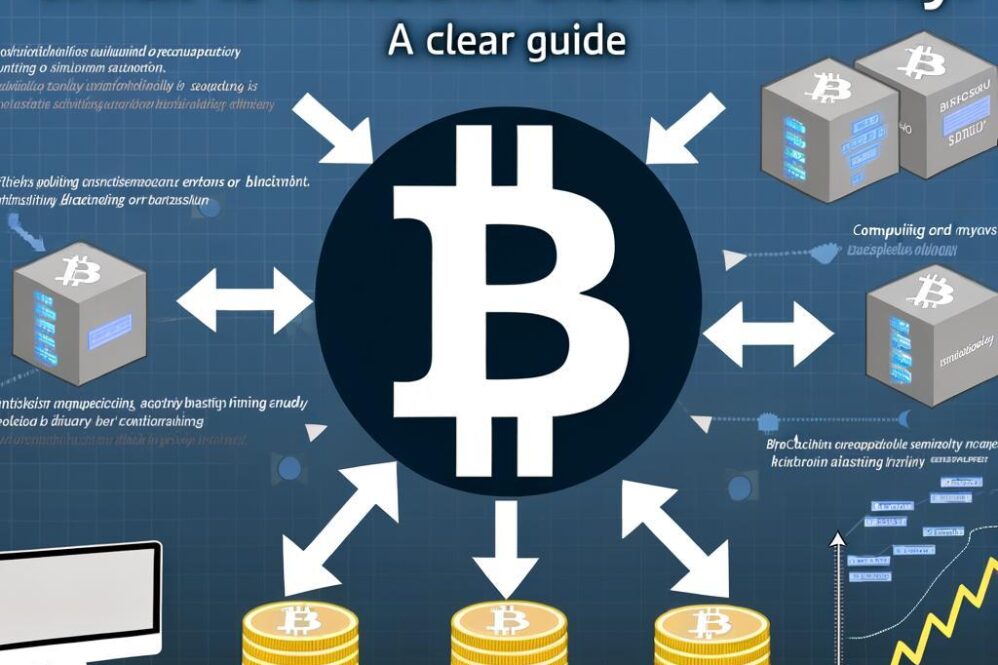
What Is the Bitcoin Block Subsidy? A Plain‑English Definition
The block subsidy is the portion of a block’s reward that creates brand‑new bitcoin and is awarded to the miner who successfully mines the block. It is one component of the overall block reward – the other being transaction fees paid by users – and is delivered automatically by Bitcoin’s protocol rules. The subsidy follows a predetermined schedule known as the halving, which cuts the subsidy roughly every 210,000 blocks, producing a predictable, declining issuance over time.
The subsidy exists to accomplish several concrete goals for the network:
- Incentivize security: provide immediate economic reward to miners who validate and extend the blockchain.
- Distribute supply: introduce new bitcoin into circulation in a decentralized, programmatic way rather than by a central issuer.
- Create predictable scarcity: a fixed issuance schedule supports Bitcoin’s long‑term monetary policy and the finite 21‑million cap.
As the subsidy decreases toward zero, miners’ revenue is expected to rely increasingly on transaction fees, shifting the economic model that secures the network. That transition raises practical questions about future fee markets and miner incentives, but the protocol’s transparent schedule gives markets and participants time to adapt. Policymakers, economists, and technical observers watch halvings closely becuase each event has measurable effects on mining economics and market psychology.

How the Subsidy Works: Mining Rewards, Halving Cycles, and Supply Dynamics
Bitcoin miners are compensated in two ways: newly minted coins known as the block subsidy and the transaction fees paid by users. The block subsidy is the dominant component of miner revenue in early cycles and is programmed to decline over time according to the protocol’s schedule. That built‑in decline-commonly known as the halving-reduces the number of new bitcoins issued roughly every 210,000 blocks (about every four years), creating a predictable issuance timetable that contrasts with fiat monetary systems.
Key mechanisms and consequences of the subsidy schedule include:
- Scheduled scarcity: the issuance rate is cut in half at each halving, gradually approaching the 21 million total supply cap.
- Miner economics: as the subsidy falls, miners increasingly rely on transaction fees and operational efficiency to remain profitable.
- Market signaling: halvings can change market expectations, frequently enough prompting renewed attention to supply growth versus demand.
Over time, the declining subsidy shapes Bitcoin’s supply dynamics by lowering the network’s inflation rate and concentrating new issuance into a tapering stream. That shift has two practical effects: it pushes the ecosystem toward a more prominent fee market to sustain miner incentives, and it reframes debates about long‑term security and decentralization-since the network’s ability to resist attack depends on the economic viability of miners. While the halving schedule is deterministic and transparent, its macroeconomic impacts remain contingent on adoption, transaction demand, and advances in mining technology.
Why the Block Subsidy Matters: Economic Incentives, Network Security, and the Long‑Term Outlook
At the heart of Bitcoin’s incentive system sits the block subsidy – the newly minted BTC awarded to miners for each validated block. That subsidy, together with transaction fees, composes the total mining reward and has historically been the primary mechanism for aligning miner incentives with network growth. Scheduled halvings that cut the subsidy roughly every four years are designed to introduce scarcity over time, shaping miner economics and influencing supply-side expectations in markets and among long-term holders.
beyond economics,the subsidy directly underpins network security. By subsidizing miners, the protocol helps sustain a high aggregate hash rate, raising the cost of attacks such as double-spends or 51% takeovers. As the subsidy declines, the security model increasingly depends on transaction fees and the willingness of miners to continue expending resources; that shift changes the calculus for attacker profitability, miner margins, and the resilience of the consensus mechanism under varying market conditions.
Looking forward, the transition from subsidy-led rewards to a fee-dominated model carries multiple plausible outcomes. Key variables include user demand for block space, the development of second-layer scaling (which can alter fee dynamics), and miners’ cost structures. Possible scenarios include:
- Stable fee market: Growing on-chain activity sustains fees that keep hash power healthy.
- Consolidation: Lower reward environments favor larger, more efficient miners, risking centralization pressures.
- Layered evolution: Off-chain solutions reduce on-chain fees but broaden overall system utility, shifting revenue mixes.
Policymakers, developers, and market participants will watch these dynamics closely, because the long-term trajectory of the fee market and miner incentives will determine both economic viability and the robustness of Bitcoin’s security model.
In short, the block subsidy is the mechanical heart of Bitcoin’s monetary design: a predictable, declining issuance of new coins that bootsrapped the network’s security and set the stage for scarcity.Launched at 50 BTC per block and cut in half roughly every 210,000 blocks, the subsidy has steadily decreased through scheduled “halvings” – a process that reduced the reward to 3.125 BTC after the 2024 halving - and will eventually phase out entirely as the protocol approaches its 21 million supply cap around the year 2140.
Understanding the subsidy is essential for anyone following Bitcoin’s economics or the evolving incentives that secure its blockchain. As block rewards fall, transaction fees and broader market dynamics take on greater importance for miner economics, network resilience, and long-term decentralization. Those shifts carry implications for investors, developers, policymakers and everyday users alike.Keep reading with a critical eye: watch on-chain metrics, halving cycles, and fee trends; consult primary sources such as the Bitcoin white paper and node software; and follow reputable reporting for analysis of how these technical rules play out in real markets. The block subsidy may be written into code, but its real-world effects unfold through human choices – and that’s the story that will keep changing.


] [[2](https://www.rewritertools.com/)] [[3](https://paraphraz.it/)]: On All Hallows’ Eve 2011, 30,000 BTC were released!](https://thebitcoinstreetjournal.com/storage/2023/07/2113708-30000-bitcoin-on-halloween-2011-1https-wwwdeeplcom-write-2https-wwwrewritertoolscom-3https-paraphraz-it-on-all-hallows-eve-2011-30000-btc-were-released.jpg "30,000 #Bitcoin on Halloween 2011! Hallows' Eve 2011, 30,000 BTC were released!")