
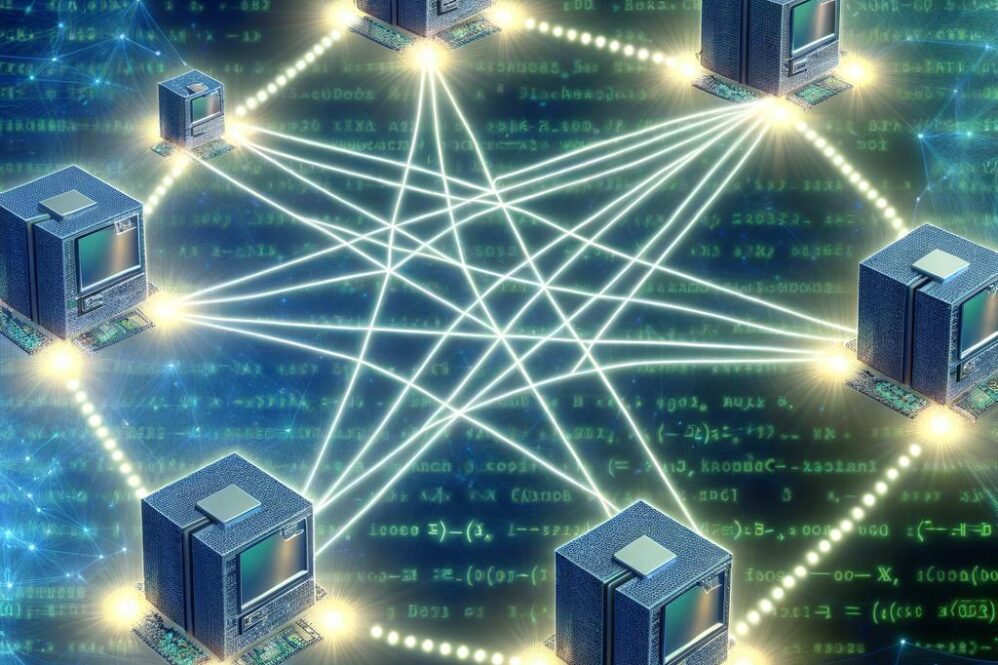
What Is a Node? Understanding the Building Blocks of Blockchain
A node is a participant in a blockchain network that holds and communicates the ledger’s data. Unlike centralized servers, nodes operate independently, each enforcing the protocol’s rules and keeping a local copy of the blockchain. Some nodes perform additional functions - such as, full nodes store the entire history and validate every block, while light nodes rely on full nodes for certain checks - but all contribute to the network’s ability to verify transactions without a trusted intermediary.
Nodes carry out a handful of practical responsibilities that keep a blockchain running smoothly:
- Storing and updating the ledger so the canonical history remains accessible.
- Validating transactions and new blocks to ensure protocol rules are followed.
- Relaying transactions and blocks to other peers, helping facts propagate.
- Participating in consensus mechanisms, directly or indirectly, which determines the accepted chain.
- Providing interfaces for wallets, explorers, and services to query the network.
Because nodes are the network’s enforcement and distribution points, they underpin decentralization and overall security. The more self-reliant nodes that verify and store data, the harder it becomes for any single actor to manipulate the ledger or conduct censorship. Running a node carries trade-offs – storage, compute, and bandwidth – but it remains the most direct way for individuals and organizations to verify blockchain state and help sustain a trustless system.
How Nodes Work: Validation, Propagation and Consensus Explained
Nodes act as the frontline arbiters of correctness, checking every incoming transaction and block against the protocol’s rulebook. During validation, a node verifies cryptographic signatures, confirms inputs are unspent (or account balances are sufficient), and enforces protocol limits such as block size or gas consumption. If a block fails any of these checks, it is discarded and never forwarded further, which prevents malformed data from taking root in the network.
Once data passes validation, it moves through the network by gossip and relay mechanisms that prioritize rapid, broad distribution. Typical factors that shape propagation include:
- Gossip protocol – lightweight peer-to-peer message exchange that spreads transactions and blocks.
- Mempool policies - local rules (e.g., fee thresholds) deciding which transactions are relayed or dropped.
- Peer selection – which peers a node connects to and how many influences reach and latency.
- Orphan handling – temporary storage and later reconciliation when a node receives blocks out of order.
At the system level,consensus is the set of mechanisms that turns independent validations and propagation into a single shared ledger. Different designs-proof-of-work, proof-of-stake and others-use distinct methods for proposing and finalizing blocks, but all rely on a fork-choice rule (longest/heaviest chain or finalized checkpoints) combined with economic incentives to align participant behavior. The result is a balance of safety, liveness and decentralization: transactions become increasingly immutable as more work or stake builds on top, while governance and protocol rules resolve longer-term disputes.
Types of Nodes and Their Roles: Full Nodes, Light Clients and Miners
Full nodes form the backbone of a blockchain network: they keep a complete copy of the ledger, independently verify every transaction and block against protocol rules, and relay validated data to peers. Because they enforce consensus rules locally,full nodes are the primary guarantors of decentralization and censorship resistance; running one requires greater disk space,CPU cycles and bandwidth compared with lighter clients. Key responsibilities include:
- persisting the entire blockchain state and history
- Verifying incoming transactions and block validity
- Propagating verified blocks and transactions to other peers
Light clients (or lightweight wallets) trade full validation for convenience: they download only block headers or request succinct proofs from full nodes, reducing storage and bandwidth needs and enabling fast sync on mobile devices.Their educational advantage is clear – they make on-chain interaction accessible to everyday users – but the trade-off is increased reliance on remote peers for proof data unless additional cryptographic mechanisms (e.g., SPV proofs or fraud proofs) are used. Typical characteristics include:
- Minimal local storage and faster startup times
- Dependence on full nodes for transaction inclusion and confirmation data
- Better UX for wallets but a weaker trust model than full nodes
Miners (or, in proof-of-stake systems, validators) are the actors that assemble and propose new blocks, securing the ledger through computational work or economic stake and collecting block rewards and fees in return. Their actions determine finality and throughput,but mining/validation can introduce centralization pressures when hardware,capital,or pool economics concentrate power. Journalistic scrutiny often focuses on how incentives and infrastructure shape network health: miners/validators must balance profitability, network rules compliance and uptime to maintain trust in the system.
As the backbone of any blockchain, nodes do more than simply pass data between users – they enforce rules, preserve the ledger’s accuracy and enable the decentralization that gives distributed ledgers their resilience and trust.Whether running a full node, a light client or participating as a validator or miner, each node type carries distinct responsibilities that together sustain network security, consensus and transparency.
For readers, the takeaway is straightforward: understanding nodes is not just a technical exercise but a practical key to grasping how blockchains operate, scale and govern themselves. As blockchains evolve – with new consensus models, scaling strategies and governance experiments – the roles and incentives for nodes will continue to shape which platforms succeed and how they affect industries from finance to supply chains.
If you want to explore further, start by running a light client or reviewing a platform’s node documentation to see how consensus and validation are implemented. For policymakers and businesses, appreciating nodes’ technical and economic functions is essential to crafting effective regulation and responsible adoption.
In short, nodes are the quiet infrastructure of blockchain systems – unglamorous but indispensable. Knowing how they work gives you the context to evaluate claims about decentralization, security and trust, and to participate more confidently in the technology’s next chapter.

