
– Exploring the foundational principles of the Bitcoin supply cap and the significance of 2.1 Quadrillion Satoshis
The Bitcoin network operates under a stringent protocol that limits the total supply to 21 million coins. This cap translates into an astonishing 2.1 quadrillion satoshis, the smallest unit of Bitcoin, wherein one bitcoin equals 100 million satoshis. The design of this supply cap is intentional, reflecting an economic philosophy that contrasts sharply with fiat currencies, which can be printed without limit. It fosters a scarcity model, simulating precious metals like gold and theoretically enhancing the value of Bitcoin over time by creating a deflationary effect as demand increases relative to supply.
The implications of this fixed supply are profound for investors and the broader cryptocurrency ecosystem.By capping the total number of satoshis, Bitcoin establishes itself as a deflationary asset, giving rise to concepts such as digital scarcity. This scarcity is reinforced through mining rewards, which halve approximately every four years in a process known as the halving. As the supply diminishes, market pressures coupled with growing global adoption may drive the value of satoshis upward, ensuring that even fractions of a Bitcoin can hold significant worth as the economic landscape evolves.
This framework instills confidence in users, as transactions and holdings can be regarded as inherently scarce resources. As more individuals and institutions recognize and adopt Bitcoin as a store of value or a hedge against inflation, the significance of the 2. becomes ever more pronounced. The distinct positioning of Bitcoin’s supply not only affects its valuation; it shifts public perception regarding wealth, value preservation, and the future of financial exchanges. Consequently, understanding the mechanics of this supply cap is essential for stakeholders aiming to navigate the complexities of a digital financial era increasingly influenced by blockchain technology.
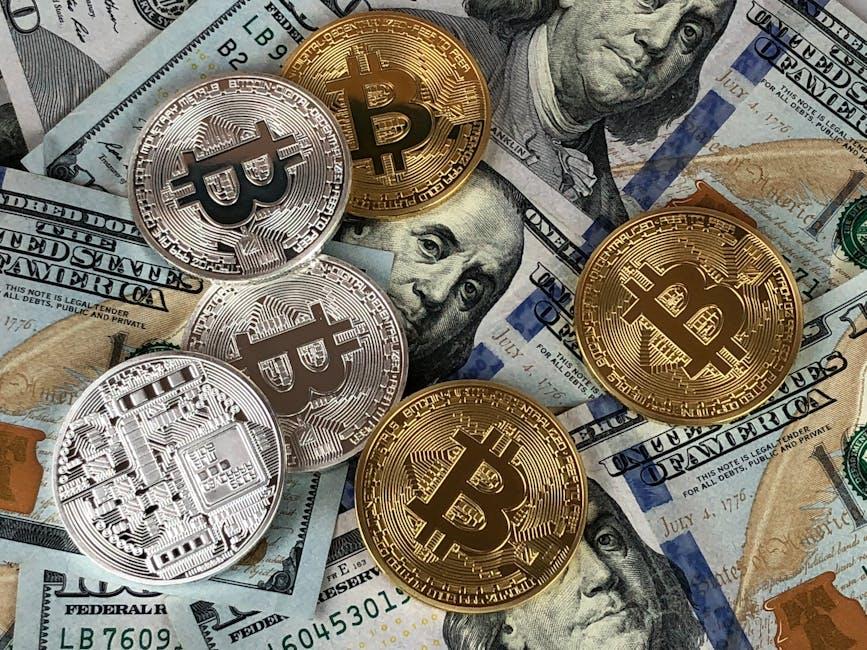
– The implications of a finite Bitcoin supply on market dynamics and value retention
The finite supply of Bitcoin, capped at 21 million coins-equivalent to 2.1 quadrillion Satoshis-introduces a unique set of dynamics within the cryptocurrency market. this scarcity drives a basic principle of economics-supply and demand. As interest in Bitcoin continues to grow, the limited availability becomes a critical factor influencing its price. Investors are increasingly viewing Bitcoin as a store of value, akin to precious metals like gold, leading to a potential increase in demand that far outpaces supply. Consequently, any significant influx of investor interest could drive prices to new heights as buyers compete for the limited units available.
Moreover, the fixed Bitcoin supply creates a deflationary environment that alters market behavior. unlike fiat currencies that governments can print at will, Bitcoin’s protocol ensures that no more than its predetermined limit will ever be available. This intentional design fosters a perception of value stability over time,encouraging investors to hold rather than spend. As a result, the market could experience increased volatility during periods of rapid price movements, as participants might react strongly to the fear of missing out on this scarce asset. Consequently, a psychological shift occurs in how traders value Bitcoin, viewing it not just as a currency but as an appreciating asset.
The implications extend beyond individual investors to institutional players, possibly reshaping entire financial landscapes.As more institutional investors allocate funds toward Bitcoin, powered by the scarcity narrative, we may witness a correlated rise in market legitimacy and adoption. In this scenario, bitcoin’s capped supply becomes a leading argument in its favor, asserting itself in conversations about diversification as a hedge against inflation and currency devaluation.the finite nature of Bitcoin doesn’t just influence its price; it redefines its role within the broader economic framework, moving it from an experimental currency to a cornerstone of modern financial portfolios.
– Analyzing the practicality of microtransactions in a Satoshi-centric economy
The concept of microtransactions within a Satoshi-driven economy introduces a paradigm shift in how we perceive digital value and trade. Given that one Bitcoin is divisible into 100 million Satoshis, the emergence of a microtransaction model becomes not only feasible but also potentially transformative. Users can engage in transactions involving minuscule amounts, allowing for the seamless exchange of value in day-to-day transactions. As businesses embrace this model, the practicality of applying Satoshis as a currency is highlighted by its scalability and low transaction costs, which can lead to widespread adoption.
However, despite the appeal of microtransactions, challenges loom on the horizon. Scalability issues remain a primary concern, notably on the Bitcoin network where congestion can lead to high fees and delayed confirmations. As companies implement microtransaction features, they must navigate the delicate balance between maintaining efficiency and ensuring that transaction costs do not outweigh the benefits. Moreover, users’ willingness to embrace such transactions is contingent upon the development of robust user interfaces and wallet technologies that facilitate effortless Satoshi payments. The right combination of technological innovation and consumer education will be pivotal in overcoming these obstacles.
Moreover, the sociocultural implications of a Satoshi-centric economy cannot be overlooked. A transition toward microtransactions could redefine purchasing behaviors and economic interactions. reduced friction in making small payments may encourage users to support content creators, fund projects, or tip service providers with unprecedented ease. This shift could democratize access to financial participation, enabling smaller transactions that are typically overlooked in conventional fiat economies. However, the success of such an ecosystem hinges on broad acceptance of Satoshis as a commonplace currency, alongside regulatory frameworks that support their integration into the mainstream financial landscape.
– Strategic considerations for investors navigating the boundaries of Bitcoin’s supply limits
As Bitcoin’s supply is capped at 21 million coins, translating this into the smallest unit, satoshis, reveals a staggering total of 2.1 quadrillion. For investors, understanding this finite ceiling is essential, as it serves as a backdrop against which supply-and-demand dynamics play out. With bitcoin’s increasing adoption and institutional interest, the implications of this supply limit become pronounced. Investors must consider that as demand for bitcoin grows, theories surrounding scarcity come into play, potentially pushing prices upwards as fewer coins become available for purchase.
Key strategic considerations include evaluating the perception of value that accompanies limited supply. The psychological effect of scarcity can lead to heightened market enthusiasm, particularly during bullish trends. Investors should be aware of the cyclic nature of price fluctuations and market sentiment, knowing that increased media coverage and adoption can lead to significant rallies. Additionally, maintaining a long-term perspective while navigating the inherent volatility of the cryptocurrency markets can be instrumental in leveraging Bitcoin’s supply dynamics for maximum benefit.
Furthermore, savvy investors might want to explore diversification strategies that accommodate Bitcoin’s capped supply. This entails assessing other cryptocurrencies that could complement their Bitcoin holdings,particularly those with differing supply mechanisms or utility,such as those with inflationary models. By balancing their portfolios in this manner,investors can effectively hedge against potential downturns in Bitcoin while still capitalizing on the unique advantages presented by its unwavering supply limit. Ultimately, understanding these dynamics equips investors with the foresight needed to navigate the complex landscape of digital assets.
the 2.1 quadrillion satoshis limit serves as a fundamental characteristic of Bitcoin’s design, reflecting both its creator’s intentions and the intricate mechanics of blockchain technology. As we advance into an era of increasing digital asset adoption, understanding this limit is crucial for investors, developers, and policymakers alike. With the digital currency landscape constantly evolving, scenarios surrounding scalability, value, and the potential future of Bitcoin will continue to be at the forefront of discussions. The immutable cap on satoshis underscores the complex interplay between scarcity, demand, and the overall economics of cryptocurrencies. As we navigate through this digital frontier, recognizing the implications of such limits will be essential in shaping the future of finance and technology.