

The Power of Active Listening in Communication
active listening is an essential component of effective communication that transcends mere hearing. It involves fully engaging with the speaker, making a conscious effort to understand their message, and responding thoughtfully. To achieve this, individuals must cultivate specific skills that enhance their ability to connect with others. Key elements of active listening include:
- Maintaining eye contact: This shows the speaker that you are attentive and interested in what they are saying.
- Providing verbal and non-verbal feedback: Nodding or using affirmations like “I see” or “Go on” encourages the speaker to continue sharing.
- Reflecting on the message: Paraphrasing what the speaker has said demonstrates that you are processing the information and ensures clarity.
A culture of active listening contributes substantially to collaboration and problem-solving. When teams prioritize this practise, they foster an environment where individuals feel valued and understood. This not only enhances interpersonal relationships but also leads to more productive discussions.Moreover, by actively listening, participants can identify underlying issues and provide more relevant solutions, ultimately improving outcomes.
Overcoming barriers to active listening is crucial for achieving effective communication. Common obstacles include distractions, preconceived notions, and emotional reactions. By acknowledging these barriers, individuals can work to minimize their impact. Techniques such as practicing mindfulness or taking a moment to pause before responding can help refine one’s listening skills. In doing so, individuals empower themselves and others, paving the way for more meaningful connections and improved dialog.
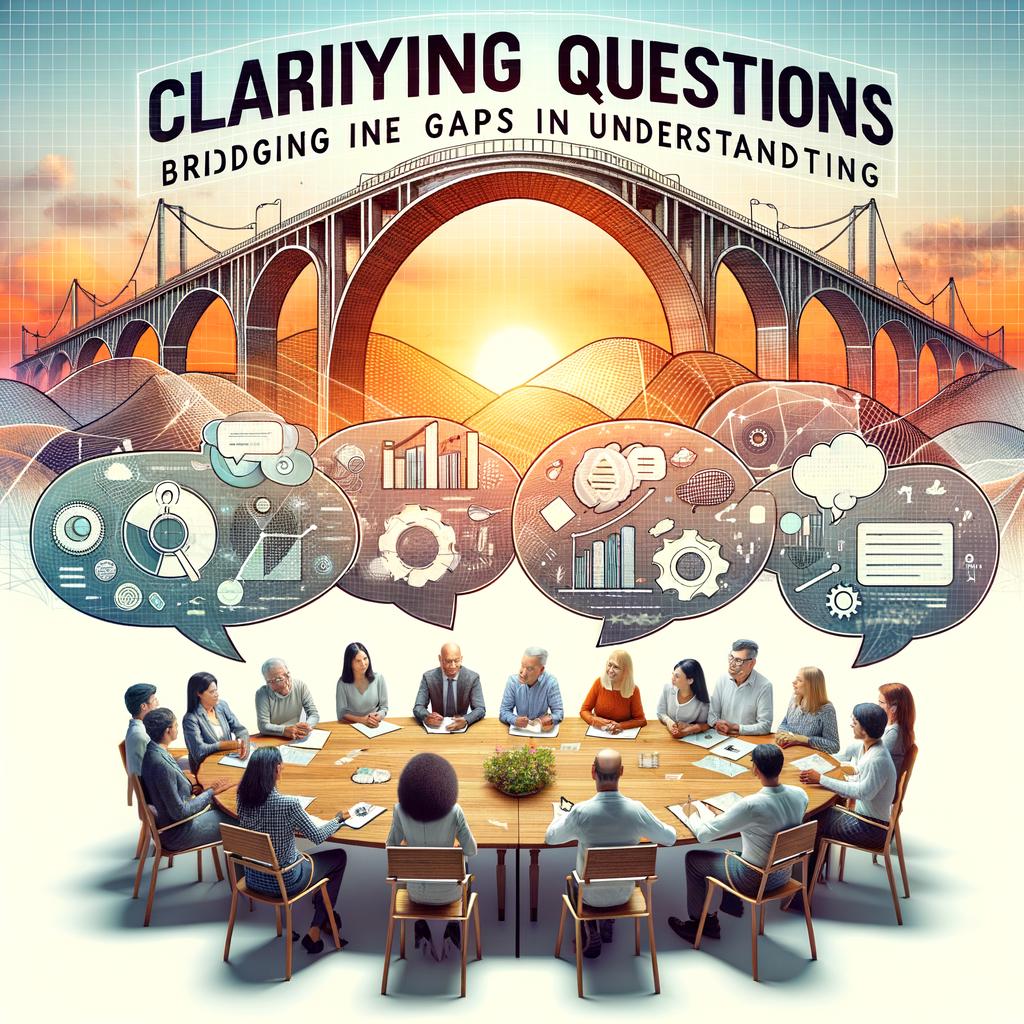
Clarifying Questions: Bridging Gaps in understanding
Effective communication often hinges on the ability to clarify misunderstandings. When conversations become muddled, it can lead to frustration for all parties involved. This is where clarifying questions become invaluable tools. By asking specific, targeted questions, individuals can bridge gaps in understanding and ensure that the dialogue remains productive. These questions serve not only to confirm information but also to demonstrate active engagement in the conversation.
Clarifying questions can take various forms, including:
- Open-ended questions: These prompt more detailed responses, allowing the conversation to unfold naturally. Such as, “Can you elaborate on that point?” encourages the speaker to provide deeper insight.
- Specific questions: These target particular details to remove ambiguity. Asking, “What did you mean by ‘triumphant outcome’?” helps pinpoint the speaker’s intent.
- reflective questions: These require the listener to paraphrase or summarize what they heard. As a notable example, “so, if I understand correctly, you believe that…?” affirms comprehension and invites correction if needed.
Incorporating clarifying questions into conversations not only enhances mutual understanding but also fosters a collaborative atmosphere. by inviting participants to express their thoughts more clearly and providing space for dialogue, individuals can work together toward common goals. This practice encourages a culture of curiosity, where asking for clarification is seen as a strength rather than a hindrance, ultimately leading to more fruitful interactions in both personal and professional settings.
Enhancing Dialogue for Improved Collaboration
Effective communication is the cornerstone of successful collaboration. To enhance dialogue within teams, it is indeed crucial to establish a clear framework that encourages open exchange of ideas. Active listening plays a vital role in this process, as it allows team members to feel valued and understood. By prioritizing listening over merely waiting to respond, individuals can identify underlying concerns and perspectives that may otherwise go unnoticed.
Another key factor in fostering effective dialogue is the establishment of a safe environment where all participants feel comfortable sharing their thoughts. This can be achieved by promoting a culture of respect, where disagreement is viewed as a natural part of the collaborative process. Encouraging team members to express dissenting opinions can lead to more innovative solutions and ultimately strengthen the team’s overall performance.
Lastly, utilizing tools and techniques designed to improve communication can significantly enhance dialogue. For instance, incorporating structured brainstorming sessions can help organize thoughts and prevent dominant voices from overshadowing quieter participants. Additionally, visual aids or collaboration software can facilitate understanding and engagement, allowing teams to collaborate more efficiently. By implementing these strategies, teams can cultivate richer discussions, leading to more successful collaborations.
mastering the art of understanding input is not merely an enhancement of communication skills but a essential shift in how we engage with one another. By prioritizing active listening and employing clarifying questions, we pave the way for more meaningful interactions that transcend misunderstandings and promote collaboration. Embracing this approach fosters a culture where diverse perspectives are valued, ultimately leading to richer dialogues and innovative solutions. as we continue to navigate complex social and professional landscapes, let us remember that effective communication is a two-way street-one built on empathy, openness, and a genuine desire to understand. By honing these skills, we not only elevate our personal interactions but also contribute to a more connected and harmonious community.