
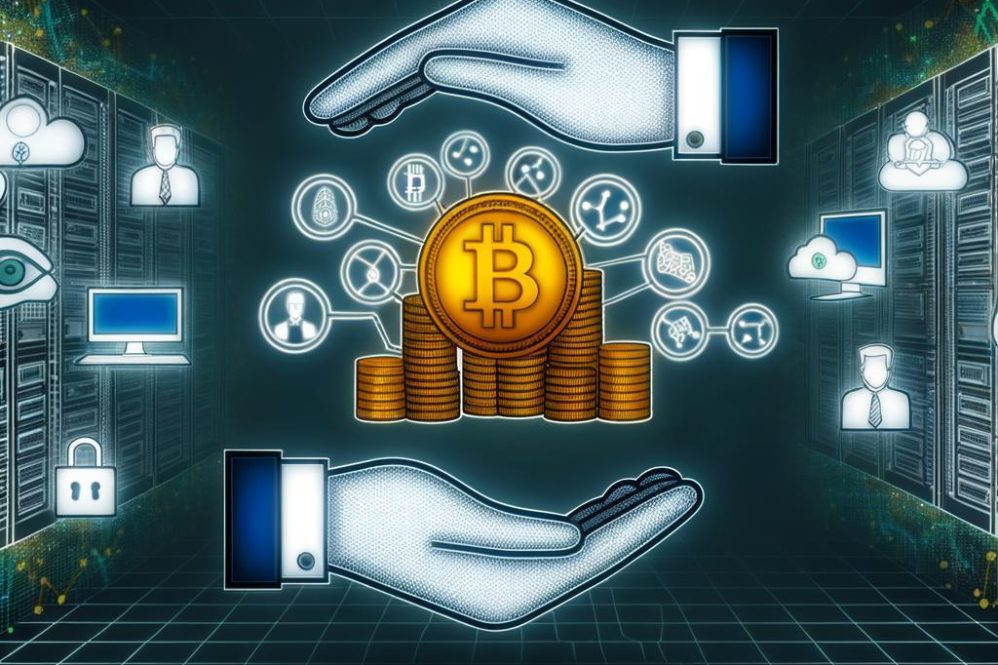
1) What Are Altcoins? A clear primer on Cryptocurrency alternatives
In the evolving landscape of digital assets, altcoins refer to any cryptocurrency other than Bitcoin and they encompass a broad spectrum of projects-from platform tokens that power smart contracts to niche utility coins and algorithmic stablecoins. While Bitcoin is primarily positioned as a decentralized store of value secured by a proof-of-work network, many altcoins pursue different technical goals: smart contract capabilities (exemplified by Ethereum), high-throughput layer‑1 designs (such as Solana or similar architectures), or privacy features and tokenized asset frameworks. Importantly, market structure reflects these functional differences: historically, Bitcoin’s market dominance has fluctuated but often sits near the 40-60% range of total crypto market capitalization (for example, around ~50% in mid‑2024), while leading altcoins like Ethereum have represented a meaningful single-project share-commonly in the mid‑teens percent range-underscoring how most altcoins are evaluated relative to Bitcoin’s benchmark.
From a technical and regulatory outlook, altcoins illustrate both innovation and fragmentation. The move by Ethereum to proof-of-stake in the Merge (september 2022) is a clear example: it shifted consensus design,reduced energy consumption by >99% according to developer estimates,and opened new economic models such as staking rewards-demonstrating how protocol changes materially affect tokenomics and network security. At the same time, regulatory developments like the EU’s MiCA regulation (2023) and increased scrutiny from securities regulators in the U.S. have raised compliance requirements that can materially affect liquidity and listings for specific tokens. Consequently, investors should view altcoins through multiple lenses-consensus mechanism, on‑chain activity, developer engagement, and legal classification-as technical promise does not eliminate countervailing risks such as smart contract vulnerabilities, centralized control of token supply, or shifts in exchange support.
For both newcomers and seasoned participants,practical due diligence reduces avoidable risk while surfacing chance. Consider these actionable steps:
- Examine market capitalization relative to circulating supply and compare that to sector peers;
- Review total value locked (TVL) and on‑chain activity for DeFi tokens, and check recent GitHub and community development metrics;
- Confirm whether the project has undergone third‑party audits and assess upgrade governance (who controls protocol changes);
- Factor in regulatory exposure-stablecoins and tokenized securities face different legal pathways than utility tokens.
In sum, altcoins extend the crypto ecosystem beyond Bitcoin by experimenting with new consensus models, financial primitives, and request layers; however, they require disciplined analysis-combining on‑chain metrics, protocol fundamentals, and regulatory context-to separate durable innovation from speculative or high‑risk propositions.
2) How Altcoins Work: Technology, Use Cases, and Key Differences from Bitcoin
At their core, altcoins are blockchain-based tokens or native currencies of alternative networks that diverge from Bitcoin in design and purpose. While Bitcoin uses a UTXO model with a relatively conservative, limited scripting language optimized for scarcity and censorship-resistant value transfer, many altcoins embrace an account model and Turing-complete smart contracts to enable programmable money. Consequently, technical trade-offs-such as consensus mechanism, block time, and throughput-vary widely: Bitcoin’s Proof-of-Work (PoW) design prioritizes security and decentralization, whereas numerous altcoins implement Proof-of-stake (PoS), delegated PoS, or hybrid systems to increase transaction per second (TPS) and lower energy usage. Moreover, scaling approaches like Layer‑2 rollups (e.g., optimistic or zk-rollups) and sharding have become central to altcoin roadmaps, enabling use cases that Bitcoin’s base layer was not architected to support.
Building on those technological differences, altcoins pursue a broad array of real-world and speculative use cases that complement or compete with Bitcoin’s store-of-value narrative. What is Altcoin insights: market participants increasingly evaluate projects by on-chain activity, developer velocity, and economic design rather than headline price moves alone. Common categories include:
- Smart‑contract platforms (Ethereum, Solana, Avalanche) that host decentralized finance (DeFi) and NFTs;
- Stablecoins that provide fiat‑pegged liquidity for trading and payments;
- Privacy coins (e.g., Zcash, Monero) designed for transaction confidentiality;
- Infrastructure tokens powering oracles, cross‑chain bridges, and storage networks.
In recent cycles, altcoins have shown sensitivity to broader market dynamics-correlating with Bitcoin during selloffs but outperforming in rallies known as “alt seasons.” Institutional and regulatory developments, such as the EU’s MiCA framework and evolving U.S. guidance, also shape which altcoins gain traction and which face delistings or compliance hurdles.
For both newcomers and seasoned traders, actionable due diligence reduces asymmetric risk: prioritize projects with audited code, transparent tokenomics, sensible vesting schedules, and demonstrable user activity measured by metrics like active addresses, total value locked (TVL), and GitHub commits. Practical steps include:
- Review third‑party audits and bug‑bounty history;
- Check token distribution and vesting to spot concentration risk;
- Monitor liquidity depth to estimate slippage for intended trade sizes.
Furthermore, balance opportunity with known risks: smart‑contract vulnerabilities (recall the 2016 DAO exploit as a precedent), bridge and oracle hacks, regulatory classification uncertainty, and governance centralization. integrate altcoins into a portfolio strategy that reflects correlation effects with Bitcoin, uses position sizing to manage volatility, and leverages hardware wallets or multisig custody to protect assets-thereby turning technical understanding into disciplined, risk-aware participation in the broader crypto ecosystem.
3) Assessing Altcoin Viability: Market Dynamics, Risks, and Responsible Investing
Investor assessment begins with an objective reading of market dynamics: altcoins are every token or chain that is not Bitcoin, and their prices and liquidity are tightly coupled to Bitcoin’s market cycle and investor sentiment. Historically, Bitcoin’s fixed supply of 21,000,000 coins and its dominant role as a liquidity and settlement layer mean that when BTC rallies or sells off violently, altcoins typically follow with higher volatility and amplified moves. What is “Altcoin insights” in this context? It is indeed the practice of synthesizing on‑chain signals (active addresses,token flow,staking participation),off‑chain indicators (24‑hour trading volume,order‑book depth),and macro drivers (rate moves,regulatory news) to judge whether an altcoin’s price action reflects real adoption or speculative rotation. Such as, altcoin “seasons” often occur when Bitcoin consolidates for weeks – enabling capital to migrate into smaller market‑cap projects – while sustained BTC leadership compression usually signals increased systemic risk for lower‑liquidity tokens.
next, rigorous risk assessment requires clear, measurable criteria rather than hearsay. At a minimum, evaluate:
- Market cap & liquidity – prefer projects with meaningful 24‑hour volume (heuristically, >$10M for tradable liquidity) and market caps that are not one‑day anomalies;
- Tokenomics & distribution – check circulating vs. total supply, scheduled unlocks, and whether >50% of tokens are concentrated in a few wallets;
- Protocol security & code activity – look for audited smart contracts, incident history, and consistent developer commits on public repos;
- Use case & composability – assess whether the project delivers unique utility (e.g., L2 scaling, cross‑chain bridges, DeFi primitives) or simply clones existing models;
- Regulatory exposure – note whether the token’s governance or token sale structure has attracted enforcement actions or heightened scrutiny.
These metrics form an evidence‑based checklist: for instance, a token with low volume, unaudited contracts, and >60% token concentration is a high‑risk candidate for liquidity crises or rug pulls.
responsible investing blends position sizing, active monitoring, and conservative exit planning. Newcomers should limit altcoin exposure to a small slice of capital – commonly 1-5% of investable assets – while experienced allocators may scale to 5-20% depending on risk tolerance and ability to perform deep due diligence.Practical steps include:
- use dollar‑cost averaging to enter positions during volatility;
- require documented audits and on‑chain evidence of token utility before allocating >1% of a portfolio to any single alt;
- prefer non‑custodial storage (hardware wallets) for long‑term holdings and separate trading from core positions;
- manage exposure to DeFi by understanding impermanent loss, smart contract risk, and counterparty risk in centralized venues.
Additionally, perform scenario analysis (stress test for a 50-80% drawdown), stay current on regulatory developments that can materially affect token listings and liquidity, and set explicit rebalancing rules so portfolio decisions remain disciplined rather than emotional. Taken together, these practices help translate technical understanding of blockchain fundamentals into pragmatic, risk‑aware investment choices.
As the altcoin ecosystem matures, one truth remains constant: innovation and risk travel hand in hand. What began as experiments in cryptography and decentralized money has blossomed into a sprawling landscape of projects-some solving genuine problems, others riding hype cycles. Understanding the difference requires more than headlines; it demands scrutiny of code, incentives, on‑chain behavior and the people behind each project.
For readers who want to put today’s reporting into practice, start with fundamentals: read the whitepaper, inspect tokenomics, check developer activity and audit reports, and follow liquidity and exchange listings. Balance technical signs of progress (active GitHub, working testnets) with market signals (real usage, partnerships that materialize). Treat social-media buzz and celebrity endorsements as clues, not evidence. Above all, assume projects will face regulatory and market shocks; factor that into position sizing and exit plans.
Practical safeguards matter. Use cold storage for long‑term holdings, diversify across uncorrelated assets, and keep a watchful eye for common red flags-anonymous teams with unverifiable claims, locked liquidity that disappears, or token models that reward insiders disproportionately. If you’re unsure, seek independent financial or technical advice; journalism can illuminate, but it cannot replace professional counsel tailored to your circumstances.
Altcoins will continue to be a laboratory for new financial architectures and software models. Some will fail, a few will transform industries, and others will quietly carve out niche use cases. The best approach for any reader is steady curiosity-read widely, verify claims, follow developments over months not minutes, and question narratives that ask you to act on fear or greed.
Note: the web links provided with this request pointed to general Google support pages unrelated to altcoins; for deeper technical and regulatory resources, consult project repositories, block explorers, major industry research outlets and official filings from relevant regulators.

