
—
Understanding eCash Drivechains: A Breakthrough in Bitcoin’s Scalability and Security
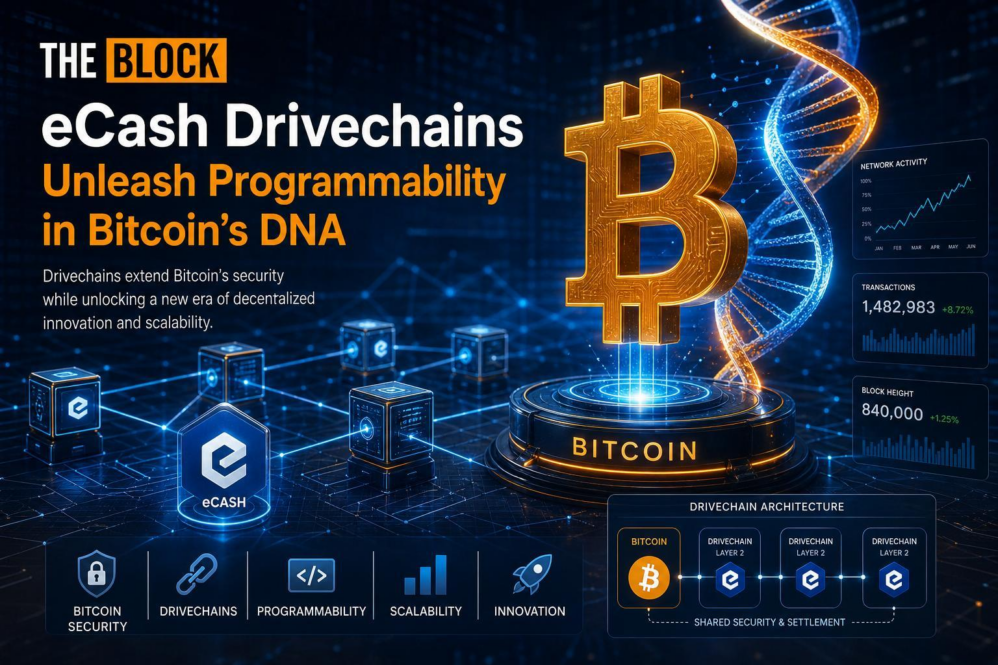
eCash Drivechains represent a significant step forward in addressing Bitcoin’s scalability and security challenges. Essentially, drivechains offer a new way to scale Bitcoin’s network by using sidechains-separate blockchains that can interact with the main Bitcoin blockchain. This approach allows for the testing and implementation of new technologies without directly affecting the main blockchain. In the context of eCash, these drivechains provide a pathway for users to explore new features while maintaining the integrity and trust of the underlying Bitcoin technology.
The core issue drivechains aim to solve is the scalability problem that Bitcoin has faced as more users join the network and the number of transactions increases.Traditional scaling solutions frequently enough come with trade-offs, such as increased centralization or reduced security, which can lead to conflicts within the Bitcoin community. Drivechains,however,allow Bitcoin to evolve in a controlled and deliberate manner by enabling users to migrate their resources to sidechains that can handle more transactions efficiently.
While the potential of eCash Drivechains is significant, it’s crucial to acknowledge the challenges that come with such innovation. Transitioning to a system that relies heavily on sidechains and complex interoperability methods requires a delicate balance to maintain the trust and security that Bitcoin is built upon. Ensuring that users can easily return to the main Bitcoin blockchain if they encounter issues with sidechains is crucial. implementing drivechains requires widespread consensus and careful consideration to avoid creating new points of failure or centralization. Nonetheless,as the technology matures,it holds the promise of unlocking new dimensions in Bitcoin’s architecture,making it more adaptable to future growth and adoption.
Unleashing Bitcoin’s Potential: How Drivechains Enhance On-Chain Governance and Programmability
Drivechains represent an innovative approach to enhancing Bitcoin’s scalability and governance while maintaining its core principles of decentralization and security. Essentially,Drivechains enable the offloading of certain transactions or data from the main Bitcoin blockchain to auxiliary chains. These auxiliary chains can be managed with different consensus rules and potentially higher transaction volumes, reducing the load on Bitcoin’s main blockchain without compromising its integrity.
The integration of Drivechains could significantly enhance Bitcoin’s programmability, allowing developers and users more adaptability in how they interact with and manage transactions. By providing the foundation for auxiliary chains, Drivechains create a modular approach to blockchain operations. This design supports the creation of specialized chains that can cater to specific needs, such as fast transactions for low-value payments or enhanced security features for high-value transfers. Such modularity not only addresses scalability issues but also opens up possibilities for customizing Bitcoin’s functionality to serve a wider range of use cases.
Though, the implementation of Drivechains also comes with challenges and limitations. Ensuring that auxiliary chains operate in a manner that does not undermine the security and decentralization of the main Bitcoin network is crucial. Maintaining the trust in these auxiliary chains involves careful design and consensus mechanisms to prevent centralization and security breaches. the broader Bitcoin community must agree on the utility and potential risks of Drivechains, making it essential for developers and stakeholders to engage in thorough discourse and testing before widespread adoption.
Navigating the Future of Bitcoin: Strategic Recommendations for Adopting Drivechains Technology
As Bitcoin enthusiasts and investors look to the future, the concept of Drivechains technology emerges as a critical element to watch. Drivechains is a proposed scaling solution that would allow for the offloading of less critical transactions to sidechains, maintaining the integrity of the Bitcoin mainnet while potentially increasing transaction throughput. This mechanism aims to address the growing demand for faster and more efficient transactions as Bitcoin adoption expands.
Given the complexity of integrating such a groundbreaking solution, careful consideration is necessary. Investors and stakeholders involved in the decision-making process must thoroughly understand the technical implications and potential challenges associated with Drivechains. This includes evaluating the current state of blockchain interoperability and the capacity of the existing Bitcoin infrastructure to support such innovations. While the promise of Drivechains is enticing, the road to implementation is fraught with technical hurdles and the need for robust testing to ensure stability and security.
Among the primary concerns is the potential impact on decentralization, a cornerstone principle of Bitcoin. Any solution that involves off-chain activities must be scrutinized to ensure it does not compromise the network’s decentralization. the governance structure and consensus rules would need to evolve to accommodate new protocols without fracturing the community. As the technology matures, collaborative efforts between developers, minersand the broader user base will be essential to navigating the complexities and laying a solid foundation for the future of Bitcoin.
The Evolution of Bitcoin Architecture: eCash Drivechains and the Roadmap to Enhanced Interoperability
The development of Bitcoin’s architecture continues to evolve with a focus on enhancing interoperability and scalability. The introduction of eCash Drivechains represents a significant advancement in this area, aiming to create a bridge between Bitcoin and other blockchain networks.Drivechains use a novel approach where sidechains are permitted to transact independently of the main Bitcoin blockchain while maintaining financial security through a consensus-driven process. This innovation seeks to address some of the core challenges Bitcoin faces, such as transaction throughput and user privacy, without altering the core Bitcoin protocol.
The roadmap to enhanced interoperability through Drivechains includes several strategic phases that focus on both technical and community aspects. These phases involve the refinement of consensus algorithms to facilitate cross-chain transactions and the development of user-pleasant tools that can help non-technical users manage cross-chain assets.One of the primary limitations of implementing such a solution lies in the need for broad community support and consensus among developers, as any changes to Bitcoin’s infrastructure require significant buy-in.
While the potential benefits of Drivechains and enhanced interoperability are clear, such as increased flexibility and broader ecosystem integration, the road ahead is lined with challenges. Ensuring that the security and decentralization of Bitcoin are not compromised is a top priority.the broader cryptocurrency market will watch closely to see how these developments impact the overall landscape, potentially influencing how other cryptocurrencies approach scalability and interoperability issues.
—